


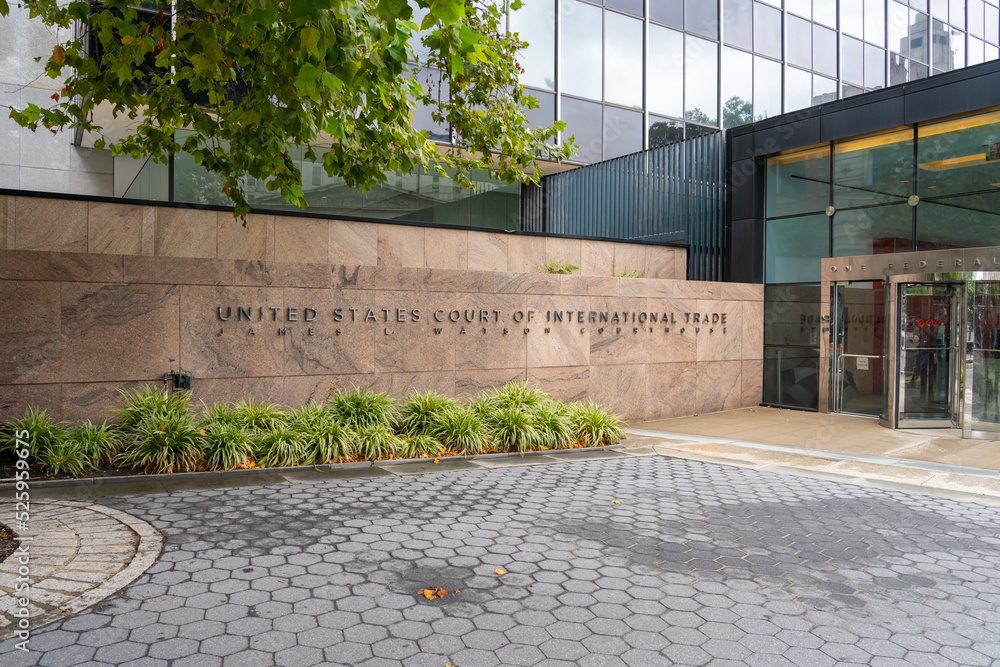
A federal trade court on Friday pressed the Trump administration over the legal footing of President Trump’s 10 percent tariffs on most imports, raising doubts about whether a decades-old statute can justify one of the central pillars of his economic agenda.
During nearly three hours of arguments, a three-judge panel of the U.S. Court of International Trade questioned whether Trump properly invoked Section 122 of the Trade Act of 1974, which allows temporary tariffs of up to 15 percent to address “large and serious” balance-of-payments deficits. The tariffs, imposed in February after the Supreme Court struck down Trump’s broader duties under emergency powers, are set to expire after 150 days unless extended by Congress.
At issue is whether persistent U.S. trade deficits—a key rationale cited by the administration—qualify as the type of international payments problem the law was designed to address. Judge Timothy Stanceu noted that trade deficits and balance-of-payments deficits were understood differently when the statute was enacted, underscoring the court’s struggle to apply a 1970s-era framework to today’s global economy.
Lawyers for 24 mostly Democratic-led states and a group of small businesses argued the tariffs are an unlawful workaround to the Supreme Court’s February ruling, which rejected Trump’s use of the International Emergency Economic Powers Act to impose sweeping global duties. They contend Section 122 was intended for short-term monetary crises tied to the now-defunct gold standard, not routine trade imbalances, and urged the court to block the tariffs before they expire to prevent the administration from extending them through successive actions.
Justice Department attorney Brett Shumate defended the policy, arguing that trade deficits contribute to broader balance-of-payments problems and fall within the statute’s scope. He maintained that the law still provides the president authority to act, even as the global financial system has evolved.
The case marks the latest legal challenge to Trump’s aggressive use of tariffs, a cornerstone of his second-term economic policy. The outcome could carry significant implications for the administration’s ability to sustain or expand import taxes after the Supreme Court dealt a major blow to its earlier approach.
The court did not indicate when it would announce its decision.