

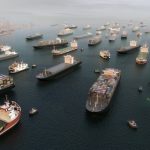
President Trump has announced a full U.S. Navy blockade of the Strait of Hormuz, heightening tensions in an already volatile region.
“It just continues to make a bad situation worse for the global nitrogen markets,” says Josh Linville, Vice President of Fertilizer for StoneX. “Every day that the strait remains closed has a massive impact on supplies. Every day the Strait of Hormuz is closed down, it has a massive impact on the phosphate markets, so it’s unfortunate…We have never, ever seen anything anywhere close to this magnitude of an issue with global fertilizer supplies.”
Linville notes that while most American farmers have their immediate spring needs met, the blockade is turning into a long-term threat that could stretch into 2027. The U.S. produces much of its own UAN and anhydrous, but it remains heavily dependent on imports for urea. Linville says when you look at what our imports were through March and what we think is coming for the month of April, he thinks we’re in good shape.
“We’re in good shape; not great. I’d feel better if that stuff was actually sitting here. But we’re in good shape. The big fear is, like this week, we’ve got an India tender that’s going on. They’re looking for 2.5 million tons. If their price is high enough, these vessels that are en route to the U.S. could easily be turned around and headed back to India if they’re a higher payer. And that’s what my biggest concern is, and that’s why I keep saying we’re in good shape, not great shape.”
The final hurdle isn’t just getting the fertilizer to a U.S. port—it’s getting it to the field. Domestic logistics, from rail to river barges, are now under the microscope. Linville warns that the window for error is closing as the side-dress season approaches.
“Overall, the whole situation is rough for nitrogen. I think that we’ll be okay. I think we’re in good shape. But again, good can turn around very, very quickly.”
Linville advises farmers to stay in constant contact with their suppliers as the blockade continues to reshape global trade routes.