


The Trump administration is urging farmers to come forward with information as federal investigators examine whether consolidation in the fertilizer industry has contributed to persistently high input costs, deepening financial strain across rural America.
At a meeting of the North American Agricultural Journalists in Washington this week, U.S. Department of Agriculture Deputy Secretary Stephen Vaden said officials are working closely with the U.S. Department of Justice and the Federal Trade Commission as part of an ongoing probe into fertilizer pricing and other farm input costs.
“We need farmers to help provide us with that information on a confidential basis, so that that can help inform the investigations that are ongoing,” Vaden said, adding that the administration is developing a mechanism to facilitate that exchange.
The inquiry comes as fertilizer prices—already elevated since the Russian invasion of Ukraine disrupted global supply chains—have surged again amid geopolitical tensions in the Middle East. Spot urea prices in New Orleans have climbed sharply, while phosphate fertilizers have also posted significant gains, according to industry data.
The administration has increasingly focused on whether market concentration is amplifying those price pressures. Vaden noted that a small number of companies dominate key segments of fertilizer production, raising concerns about competition and pricing power.
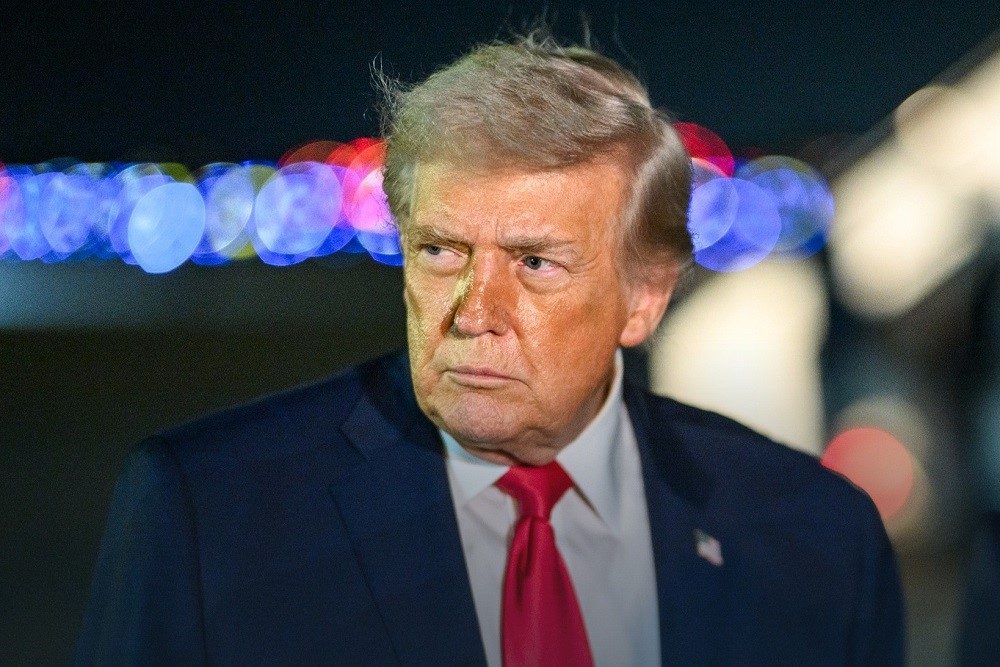
President Donald Trump signaled his own frustration over the weekend, writing on social media that his administration is monitoring the situation closely. “I am watching fertilizer prices CLOSELY,” Trump said. “The United States will not accept PRICE GOUGING from the fertilizer monopoly! American Farmers, we have your back!”
At the center of the debate is The Mosaic Company, one of the world’s largest phosphate producers. The company recently announced plans to idle two production facilities in Brazil, a move that would remove roughly 1 million metric tons of supply from the global market.
Vaden criticized the decision, arguing it runs counter to basic economic signals. “You take a million tons of supply out of the international market, that affects the price worldwide,” he said. “It will only lead to one thing — higher prices.”
Mosaic defended its actions and broader pricing trends in a public statement on social media, emphasizing that fertilizer markets are shaped by global forces beyond any single company’s control.
“Global fertilizer prices are shaped by a wide range of well-documented market factors, including global supply and demand dynamics, energy costs, weather and crop forecasts, transportation constraints, and geopolitical conditions,” the company said. “These forces, not individual producers, drive the pricing of phosphate and potash fertilizer products.”
The company added that U.S. fertilizer prices remain lower than in other major agricultural regions, citing weaker domestic demand tied to the “difficult overall economic situation facing American farmers.”
But that explanation drew a sharp rebuke from U.S. Agriculture Secretary Brooke Rollins, who accused the company of undermining farmers while reducing supply.
“So disappointed in this response,” Rollins wrote on social media. “Our Great President and this Administration have our farmers’ backs. Any sleight [sic] of hand will not be tolerated.”
So disappointed in this response, @MosaicCompany, especially as you decide to idle two fertilizer production facilities, removing 1 MMT of supply from the world market.
Our Great President and this Administration have our farmers’ backs.
Any sleight of hand will not be… https://t.co/GTCxcBQNgi
— Secretary Brooke Rollins (@SecRollins) April 13, 2026


Farm groups have also intensified criticism, arguing that trade policies supported by major producers—including duties on imported phosphate fertilizers—have contributed billions of dollars in additional costs for U.S. growers in recent years.
For many farmers, the stakes are immediate. Fertilizer is among the largest input costs in corn and soybean production, and elevated prices have squeezed margins already pressured by volatile commodity markets and global trade disruptions.
Vaden acknowledged that frustration, suggesting the current moment could mark a turning point in how regulators approach the industry. “Farmers have been asking for years whether producers are maintaining a larger share of profits than they would in a truly competitive market,” he said. “Now that these questions are at the forefront, it’s time that we all start asking them.”
As federal investigators continue their work, the administration is betting that farmers themselves—long at the mercy of volatile input costs—may hold the key to determining whether those costs reflect market forces, or something more.