

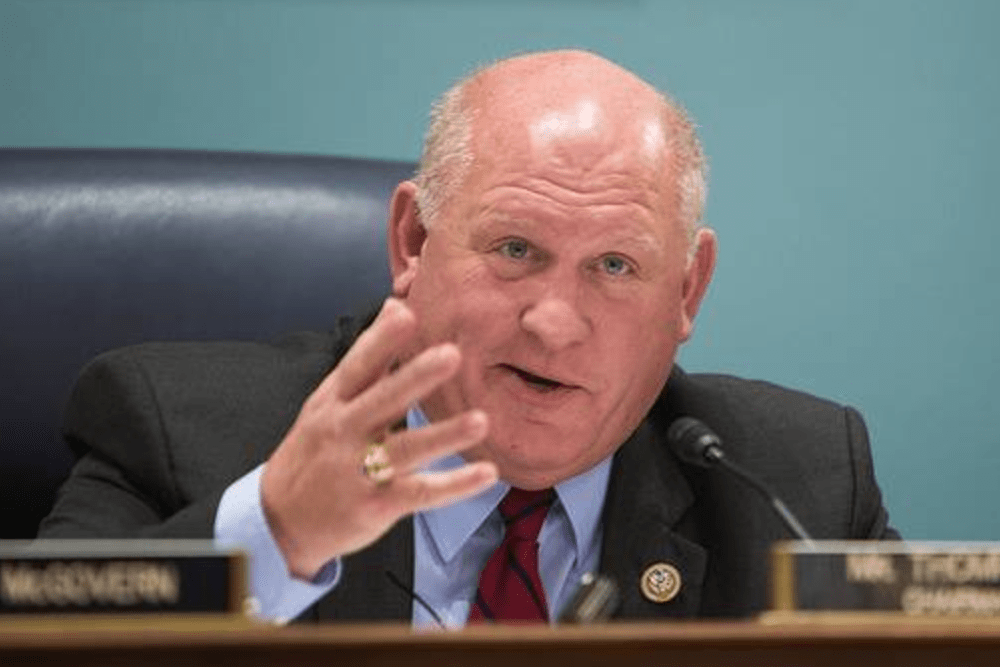
The House Agriculture Committee has advanced its version of the long-delayed Farm Bill, with Rep. Glenn “GT” Thompson (R-PA-15), who serves as Chairman of that committee, now pushing for a full House vote on the legislation this month.
The measure, which cleared committee in early March, drew support from seven Democrats—an outcome Thompson described as evidence of a bill crafted to balance fiscal restraint with bipartisan priorities.
“You know, we had great success when it came out of committee. I mean, it was a 34-to-17 vote,” Thompson said, pointing to the cross-party backing. “It was budget-neutral, responsible spending, and bipartisan by design.”
Thompson said the bill reflects months of outreach, including listening sessions held across 43 states and one U.S. territory, aimed at shaping what he characterized as “practical policy” responsive to the needs of farmers. With the agricultural sector facing mounting economic pressures, he emphasized the urgency of congressional action, arguing that producers require greater certainty as they navigate volatile markets and rising input costs.
“Quite frankly, I think with what our farmers need right now, it’ll give them certainty,” he said. “And so, I think there’s an urgency in Congress to get this done.”
The House proposal builds on earlier legislative efforts, including provisions from a broader spending package that addressed roughly one-fifth of the farm bill’s scope. That portion included an estimated $55 billion to $56 billion in additional investments, targeting areas lawmakers identified as in need of immediate support. The remaining components—covering nutrition programs, conservation, and commodity supports—are expected to form the backbone of what Thompson called a “long overdue” modernization of federal farm policy under the Farm, Food, and National Security Act of 2026.
“Farm country needs updated policies now,” he said.
Attention is now turning to the Senate, where Sen. John Boozman (R-AR), Chair of the Senate Agriculture Committee, is leading parallel efforts to draft companion legislation. Thompson described Boozman as a close collaborator and said House passage would be critical to building momentum in the upper chamber.
“We want to help Chairman Boozman build up some momentum in the Senate,” Thompson said. “This has to be a team effort between both chambers for it to be successful.”
For many of America’s farmers and agricultural leaders, however, patience is wearing thin after years of delays. Since the last farm bill expired in 2023, Congress has repeatedly extended existing programs rather than enacting a new measure—moves critics describe as “kicking the can down the road.” Now, with economic pressures mounting, farmers are pressing lawmakers more urgently than ever to pass a new farm bill, warning that continued inaction could carry serious consequences for the nation’s agricultural economy.