


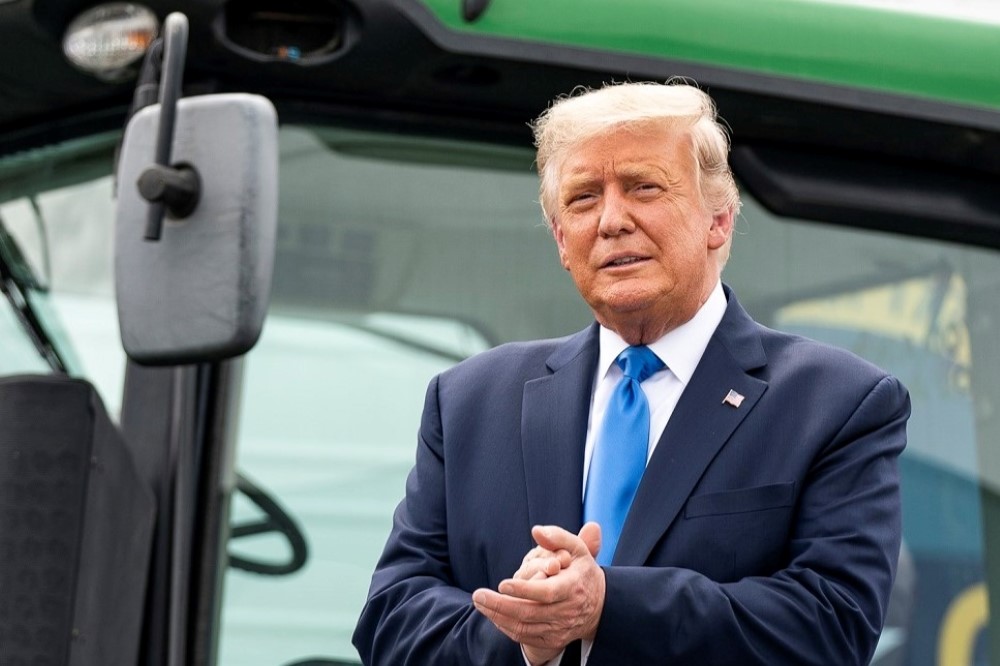
President Trump on Monday ordered a temporary reduction in tariffs on imported agricultural equipment, a move the White House says will lower costs for farmers and manufacturers while encouraging investment in domestic industry.
Under a presidential proclamation, tariffs on imported combines, harvesters and other agricultural equipment will fall to 15 percent from 25 percent beginning June 8. The tariff reduction will remain in effect through Dec. 31, 2027.
The administration also expanded the category of industrial equipment eligible for the lower tariff rate to include products such as bulldozers and forklifts imported from countries covered by U.S. trade agreements. Foreign manufacturers that produce equipment containing at least 85 percent U.S.-made steel, aluminum or copper will qualify for an even lower 10 percent tariff rate.
The announcement comes as many farmers face mounting financial pressure from elevated fuel, fertilizer and machinery costs, weak commodity prices and uncertainty surrounding global trade and geopolitical conflicts. Farm income has tightened across much of the agricultural sector, leading many producers to postpone major equipment purchases.
In explaining the decision, the Trump administration said recent economic conditions have affected industries that rely heavily on agricultural and industrial machinery.
The White House described the tariff reductions as a temporary measure designed to encourage near-term investment while preserving protections for domestic metals producers under Section 232 trade authorities, which the administration has used extensively to impose tariffs on imported steel, aluminum and copper products.
Administration officials argue the tariffs have helped revive U.S. metal production. The White House said the United States became the world’s third-largest steel-producing nation in 2025 and cited billions of dollars in announced investments in steel, aluminum and copper manufacturing projects across the country.
While the administration framed the policy as both an economic and national security measure, the decision also reflects growing concerns about conditions in the farm economy.
A survey released Tuesday by the Purdue University/CME Group Ag Economy Barometer showed farmer sentiment weakened in May as concerns about profitability and capital investments intensified. The survey’s measure of farm capital investment fell to its lowest level since September 2024, signaling continued reluctance among producers to make large purchases.
Equipment manufacturers and dealers have faced their own challenges. Industry analysts have pointed to rising raw material costs, labor shortages and fluctuating trade policies as factors contributing to higher machinery prices. Dealer surveys indicate many expect equipment costs to continue increasing through the end of 2026.
Industry analysts said companies with greater exposure to imported finished equipment could see some of the largest benefits from the tariff changes. At the same time, manufacturers with extensive U.S.-based supply chains may qualify for the newly created 10 percent tariff rate on products meeting domestic metals-content requirements.
The tariff reduction also arrives amid mixed signals in the farm machinery market. According to the Association of Equipment Manufacturers, U.S. combine sales increased 3.4 percent in April compared with a year earlier. Tractor sales, however, continued to decline, reflecting persistent caution among farmers confronting narrow profit margins and uncertain economic conditions.
Whether the tariff relief will significantly boost equipment purchases remains unclear. Many farmers continue to face difficult financial decisions as input costs remain elevated and crop prices struggle to keep pace.
Still, for producers delaying machinery upgrades and manufacturers seeking greater certainty, the administration’s action offers at least temporary relief in an agricultural economy that remains under strain.