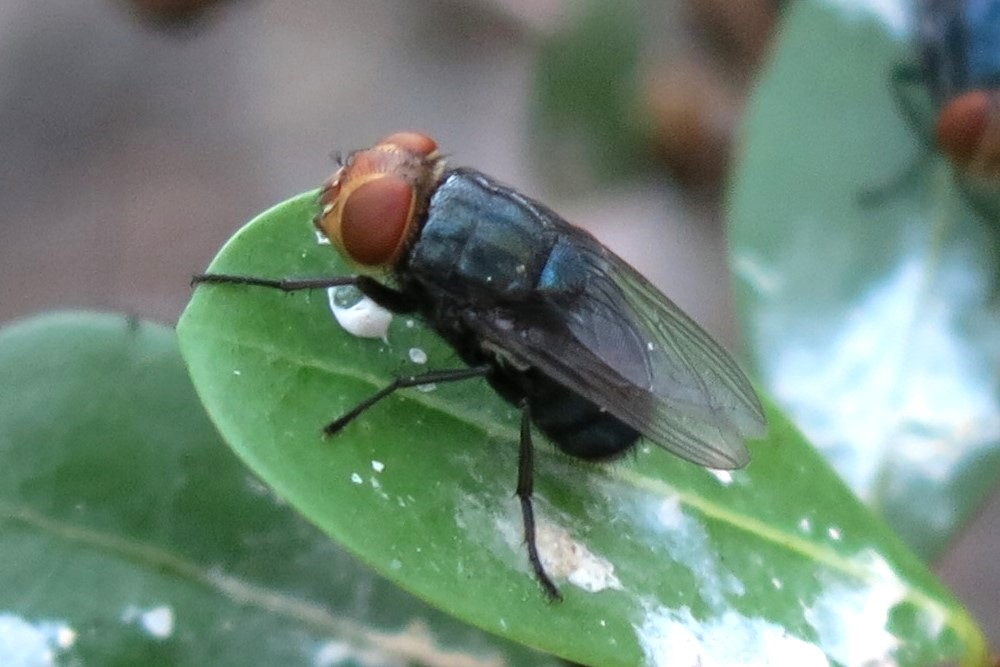



The discovery of a flesh-eating parasite in a South Texas calf has ended a six-decade run without New World screwworm in the United States, triggering an aggressive federal response and raising fresh questions for cattle producers hundreds of miles from the outbreak zone, including those in Indiana.
The U.S. Department of Agriculture confirmed Wednesday that laboratory testing identified New World screwworm larvae in the umbilical area of a 3-week-old calf in Zavala County, Texas, marking the first domestic case since 1966. Federal officials immediately established a 20-kilometer quarantine zone around the site, imposed movement restrictions and accelerated the release of millions of sterile flies in an effort to prevent the parasite from becoming established in the country again.
While the confirmed case remains isolated, animal health experts say the finding is a stark reminder that livestock producers nationwide are vulnerable to a pest long considered a problem of the past.
“This is an animal health issue. This is not a food safety issue. So, consumers do not have to be concerned about this,” said Dr. Ron Lemenager, a beef extension specialist and professor of animal sciences at Purdue University who also operates an Indiana cattle farm near Otterbein.
For cattle producers in Indiana, the immediate threat is not necessarily direct exposure to the parasite but the economic and logistical consequences that could follow if the outbreak expands.
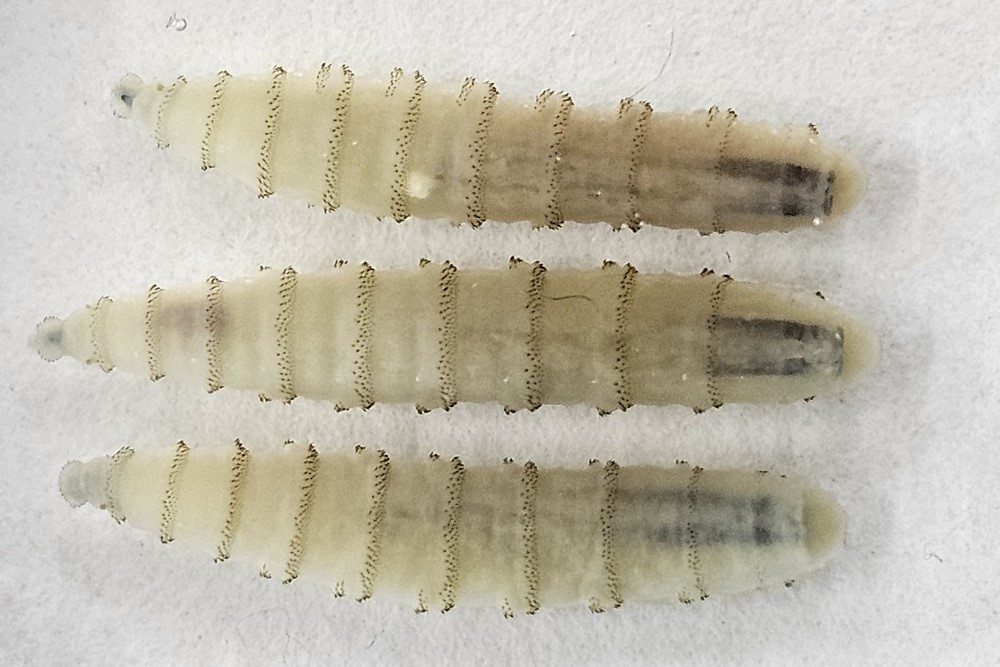
New World screwworm is the larval stage of a parasitic fly whose offspring feed on living tissue. Unlike common maggots that consume dead flesh, screwworm larvae invade open wounds, navels and body openings of warm-blooded animals, causing severe injuries and sometimes death if left untreated.
The pest was eradicated from the United States in the 1960s through a landmark sterile insect program that remains one of the most successful agricultural pest-control campaigns in history. Since then, it has largely been confined to Central America. But outbreaks have steadily advanced northward through Mexico in recent years, prompting months of preparation by federal officials who feared the parasite would eventually reach the United States.
USDA officials said they had already released more than 129 million sterile flies across portions of South Texas and northern Mexico before the Texas detection occurred. The agency has also deployed more than 8,000 traps along the border and increased surveillance efforts involving livestock, wildlife and pets.
Although colder Midwestern winters provide some natural protection, Lemenager said changing weather patterns and warmer seasonal temperatures mean producers in states such as Indiana and Michigan cannot assume they are immune.
“The fly does not like 40-degree temperatures and below. So, that gives us some protection here in this part of the country. That doesn’t mean to say that we can’t get it in the summertime. The heat has migrated north, and so we don’t get as cold as soon as we used to,” Lemenager said.
The parasite can infest virtually any warm-blooded animal, including cattle, horses, sheep, goats, wildlife, pets and, in rare cases, humans. Newborn livestock are particularly vulnerable because of exposed navel tissue.
“Any warm-blooded animal is susceptible to the infection, right? Navel cords on newborn calves or newborn animals of any kind, those are particularly vulnerable. The animal that does not have any wounds or blood on the surface are probably immune to it. But, anytime we’ve got a wound or blood, those are the animals that are going to be the most vulnerable,” Lemenager said.
Federal and state officials have emphasized that no additional cases have been detected and that the nation’s food supply remains safe. Animals affected by screwworm would not enter the commercial food chain, and the parasite does not infest meat products.
Even so, the confirmation has rattled livestock markets and rekindled memories of the enormous costs associated with previous infestations.
Industry leaders warned that a widespread outbreak could disrupt cattle movements, increase veterinary expenses and create new regulatory burdens for producers. Those concerns are especially significant in Texas, home to the nation’s largest cattle herd, but the effects could ripple throughout the national beef supply chain.
The market reaction following Wednesday’s announcement underscored the uncertainty surrounding the situation. Yet Lemenager believes many Midwest producers could ultimately benefit if cattle buyers place a premium on animals from regions outside the affected area.
“Until everybody understands that’s not been following this all along, they could react somewhat negatively to this news. But the reality is that it does not affect food safety. And that’s a key point from the standpoint of volatility in the marketplace,” he said.
He added that producers in states such as Indiana and Michigan may find themselves in a stronger marketing position if movement restrictions remain concentrated in South Texas.
“One could argue that those producers in this Upper Midwest could be beneficiaries, all right? Because these cattle obviously can move. We’re not quarantined. And so the demand for known cattle outside of the areas of infection could be worth more than, for example, the Southern Texas feeder cattle,” Lemenager said.
Federal officials remain focused on ensuring that scenario never develops.
USDA has intensified its sterile insect campaign, releasing roughly 4 million sterile flies weekly by air and deploying an additional 4 million through newly installed ground-release systems near the outbreak area. The technique works because female screwworm flies generally mate only once. When enough sterile males are introduced into the population, reproduction eventually collapses.
The strategy eradicated screwworm from the continental United States by 1966 and successfully eliminated a smaller outbreak in Florida’s Key deer population in 2017.
Lemenager expressed confidence that the same approach can work again.
“I’m really confident that the technologies that we’re using to create these sterile flies and the number of sterile flies that are being produced is going to work. If you are vigilant of watching your animals from the standpoint of pest infection, I would be vigilant. I would do what I can to use the approved products, all right, for insecticides,” he said.
For now, animal health officials are urging livestock owners to inspect animals regularly for unusual wounds, drainage or signs of infestation and to report suspicious cases immediately.
The coming weeks may determine whether the Texas detection remains an isolated incident or becomes the first sign of a broader resurgence of a parasite that American livestock producers believed had been left in the past. For cattle operations across Indiana, experts say vigilance — rather than panic — remains the appropriate response.
CLICK BELOW for Hoosier Ag Today’s radio news report: