

A destructive, flesh-eating parasite has breached the United States southern border for the first time in six decades, prompting an aggressive federal response and sounding alarms across the American livestock sector.
The U.S. Department of Agriculture (USDA) confirmed on Monday the detection of two additional cases of the New World screwworm in Texas: one in a calf in La Salle County and another in a dog in Andrews County. The recent cases follow two previous detections last week, marking a stark and troubling return of a pest that was federally eradicated from the U.S. in 1966.
For the cattle industry, the reappearance of the parasite—which can kill a full-grown animal in days—is a nightmare scenario that producers have been quietly steeling themselves against for more than a year.
“This is not a surprise,” said Colin Woodall, Chief Executive Officer of the National Cattlemen’s Beef Association (NCBA), in an interview. “This is something that quite frankly we, as the cattle industry, have been expecting for several months now, ever since New World screwworm made it out of Guatemala into Mexico right before Thanksgiving of 2024. We expected this to be inevitable. But that gave us over 18 months to get prepared.”
A Gruesome Biological Threat
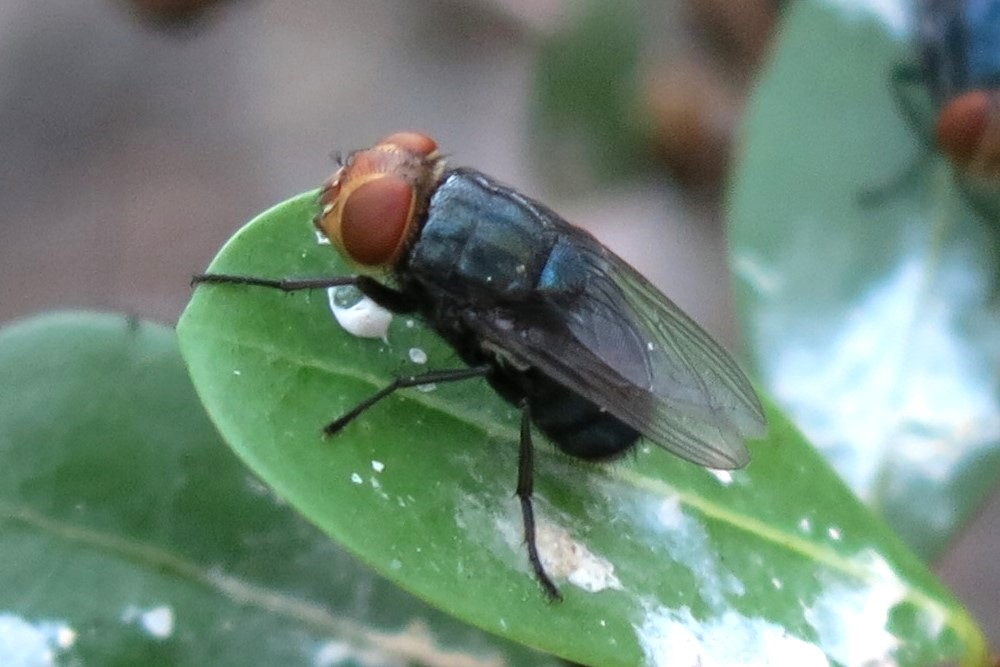
Unlike typical blowflies that feed on dead tissue, the New World screwworm fly lays its eggs in the open wounds of warm-blooded animals. Within hours, the larvae hatch and burrow deep into the living flesh of the host, feeding on the animal from the inside out.
While the multi-billion-dollar livestock industry is at immediate economic risk, the pest is blind to species. “This is not just a cattle-only pest,” Woodall warned. “This is a pest that can infest any warm-blooded animal. So we’re talking about sheep, goats, dogs, cats, people.”
Federal authorities indicated that the dog infested in Andrews County had recently been in Mexico, highlighting the ongoing trans-border migration of the parasite.
The USDA and the Texas Animal Health Commission (TAHC) have deployed a unified force of 75 personnel on the ground in Texas, establishing 20-kilometer “infested zones” around the detection sites. These zones enforce strict livestock movement controls and heightened biological surveillance.
Officials have emphasized that the American food supply remains entirely safe, as the parasite does not affect processed meat, and any infested animals would be flagged during routine federal inspections.
The Push for Millions of Sterile Flies
Eradicating the pest requires a unique form of biological warfare known as Sterile Insect Technique. Because female screwworm flies mate only once in their life cycle, scientists breed millions of male flies, sterilize them via radiation, and release them into the wild via aircraft. When they mate with wild females, the resulting eggs fail to hatch, collapsing the local population.
The primary facility currently producing these sterile flies is located in Panama, but current production levels are insufficient to combat the northern surge.
“Right now, we’re only producing about 100 million flies a week… down in Panama,” Woodall said. “The estimates are, in order for us to eradicate it again, we will need 500 million flies a week.”
To meet the demand, the USDA has activated a sterile fly dispersal facility at Moore Air Base in Edinburg, Texas, with aerial release flights scheduled to begin immediately. Furthermore, the industry is looking toward a retrofitted production facility in Mexico expected to come online later this summer, as well as a domestic U.S. facility under construction in South Texas slated to be operational by late 2027.
Political Friction and Long-Term Strategy
The return of the screwworm has quickly taken on political undertones in Washington. In announcing the appointment of John Bellinger as the new Senior Advisor for New World Screwworm Preparedness, Agriculture Secretary Brooke Rollins explicitly tied the pest’s resurgence to “Biden’s failed open border policies” for its return.
Bellinger, a Texas A&M University Regent and former meat industry executive, has been tasked with integrating into the USDA team to accelerate technological solutions and push the pest back beyond the Darien Gap in Central America.
Despite the heightened rhetoric and the implementation of local quarantines, agricultural leaders are urging calm, emphasizing that the industry will not grind to a halt.
“Everybody needs to keep in mind that we’re not talking about a shutdown of movement of this industry,” Woodall said. “There will be some movement restrictions when there’s an infested zone, but once the inspections of those cattle are done… they’re going to be able to move. So we’re encouraging people: if you see something, say something.”
The NCBA is planning to make the screwworm crisis a central focus of its upcoming summer business meeting in Denver this July, where cattle producers will coordinate directly with state partners and federal veterinarians.
Ultimately, Woodall expressed confidence that the combination of livestock inspections, aggressive sterile fly releases, and federal agricultural research will eventually replicate the victory achieved 60 years ago.
“We’ll eradicate this pest again,” Woodall said. “It’s just a matter of time.”