

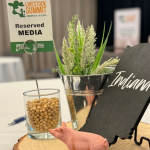
Livestock and poultry producers, corn and soybean growers, agribusiness professionals and politicians all gathered Tuesday for the Indiana Corn Growers Association and Indiana Soybean Alliance Membership and Policy Committee Livestock Summit in downtown Indy.
ICGA President Alan Dunn, a corn and soybean grower from Clinton County, says there are two major pillars of policy development for their organization: feed and fuel.
“We talk a lot about E15, we talk a lot about 45Z. It’s the real public-facing aspect of our policy development. But feed and livestock, that’s really the bedrock foundation of a successful row-crop agriculture environment like we have here in Indiana. So, it was time to recognize that, it was time to talk about some of the challenges our customers were facing, and to just continue to build those relationships.”
Dunn adds that the event allowed row crop producers like himself to better understand the needs of their primary customers and the significant challenges they face.
“Whether it’s poultry and HPAI, PRRS with our swine producers, we’ve got New World screwworm coming into the country now for our cattle producers. So, as a grain grower only, those are things that I read about, I hear about, but I don’t get an in-depth understanding of what those challenges are until you come to an event like this.”
With more than half of Indiana’s corn and soybean production going toward feeding livestock, Dunn gave the crowd this commitment to their livestock partners: if there’s a policy, a priority, or something that’s important in policy for you, it’s important to them as well.
“We’re stronger together. We all face similar regulatory burdens, we all face the fact that we’re a small percentage of the population, we all respond to the same customer base, consumer base. And so, we need to be tackling some of those challenges together.”
So, when the Indiana legislative session opens back up in January or when issues hit at the federal level, you can expect a “One Indiana Agriculture” approach from your corn and soy policy organizations.