

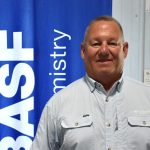
On a Tuesday drive from Fort Wayne to Lafayette to just past Champaign, Illinois Kent Stickler took a good look at farm fields along the way, and he liked what he saw. Stickler is an Indiana district manager for BASF and was headed to their field day Illinois.
“The crop in general as I came across there, although we had multiple different planning dates with some of the early, wet weather then turned off a little bit dry, and there are a lot of different planting dates, but what I saw is a crop with a tremendous amount of potential,” he told HAT. “Yeah it’s in different stages, but the yield potential is there, we just have to keep an eye on it.”
Stickler wants to see growers reach that potential, and they will if they make the right in-season management decisions.
“Well certainly the growers today have put a lot of inputs into the 2026 crop, and now is not the time to put it to bed for the year,” he explained. “That’s why I say we got to keep an eye on it, get in our fields and look at it. Here at the field day today there was a comment about how foggy it’s been in the morning, how much dew we’ve seen on the fields, how long that dew is staying on our crop and with these humidities, conditions are just ripe for a lot of things to be going on in our fields, so that’s why I say to stay on alert, because as I’ve said many times, our goal is to produce as many bushels as we possibly can off of an acre of corn or an acre of soybeans. The higher we can push those yields, the less it costs per bushel of production. So that’s the ultimate goal and that’s why I don’t like giving up on them.”
There was a very slow start to corn and soybean planting in Fort Wayne this year, but that corner of the state has seen the crops get a good start.
“It’s a little deceiving because they got a late start, but you think about the heat we’re getting now, how rapidly this crop is growing, and so if we get some moisture after some of this heat, we get some of these cooler conditions, yeah that crop is going to really thrive. But it’s going to allow some of these other outside forces and challenges to come into the crop. We’ve got to keep an eye on them.”
Stickler didn’t mention tar spot, but that is one of those outside forces and a colleague at BASF spoke extensively about it. Keep checking back with us for details on what could be a season full of tar spot.
Hear the conversation with Stickler: