
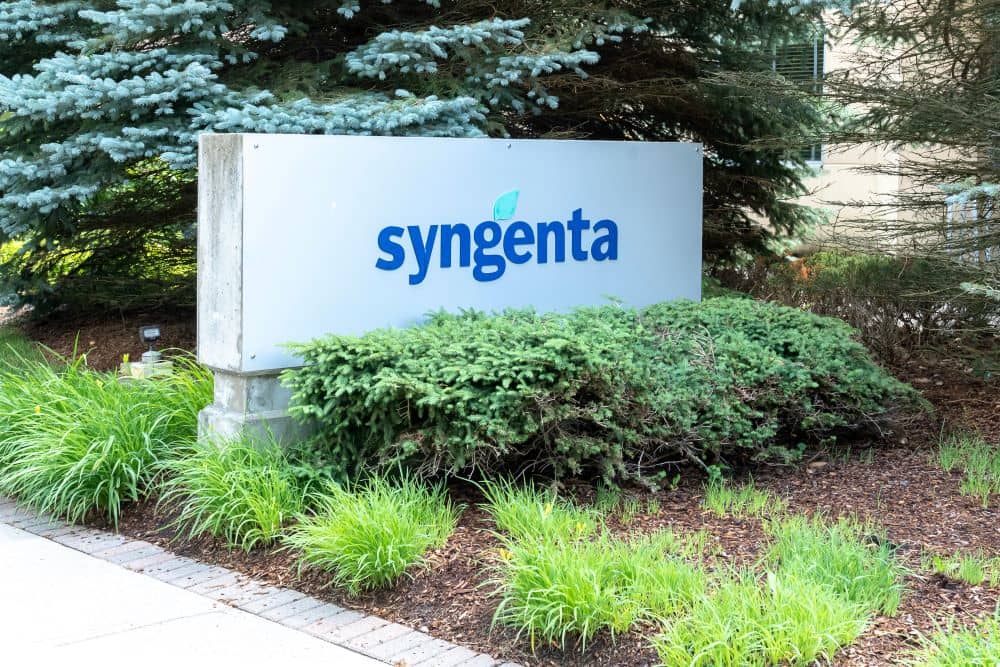
In a high-stakes legal battle between two of the world’s largest crop protection giants, Syngenta has filed a federal patent infringement lawsuit against German chemical company BASF. The dispute, centered on a critical chemical formulation used to protect corn crops from aggressive weeds, threatens to disrupt the commercial launch of a major new agricultural product as U.S. farmers are making preparations for next year’s growing season.
The lawsuit, filed in the U.S. District Court for the District of Delaware and made public on Wednesday, alleges that BASF’s highly anticipated new corn herbicide, Ridivex, infringes on a patent held by Syngenta for its own competing premium herbicide, Storen.
According to the complaint, BASF’s Ridivex combines the widely used herbicide pyroxasulfone with a specific “safener” chemical known as isoxadifen-ethyl. Safeners are crucial chemical additives that protect the cash crop itself from being damaged by the weedkiller. Syngenta argues that this precise combination infringes on U.S. Patent No. 8,404,618, which covers the proprietary chemical formula that makes Storen both highly effective against weeds and safe for corn crops.
With the U.S. Environmental Protection Agency (EPA) expected to approve Ridivex “within days,” Syngenta is asking the federal court to step in immediately and block BASF from launching or selling the herbicide in the United States.
The timing of the lawsuit is no coincidence. Syngenta urged the court to act swiftly, warning that allowing BASF to enter the market ahead of the autumn planting and purchasing cycle could cause irreparable economic harm.
“The June–September distributor purchasing window is a critical inflection point that largely determines sales outcomes for the entire year,” Syngenta stated in the lawsuit. “If a competing product enters the market during or before this distributor purchasing window—particularly one positioned as a direct alternative to Storen—it can displace Syngenta’s product before sales to growers even begin.”
In addition to seeking an injunction to block the sale of Ridivex, Syngenta’s crop protection units, based in Switzerland and North Carolina, are seeking unspecified financial damages, including lost profits or a reasonable royalty.
A spokesperson for BASF said the company is aware of the complaint and currently reviewing it. Syngenta did not immediately respond to additional requests for comment.
What This Means for U.S. Farmers and the Ag Industry
For the American agricultural sector, which is already grappling with volatile crop prices, high input costs, and shifting weather patterns, the courtroom showdown between these two multinational titans could have far-reaching consequences.
1. Reduced Choices and Rising Costs Corn is the most widely produced feed grain in the United States, and managing weeds is one of the costliest challenges corn growers face. The launch of Ridivex was expected to provide farmers with a new, highly anticipated tool to combat herbicide-resistant weeds. If the court grants Syngenta’s request for an injunction and blocks Ridivex from entering the market, farmers will lose a key alternative. A lack of market competition often keeps herbicide prices elevated, leaving growers with fewer options to manage their input budgets.
2. Supply Chain Disruption for Distributors The agricultural retail supply chain relies heavily on predictability. The June-to-September window is when distributors secure chemical inventories for the upcoming year. Because of this lawsuit, distributors now face significant uncertainty. Investing in or planning for a Ridivex launch carries immense legal risk, while sticking solely to established products like Storen could limit their product portfolios.
3. The Battle Against Superweeds Modern agriculture is locked in an arms race against “superweeds”—weeds that have mutated to survive standard chemical treatments. The introduction of new formulation mixes, like the one in Ridivex, is vital for resistance management. Prolonged litigation that keeps new formulations off the market could slow down the adoption of newer, more effective weed-control strategies, potentially hurting overall crop yields in the long run.
As the EPA decision looms, all eyes will be on the Delaware federal court. For Syngenta and BASF, billions of dollars in market share are at stake. For U.S. farmers, the outcome could dictate how they protect their fields—and how much it will cost them—in the seasons to come.
The case is Syngenta Crop Protection AG v. BASF Agricultural Solutions US LLC, U.S. District Court for the District of Delaware, No. 1:26-cv-00859.
Source: Reuters