

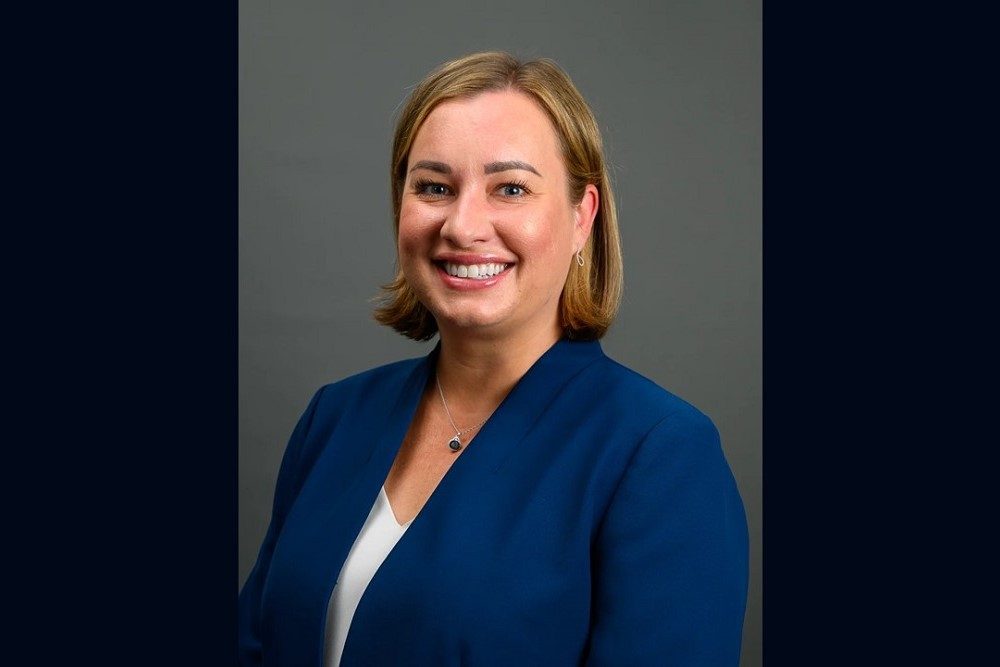
In a major bid to navigate fraught global trade relations and hardening supply chain vulnerabilities, the United Soybean Board (USB) on Tuesday named Courtney Knupp—a top White House national security aide—as its next chief executive officer.
Knupp, who currently serves as director of global supply chain at the National Security Council (NSC), was unanimously ratified by the board’s 77 farmer-directors during their July meeting in Indianapolis. Her appointment signals a strategic pivot for the $1 billion U.S. soy industry, which finds itself increasingly on the frontlines of geopolitical competition, shifting trade alliances, and domestic energy transition demands.
She will assume leadership of the organization on Oct. 1.
A White House Trade Veteran at the Helm
The choice of Knupp underscores how deeply American agriculture has become intertwined with national security and global trade policy.
During her tenure at the NSC, Knupp coordinated federal policy aimed at fortifying food supply chains against geopolitical shocks, foreign market restrictions, and extreme weather events. Her resume spans nearly two decades across public policy, trade negotiations, and corporate agribusiness, including stints as a senior policy advisor to the U.S. Secretary of Agriculture, international market development lead at the National Pork Board, and strategic director at the U.S. Soybean Export Council.
“Courtney is the right leader at the right time to advance the work of the Soy Checkoff,” said Brent Gatton, chair of the United Soybean Board. “She brings the strategic vision, deep agricultural understanding, and proven leadership our farmer-leaders set out to find, along with a genuine commitment to increasing return on investment for U.S. soybean farmers.”
For American soybean growers, the stakes could hardly be higher. Soybeans represent one of the United States’ most lucrative agricultural exports, serving as a critical cornerstone for foreign feed, domestic biofuel production, and consumer products. However, escalating trade frictions in Asian markets, shifting tariff landscapes, and intensifying competition from South American producers have squeezed margins for Midwest growers.
Stabilizing an Industry in Flux
Knupp’s arrival comes after months of leadership uncertainty in the soy sector. Lucas Lentsch, who stepped into the role in early 2024, departed abruptly in February following disagreements with board leadership over operational control and management autonomy. Darryl Chatman, the board’s executive vice president of compliance, has served as interim chief executive while directors conducted a nationwide search.
By tapping an insider with direct links to the executive branch and deep roots in international trade, the United Soybean Board is positioning itself to play a far more assertive role on the global stage.
“Soy touches every life, every day, from the food we eat and the feed that powers animal agriculture to fuel and industrial uses,” Knupp said in a statement. “The checkoff exists to deliver value back to the farm gate, and that mission is personal to me. I grew up on our family farm in Iowa, where we still grow soybeans, and it is an honor to work alongside USB’s farmer-leaders.”
From the Farm Belt to the National Security Council
Raised on an Iowa row-crop farm, Knupp holds degrees in agricultural business and international agriculture from Iowa State University. Before entering government service, she worked in commercial roles at agricultural chemical giant BASF and animal health firm Elanco.
As CEO, Knupp will oversee the allocation of hundreds of millions of dollars in mandatory farmer checkoff contributions. Her primary imperative will be expanding export markets in Southeast Asia and Africa, defending domestic market share against alternative proteins and competing oils, and expanding renewable diesel demand across North America.