

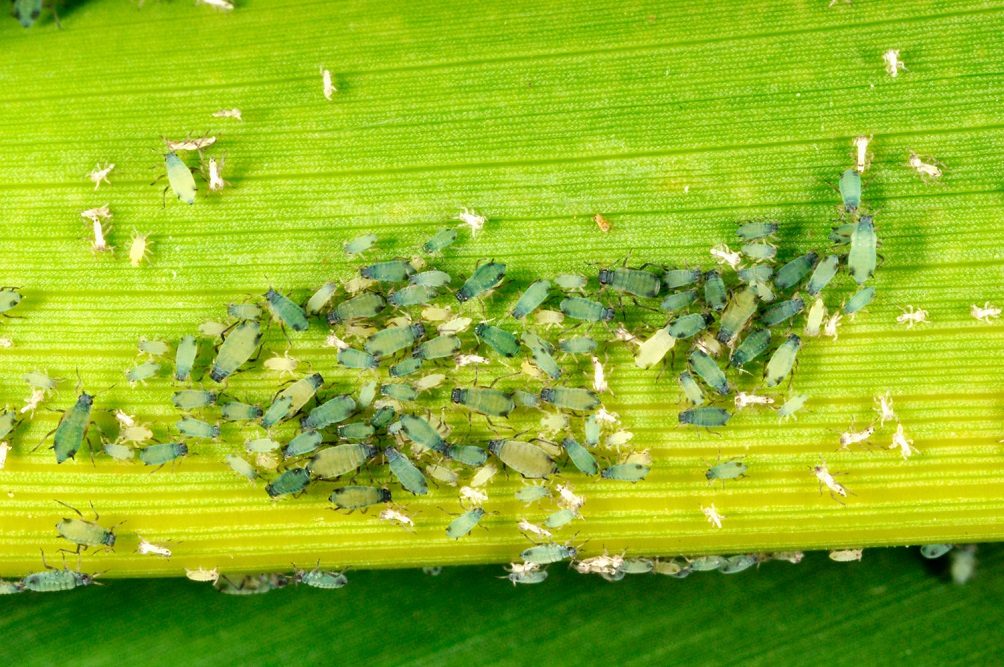
A familiar late-season sight is showing up uncharacteristically early in Midwest cornfields, prompting a rush of aerial applications and raising questions among growers about whether chemical intervention is actually warranted.
Dr. Christian Krupke, professor of entomology at Purdue University, is urging producers to pump the brakes and evaluate economic thresholds before tank-mixing insecticides with their late-season fungicide passes. While corn leaf aphid (CLA) populations are typically harmless scavengers arriving in September and October as crops senesce, recent mid-summer sightings across Indiana and the broader Midwest have caught farmers off guard.
According to Krupke, these recent infestations consist of a mix of winged dispersers and wingless aphids appearing in spotty, small groups of fewer than 20 individuals.
“Corn leaf aphid (CLA) is typically an occasional presence in cornfields within the Midwest,” Krupke explains. “They are a common sight late in season, in September and October, when corn is starting to senesce and they can’t have much impact on yields since corn plants are effectively ‘shutting down’ at this time in terms of photosynthesis, they are not a pest of concern at that time.”
Assessing the Real Threat: Tassels and Timing
The real danger with corn leaf aphids surfaces only when astronomical populations produce massive amounts of sticky honeydew capable of gumming up tassels, effectively blocking pollen shed and reducing ear fertilization. However, Krupke notes that reaching this level of economic damage is exceptionally rare in the region.
“The pest threat occurs when very large infestations produce sufficient honeydew to interfere with pollination — gumming up tassels and corn so that pollen cannot disperse and fertilize developing ears,” Krupke states. “I have personally never seen (or even heard of) an infestation of this severity, but I am sure it’s happened. At this point, much, but not all of the corn in the state is past this point in maturity.”
With aerial applicators active across the countryside, Krupke emphasizes that the vast majority of Indiana corn has already cleared the critical pollination window, rendering post-pollination insecticide applications entirely unnecessary.
“There are no aphid threshold guidelines after pollination, for obvious reasons; by this time, the fertilization story is written and aphids won’t be a factor in determining yields,” Krupke adds. Furthermore, he notes that most local corn has avoided severe drought stress—a key environmental multiplier that typically drives aphid damage higher.
Purdue Management Guidelines: When to Treat (and When to Wait)
If you are scouting fields that are still approaching or currently undergoing pollination, Purdue Extension outlines specific protocols to determine if treatment is justified:
1. Prior to Tasseling
-
Scouting Method: Randomly select 4 nonconsecutive plants in 5 areas of the field (taking 10 to 15 paces between each plant). Pull the whorl upward and out, unroll it, and count the aphids.
-
Calculation: Total the aphids found across all 20 whorls to find the average per plant.
-
Threshold: 15 aphids per plant whorl, observed 3 weeks before tasseling and only when plants are experiencing active drought stress.
2. During Pollen Shed
-
Scouting Method: Examine 20 consecutive plants in 5 separate areas of the field, checking specifically for aphids and honeydew accumulation on the tassels.
-
Calculation: Calculate the percentage of plants showing both aphids and honeydew, alongside checking the status of pollen shed and ear fertilization.
-
Threshold: 50% of tassels covered prior to 50% pollination and plants must be under drought stress.
Let Nature Do the Heavy Lifting
Before investing in pyrethroids to add to your fungicide tank, Krupke reminds growers that flare-ups of this nature frequently self-regulate.
“Often natural enemies like ladybird beetles and parasitoids play a large role in regulating these populations and provide another reminder that sometimes these flare ups just need a little bit of time to resolve on their own,” Krupke concludes.
Producers are encouraged to scout their specific fields rather than treating out of reflex, ensuring that management decisions are driven by data rather than calendar dates.
CLICK HERE for the original report written by Dr. Christian Krupke.