

While overall agricultural confined space incidents dropped slightly nationwide in 2025, the toll on farm families and workers remains a stark reminder of the deadly risks hidden inside everyday agricultural structures.
According to the newly released 2025 Summary of U.S. Agricultural Confined Space-related Injuries and Fatalities by Purdue University’s Agricultural Safety and Health Program, the agricultural sector documented 48 cases last year, including 22 fatal and 26 non-fatal incidents.
While this represents a 5.9% decrease from 2024 and sits well below the 10-year average of approximately 60 cases, safety experts emphasize that complacency is not an option. Indiana and neighboring Midwestern states continue to shoulder a heavy burden in these preventable tragedies.
Indiana and the Regional Impact
The 2025 report identified Indiana with 6 total confined space-related cases, placing the state third nationally behind Minnesota (8) and Colorado (7). Furthermore, Indiana tied with Minnesota for the most grain-entrapment cases in the country with 5 each, followed by Illinois with 3.
Historically, Indiana holds the second-highest cumulative number of documented cases in the nation at 251, trailing only Iowa. However, experts note that Indiana’s numbers reflect not just local risk, but a uniquely proactive 40-year surveillance infrastructure built to capture these incidents.
Dr. Bill Field, Professor of Agricultural and Biological Engineering at Purdue University, points out that the sheer concentration of incidents in the region is hard to ignore.
“OSHA Regions 5 and 7 continue to account for approximately 67.7% of all documented agricultural confined space-related incidents,” Field notes. “Indiana continues to have the highest cumulative number of documented grain entrapment cases. Considering total grain production and storage capacity, states like Iowa, Illinois, and Minnesota ought to have a significantly greater number, but Indiana has maintained a more aggressive surveillance program for this type of incident for over 40 years.”
A Changing Landscape of Risk
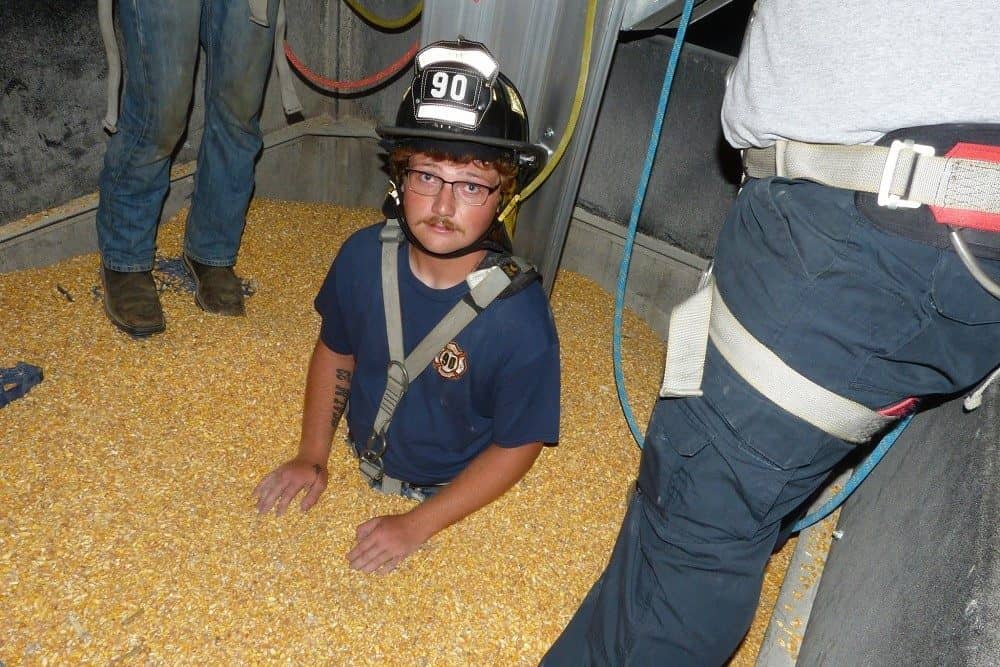
The 2025 data highlights that while grain entrapments remain a primary threat—accounting for 21 cases nationwide—confined space dangers extend far beyond the grain bin.
The data cataloged a dangerous mix of hazards:
-
10 asphyxiations due to oxygen-deficient or toxic environments.
-
8 equipment entanglements involving in-floor and sweep augers.
-
7 falls into or from grain storage structures.
-
4 livestock waste storage incidents, which tragically resulted in 10 fatalities, including a single multi-victim disaster in Colorado where six workers died trying to rescue each other.
Dr. Field emphasizes that the persistence of these numbers points to systemic gaps in safety culture and training, particularly regarding non-grain hazards like manure pits and tower silos.
“A review of the data notes a decline in grain-related incidents, but continued stagnation in overall frequency of all incidents involving confined spaces in agricultural workplaces,” Field says. “We are not able to identify all cases that potentially occur due to lack of reporting requirements and dependency on local media reports.”
The Rising Cost of Negligence
Beyond the devastating emotional toll on rural communities, the financial and legal consequences for agricultural employers failing to secure workplaces are skyrocketing.
Historically handled through modest insurance policies or community support, fatal and injury-related incidents are now driving massive civil litigation. While traditional OSHA fines for safety violations often hover between $50,000 and $100,000, recent civil lawsuits involving grain bins and livestock facilities have resulted in jaw-dropping $10 million to $17 million legal settlements. In at least two recent cases, prosecutors weighed criminal charges against negligent employers.
Resources for a Safer Rural Community
Purdue’s Agricultural Safety and Health Program continues to urge producers, educators, and first responders to utilize its extensive library of free safety tools to reverse these trends.
-
Education & Training: Resources like Against the Grain (aimed at youth workers ages 16–21) and first-responder rescue guides are available as free downloads at www.agconfinedspaces.org.
-
Youth Safety: Farm safety modules, including new lessons on bull safety, can be accessed at www.agsafety4youth.info.
“Every little bit helps increase awareness, and hopefully reduces the frequency and severity of these events,” Field urges. “Feel free to utilize this report in your efforts to promote safer agricultural workplaces. We need all the help we can get.”