

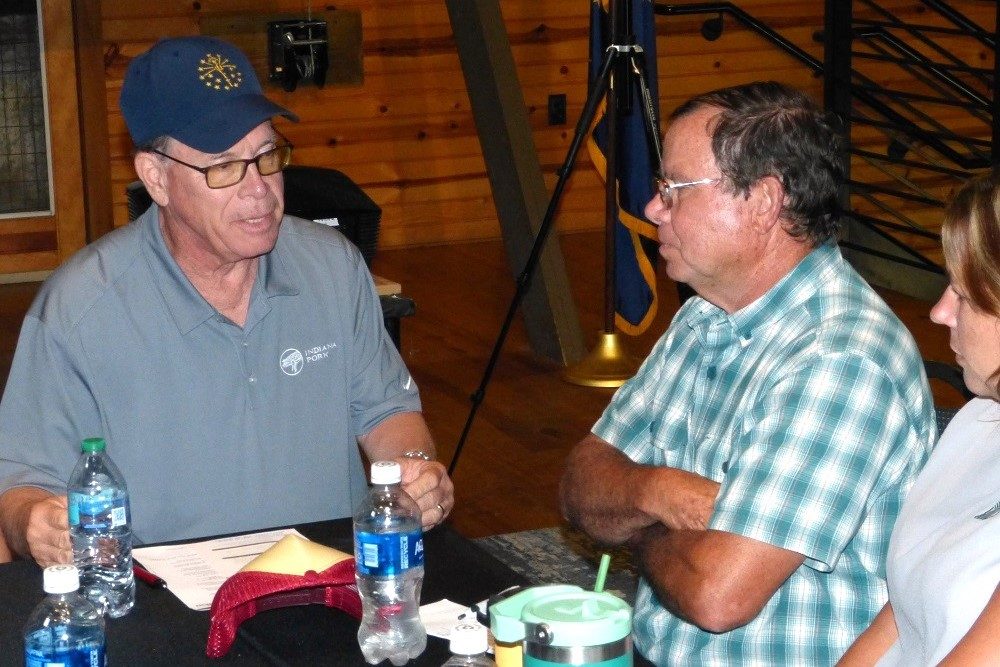
Indiana agriculture faces a high-stakes crossroads. From the constant shadow of transboundary animal diseases to a persistent global trade imbalance, the state’s agricultural leaders are sounding the alarm. On Opening Day of the 2026 Indiana State Fair, those mounting pressures took center stage inside the Normandy Barn as a coalition of farm organizations and agricultural leaders pressed Gov. Mike Braun (R-IN) for decisive action.
At the forefront of the discussion was a critical infrastructure need: a massive investment to modernize Indiana’s aging veterinary diagnostic capabilities.
Modernizing for Modern Threats
Representatives from the Indiana Pork Producers Association, Indiana State Poultry Association, and the Indiana State Board of Animal Health (BOAH) are delivering a clear message to the Governor and state lawmakers. They are pushing for a $120 million investment to construct a brand-new Animal Disease Diagnostic Laboratory (ADDL) at Purdue University’s campus in West Lafayette, alongside crucial upgrades to the state’s secondary laboratory facility in Dubois County.
Ag leaders warned that the state’s current infrastructure is falling behind the curve when it comes to combating rapidly evolving biological threats. Governor Braun acknowledged the urgency of the request.
“Most facilities are 30 to 40 years old, and if you want to get all the new diagnostic tools and so forth, they probably have a valid request,” said Gov. Braun.
With foreign animal diseases threatening livestock sectors nationwide, Braun emphasized that state-of-the-art diagnostic power is no longer optional—it is an absolute economic necessity for Hoosier producers.
“And more, it’s shocking the amount that it does cost to be kind of up to snuff, the latest and greatest,” Braun said. “But if we don’t have that at the top of its game with all the things you’re dealing with now from avian flu on the poultry side, and screwworm that’s scaring people in the cattle business, that’s kind of encroaching. So, you got to make sure that you can stay on top of it whenever there’s an issue.”
Prying Open Global Markets
Beyond animal health infrastructure, the roundtable discussion pivoted to the macroeconomics facing the farm gate, specifically the uphill battle of securing international trade partnerships. Farmers expressed deep frustration over closed foreign markets and structural trade deficits that put domestic producers at a disadvantage.
Addressing the trade landscape, Braun noted that breaking down international barriers requires persistent, aggressive negotiation.
“A lot of talk about finding more markets. Well, that’s something other countries, you know, were dependent on,” said Braun. “They don’t want to open up their markets. We need to keep prying because it’s been an imbalanced relationship. Our trade deficit is about a trillion dollars a year, and in almost every category of agriculture, you know, we’re selling less abroad than what gets sold into our market. So, I think the current administration is working on it.”
A Unified Front at the Statehouse
The high-profile roundtable drew heavy hitters from across the agricultural landscape. In addition to livestock and animal health representatives, the morning strategy session included leaders from the Indiana Corn Growers Association, Indiana Soybean Alliance, Indiana Farm Bureau, Agribusiness Council of Indiana, AgriNovus Indiana, and the Indiana State Department of Agriculture.
As state lawmakers prepare to head back to the Statehouse to begin shaping the next state budget, Indiana’s agricultural community will be watching closely. For Hoosier farmers navigating tight margins, volatile markets, and biological risks, the upcoming legislative session will test whether shared concerns translate into funded solutions.
CLICK BELOW for Hoosier Ag Today’s radio news report: