

Following a relentless barrage of severe storms, straight-line winds, tornadoes, and catastrophic flooding that began on Tuesday, August 11, federal and state leaders have officially mobilized.
President Trump has approved a Presidential Emergency Declaration for Indiana, unlocking crucial federal resources to support response and recovery operations across 54 impacted counties. For Hoosier farmers grappling with submerged fields, damaged infrastructure, and threatened livestock, this federal action serves as a vital first domino—paving the way for the USDA’s Farm Service Agency (FSA) to roll out targeted agricultural disaster assistance.
Governor Mike Braun, working hand-in-hand with federal officials from the State Emergency Operations Center, emphasized that the multi-agency response is operating at full throttle.
“My heart is with the families and loved ones of the five Hoosiers we have lost and every family whose life has been changed by these storms,” Gov. Braun said. “Our response is fully mobilized, and we will continue putting every available resource behind keeping Hoosiers safe and helping our communities recover.”
Getting the Ball Rolling for FSA Agricultural Relief
While FEMA’s immediate authorization targets emergency protective measures, public safety, and infrastructure support—primarily funded at 75% federal backing—the Presidential Emergency Declaration is the critical prerequisite for agricultural relief.
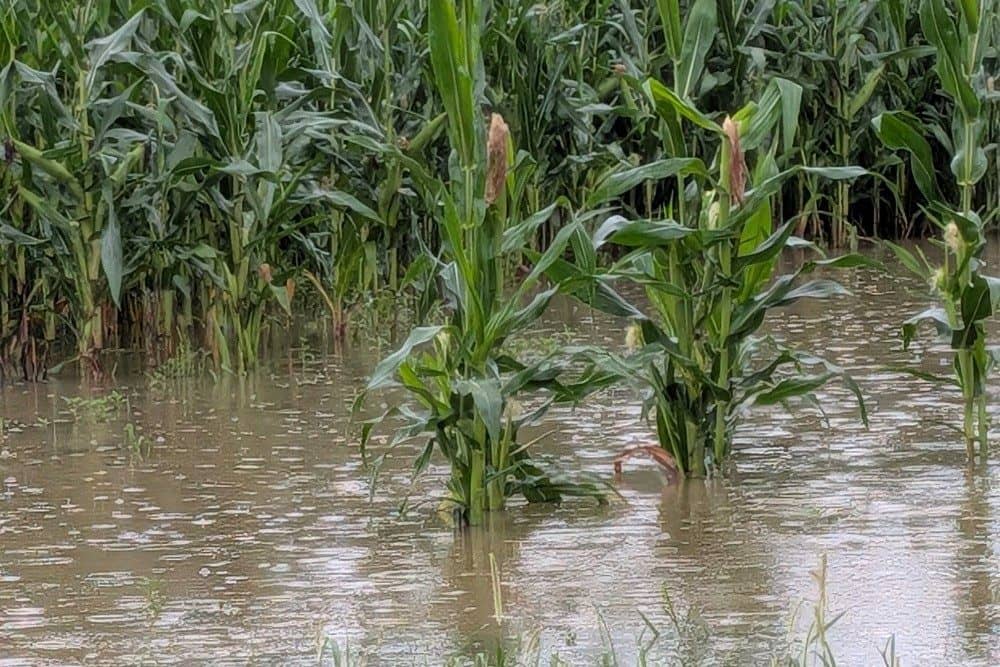
With the federal emergency framework now locked in place, the path is cleared for the USDA Farm Service Agency (FSA) in Indiana to initiate damage assessments and deploy critical safety-net programs for rural communities. For producers across hard-hit northern and central pockets of the state—where standing water has drowned corn and soybean acres and threatened livestock operations—this administrative milestone gets the ball rolling on several essential fronts:
-
Emergency Loans & Loss Assistance: FSA disaster programs, such as the Emergency Loan Program and the Noninsured Crop Disaster Assistance Program (NAP), rely on official federal disaster designations to fast-track low-interest emergency loans and financial relief for crop and pasture losses.
-
Livestock Indemnity Programs: Livestock producers in heavily flooded and storm-impacted counties can look toward FSA frameworks to help offset losses from animal mortality and stress caused by extreme weather conditions.
-
Infrastructure and Land Rehabilitation: Programs like the Emergency Conservation Program (ECP) can soon swing into gear, providing emergency funding and technical assistance to farmers to rehabilitate farmland damaged by wind and overflowing waterways—including clearing debris, fixing fences, and repairing conservation structures.
The Scope of the Crisis
Northern and central Indiana have borne the brunt of the disaster, with persistent flooding causing major disruptions to rural infrastructure, farmsteads, and crop ground. Counties including Lake, LaPorte, Elkhart, St. Joseph, Marshall, Fulton, Cass, Miami, Howard, Tipton, and Hamilton (among more than 50 others named in the declaration) have experienced severe agricultural strain.
Statewide power outages peaked at over 300,000 before dropping to roughly 160,000, with lingering disruptions heavily concentrated in industrial and rural pockets of Lake County. Meanwhile, state assets—including 72 Indiana National Guard personnel and 48 Department of Natural Resources officers—remain deployed to assist local first responders with ongoing water rescues, evacuations, and welfare checks.
What Farmers Should Do Next
As floodwaters slowly recede in southeastern and central regions and recovery planning begins, agricultural extension offices and local officials urge producers to take immediate steps:
-
Document Everything: Take clear, timestamped photographs and videos of flooded fields, washed-out access roads, structural damages to barns and bins, and any livestock losses.
-
Contact Your Local FSA Office: Reach out to your county USDA-FSA office to report damages immediately. Timely reporting is essential for triggering localized disaster loss thresholds and ensuring you are first in line as assistance packages open up.
-
Prioritize Safety: Refrain from driving equipment through standing water or compromised rural bridges until local authorities clear them for safe passage.