

Storms and heavy rainfall across much of Indiana have taken a toll on Hoosiers and Hoosier farm fields. In a Channel Seed growing season update, Eric Wornhoff, Sales Agronomist covering west-central Indiana, says affected fields in his area were mostly having a very good season.
“But overall if we had to do a grading scale, we started at about an A to A- right out of the gate, and then as we moved through the season here of course, with better than two feet of rain in some areas since we’ve planted, we’ve seen some attrition of the crop for sure,” he explained.
The problem has been rain events bringing from three to six inches in a single event, and now corn fields that may look good from the road have some real problems when you go further in.
“When you dive in 100 to 120 rows into these corn fields and you start peeling back ears we are seeing some tip back, and it doesn’t matter if it’s 105-day corn or 117-day corn,” he told HAT. “But what we’ve seen is with extra water, the micronutrients, your sulphur’s, your zinc’s, your boron’s and things like that, they have really leached away with all the rain and we’re starting to see some nitrogen deficiency as well.”
Tar spot in corn is hit or miss right now, and Wornhoff says there is plenty of gray leaf spot, mainly in the lower half of the canopy.
“There’s very little on the ear leaf and above to the tassel,” he said. “Most guys went out aggressively and started spraying early, which we recommended, just to stay ahead of the prevent versus trying to cure.”
Phytophthora and sudden death syndrome in soybeans are now showing up, and he expects those to be widespread diseases in poorly drained fields. But indications are soybeans could finish the season strong in fields that didn’t sustain critical injury.
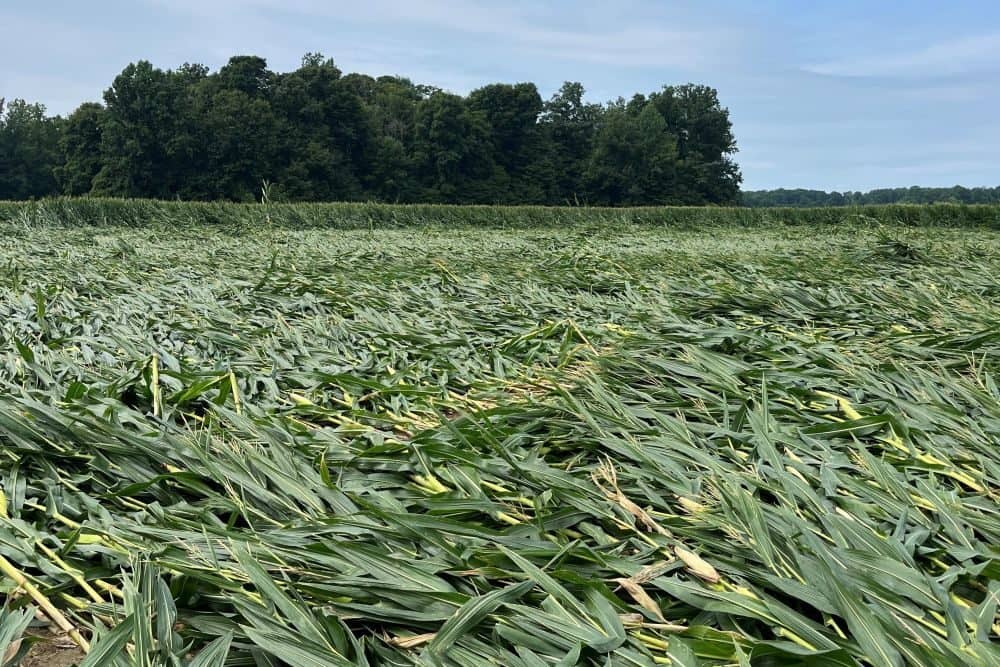
Wornhoff says thousands of acres of corn were hit by hail twice in the Attica and Williamsport area, and other fields both north and south have corn blown over by wind and hail events. Channel Seed is already telling farmers to get a fast start on that corn harvest.
“We believe with all the nutrient loss that we’ve had with the extra water that we’ve had to leach a lot of products away and we need to be shelling corn early. It is not going to hold itself together like it normally has the last several years.”
For much more with Eric Wornoff, hear the full interview here: