


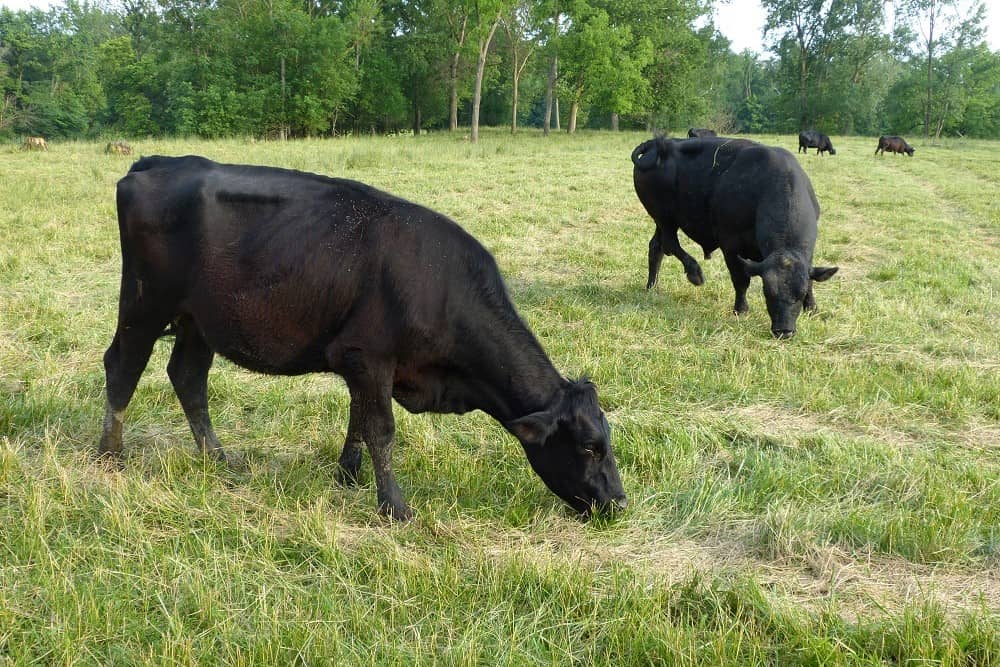
With the nation’s beef herd sitting at its lowest level in roughly 75 years, the U.S. Department of Agriculture is launching a broad new effort designed to put more cattle back on the nation’s pastures — and give the ranchers raising them more control over how those cattle move through the beef supply chain.
Agriculture Secretary Brooke Rollins announced the Ranchers First Initiative Aug. 31, describing it as a sweeping package of actions aimed at rebuilding what USDA calls the “Great American Beef Herd.”
The initiative comes as cattle producers face a complicated market. Tight supplies have pushed cattle prices sharply higher, creating opportunities for producers who have cattle to sell while simultaneously making herd expansion more expensive. At the same time, consumers are paying historically high prices for beef and the nation’s processing system remains dominated by a handful of major companies.
USDA’s new plan takes aim at both sides of that equation.
“Until President Trump took office, America’s ranchers were treated as a problem with policy geared toward their eventual extinction,” Rollins said. “The consequences were devastating: a war on beef, a cattle herd at a 75-year low, and the loss of tens of thousands of family operations.”
“President Trump promised to put the American ranchers first, and the Ranchers First Initiative delivers on that promise,” she said.
For cattle producers, however, the significance of the initiative will ultimately come down to whether the new policies can translate into something tangible on the farm and ranch: more financial confidence to retain females, more places to market cattle, greater processing competition and a stronger path for the next generation to enter the business.
A new incentive to keep heifers
One of the most significant pieces of the announcement is a new risk-management tool designed specifically around the decision every expanding cow-calf operation must make: sell the heifer or keep her for breeding.
USDA plans to create the Beef Retention and National Development (BRAND) endorsement for Livestock Risk Protection.
The endorsement would allow producers to insure the economic value of retaining a heifer for breeding for two years.
Under the proposed approach, the policy would establish a protected value based on the heifer’s expected slaughter value when the policy is enrolled. If the projected or realized slaughter value later exceeds the economic value of keeping that animal as breeding stock, the policy would provide coverage for the difference.
That could be an important tool in a cattle market where producers face an unusually difficult economic decision.
When finished cattle and replacement heifers command strong prices, retaining females means giving up an immediate source of revenue. Producers are effectively betting that keeping those animals today will generate more value through calves and herd growth in the years ahead.
The BRAND endorsement is intended to reduce some of that risk.
For an industry desperately trying to rebuild its cow herd, that matters.
Every heifer retained today represents a potential increase in the nation’s beef-producing capacity tomorrow.
More processing power closer to home
USDA is also putting substantial emphasis on one of the most persistent concerns among cattle producers: access to processing capacity.
The agency plans to establish a Strengthening Processing for U.S. Ranchers Guaranteed Loan Program, building on the existing SPUR initiative that supports small and regional beef slaughter facilities.
The new loan program could help regional processors expand their operations, establish processor cooperatives, increase their business footprint and diversify the animal proteins they handle.
USDA also plans to establish a Regional Processor Continuity Effort designed to strengthen the resilience of smaller processing businesses and protect regional processing capacity.
The timing is significant.
USDA says recent processing closure announcements mean nearly 20% of beef processing capacity will be available as the nation’s cattle herd grows.
The department sees that as an opportunity to shift more processing capacity toward American-owned independent processors, small and mid-sized businesses and new cooperatives.
For cattle producers, more processing capacity could mean more than simply another place to send cattle.
A stronger regional processing network could create additional competition for livestock, reduce transportation costs, improve access to slaughter dates and create more opportunities for producers to retain ownership farther down the supply chain.
That could be particularly important for cattle producers selling freezer beef, developing branded beef programs or marketing directly to consumers, restaurants, schools and institutions.
The potential impact is substantial — but it won’t happen automatically.
Building processing infrastructure requires capital, labor, livestock supplies, waste-management systems, food-safety compliance and reliable markets for the finished beef.
The federal government’s willingness to help finance and stabilize those operations could remove one of the biggest barriers facing smaller processors: access to capital.
A potential shift in the beef supply chain
The processing component of Ranchers First also arrives just days after President Donald Trump announced plans to pursue changes that could give farmers and ranchers greater ability to process their own meat.
Trump has criticized the concentration of the U.S. meatpacking industry, arguing that four major companies control too much of the nation’s processing capacity.
That issue has become increasingly important as the cattle herd has contracted.
When fewer cattle are available, access to processing becomes even more consequential. Producers need competition for their animals, while processors need enough cattle to keep plants operating efficiently.
The Ranchers First Initiative does not eliminate the nation’s existing meat-inspection system, nor does it mean every cattle producer will suddenly be able to slaughter and sell beef without federal inspection.
Instead, USDA’s immediate actions point toward expanding and strengthening the regional processing infrastructure that could give producers more alternatives.
That distinction is important.
Economists have questioned whether allowing more on-farm slaughter by itself would be large enough to materially change the national beef market. But a significant expansion of small and mid-sized inspected processors could have a broader impact by creating new marketing outlets and increasing competition at the local and regional level.
For producers, that could be the more meaningful change.
USDA wants the government to buy more American beef
USDA is also targeting demand. The department says it will prioritize federal procurement of locally processed American beef, encouraging purchases by federal and state institutions, including prisons, hospitals and other facilities.
USDA says the goal is to strengthen demand for American-raised beef while increasing domestic sourcing and transparency in government food purchasing.
The potential effect could extend well beyond the ranch gate.
Government institutions represent a substantial, dependable food market. If more of that purchasing is directed toward locally processed, American-raised beef, it could create a steadier customer base for regional processors.
That, in turn, could create additional demand for cattle from nearby producers.
The initiative builds on USDA’s recent Harvest to Hallways effort involving school food, while expanding the scope of agencies that could participate in domestic beef purchasing.
For cattle producers, that creates the possibility of a more connected regional system: local cattle moving to local processors, with locally processed beef moving into institutional markets.
Bringing a new generation into the cattle business
USDA is also looking beyond today’s cattle market.
The department says new and beginning farmers and ranchers will receive expanded support during their first decade of operation. Those producers can access FSA financing for land, livestock and equipment, conservation and grazing assistance through NRCS, livestock risk-management programs and state-level support.
USDA plans to build on those efforts by establishing a new initiative focused on Beginning and Veteran Farmers and Ranchers Affairs.
The department also says it will work with the Department of War and Department of Veterans Affairs to use programs such as SkillBridge to help military servicemembers transition into careers in agriculture.
That could prove important for an industry confronting a demographic challenge as significant as its inventory shortage.
Rebuilding the national herd requires more than breeding cows.
It requires people willing and able to own those cows, manage pasture, invest in equipment, withstand market volatility and remain in the business long enough to pass an operation to another generation.
Rebuilding the herd won’t happen overnight
USDA’s announcement comes at a critical moment for American beef producers.
The cattle herd did not fall to a 75-year low because of one policy or one bad year. Drought, high production costs, tight forage supplies, market conditions and long-term economic pressures have all influenced producers’ decisions to reduce cow numbers.
Rebuilding that herd will take time.
And rebuilding it could actually create another challenge for the beef industry: how to add cattle without overwhelming the processing system once supplies begin increasing.
That is why USDA’s simultaneous focus on heifer retention and processing capacity is significant.
If producers receive better tools to retain females and expand their herds, but processing capacity fails to keep pace, bottlenecks could develop.
Conversely, expanding processing infrastructure without enough cattle could leave plants struggling to operate profitably.
The success of the Ranchers First Initiative may depend on whether those pieces can grow together.
What it could mean for Indiana cattle producers
For cattle producers in Indiana and across the Midwest, the most important part of the initiative may ultimately be its emphasis on regional beef infrastructure.
Indiana has thousands of cattle operations, many of which are relatively small compared with the nation’s largest commercial ranches and feedlots.
More regional processing options could give those producers additional ways to market cattle, particularly those pursuing direct-to-consumer or value-added beef businesses.
It could also help strengthen the economic connection between Indiana’s cattle producers, processors, restaurants, schools and consumers.
The new heifer-retention risk tool could be equally important for producers looking to rebuild cow numbers.
High replacement-animal values can make herd expansion a difficult proposition. A risk-management product specifically designed around retaining breeding heifers could give some producers greater confidence to make that investment.
And if USDA’s federal procurement strategy succeeds in creating additional demand for locally processed American beef, regional processors could have another reason to expand — potentially creating more competition for cattle in local markets.
The stakes are bigger than cattle prices
The Ranchers First Initiative is ultimately about more than rebuilding a number on a USDA cattle inventory report.
It is about who controls the beef supply chain.
For decades, cattle producers have largely operated at the front end of a system in which processing is concentrated among a relatively small number of large companies.
USDA is now signaling that it wants to strengthen the other end of that equation — the rancher, the regional processor and the next generation of producers.
“President Trump will make certain the men and women who raise our cattle can hand their operations to the next generation, and that American families can put safe, high-quality, American-raised beef on the table,” Rollins said.
Whether the Ranchers First Initiative can accomplish that goal remains to be seen.
The cattle industry cannot rebuild overnight. Neither can a regional processing network. And federal programs alone cannot overcome every economic challenge facing America’s ranchers.
But at a time when the nation’s beef herd has reached a historic low, USDA is putting a new set of tools on the table.
For cattle producers, the opportunity could be significant: keep more heifers, manage the risk of herd expansion, access more processing options and potentially capture more value from cattle before they leave the farm or ranch.
The question now is whether those tools will be strong enough — and arrive quickly enough — to help American ranchers rebuild the nation’s beef herd while reshaping who benefits from the beef supply chain.