

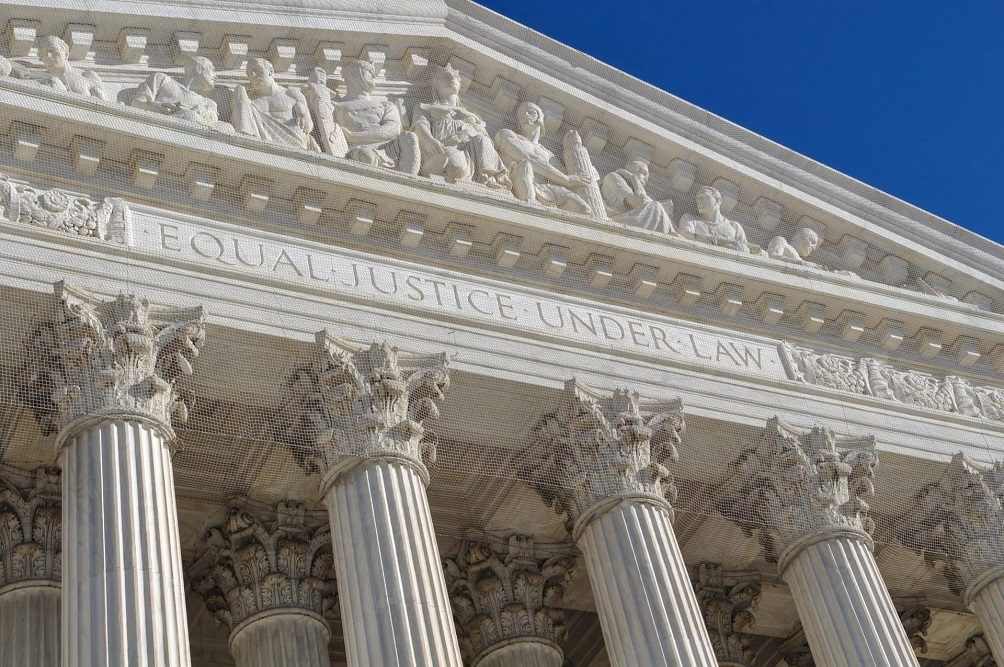
The U.S. Supreme Court is set to hear arguments Monday in a closely watched case that could reshape pesticide litigation nationwide, as justices weigh whether federal law shields manufacturers of Roundup from state-based failure-to-warn claims.
At the center of Monsanto Company v. Durnell is John Durnell, a Missouri man who won a $1.25 million jury verdict after alleging that exposure to Roundup caused his non-Hodgkin’s lymphoma and that the product’s maker failed to adequately warn users of potential cancer risks. The herbicide’s manufacturer, now owned by Bayer, is asking the court to overturn that award, arguing that federal pesticide law preempts such state claims.
The dispute hinges on the scope of the Federal Insecticide, Fungicide, and Rodenticide Act, which governs pesticide labeling and bars states from imposing requirements “in addition to or different from” federal standards. Bayer contends that because the Environmental Protection Agency has repeatedly concluded that glyphosate—the active ingredient in Roundup—is unlikely to cause cancer and has not required a warning label, state juries cannot second-guess that determination.
For farmers, glyphosate has become a cornerstone of modern food production, widely used to control weeds efficiently without damaging crops. Its effectiveness has helped support high yields and reduced the need for more labor-intensive or environmentally disruptive tillage practices, contributing billions of dollars in annual economic benefits to U.S. agriculture. Growers and industry groups warn that limits on its use could raise production costs and complicate efforts to maintain a stable food supply.
Lawyers for Durnell counter that their claims are consistent with federal law, which also prohibits misleading or inadequate labeling, and argue that juries can find manufacturers liable when warnings fall short of those standards. Lower courts in Missouri agreed, concluding that Bayer had not shown federal regulators would have rejected a cancer warning.
The case arrives amid a broader legal and scientific debate over glyphosate. While U.S. regulators have consistently found the chemical does not pose a public health risk, a 2015 review by the International Agency for Research on Cancer classified it as “probably carcinogenic to humans,” helping spur more than 100,000 lawsuits against Monsanto.
The justices’ decision could resolve a growing divide among federal and state courts over how far federal pesticide law reaches, a split that prompted the high court to take up the case after previously declining to do so. The Trump administration has sided with Bayer, warning that allowing state-level warning requirements could create a patchwork of inconsistent rules.
Beyond the courtroom, the stakes are substantial. Bayer has faced billions of dollars in liability over Roundup claims and recently proposed a multibillion-dollar settlement to address ongoing and future cases. Industry groups say a ruling against the company could chill agricultural innovation, while critics argue it would limit accountability for potential health risks.
A decision is expected by early summer.