


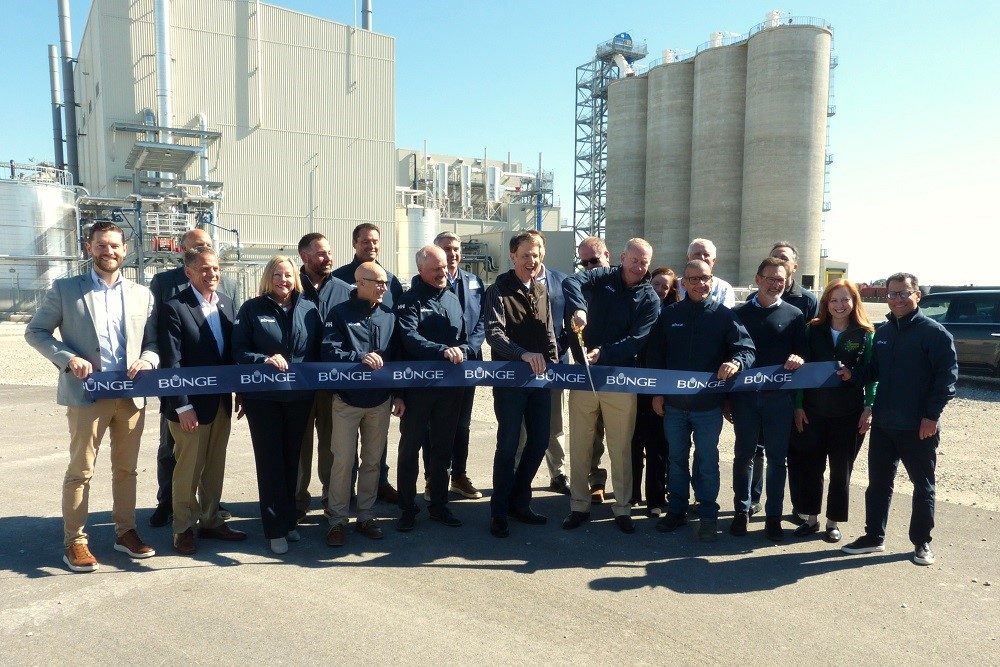
A sprawling new soybean processing facility that opened Thursday in Shelby County is being hailed by agricultural leaders and state officials as a milestone in the growing race to secure domestic supplies of plant-based protein, as global food manufacturers seek new ways to meet rising demand for high-protein ingredients
Global agribusiness company Bunge cut the ribbon on a $550 million soy protein concentrate plant near Morristown, Indiana—about 35 miles southeast of Indianapolis—marking the first soy protein concentrate facility built in the United States in more than four decades and what company officials described as the largest of its kind in the country.
The facility, located alongside Bunge’s existing soybean crush and refining complex in Morristown, is expected to process 4.5 million bushels of soybeans annually and produce high-purity soy protein concentrates destined for a broad range of food and feed products, including processed meats, bakery goods, snacks, beverages, pet food and plant-based foods.
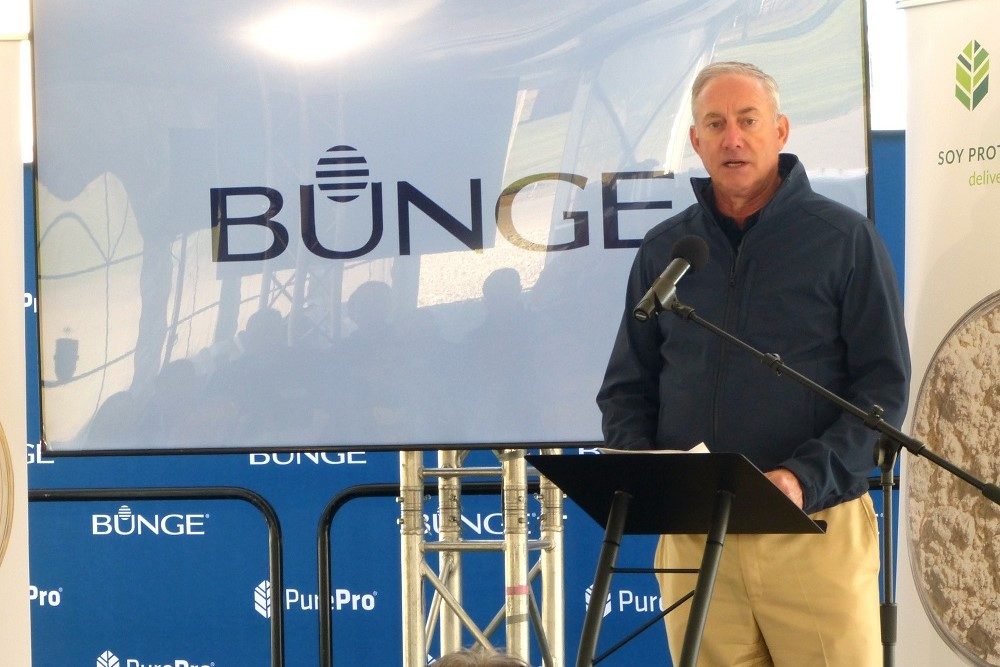
Company executives said the project reflects rising consumer demand for protein-rich foods and increasing pressure on food manufacturers to secure affordable domestic supplies of plant-based ingredients.
The site will manufacture the company’s PurePro soy protein concentrates, including both non-GMO and conventional varieties, in powdered and textured forms. Bunge said the products contain roughly 70 percent protein and 17 percent fiber, designed to help food companies increase protein content while maintaining taste and texture.
The investment also underscores Indiana’s growing role in the global soybean economy. More than 80 percent of the soybeans processed at the Morristown complex are sourced from Indiana farms, according to company figures.
The expansion arrives at a time when food companies are recalibrating supply chains and looking for domestically produced ingredients amid continued volatility in global agricultural markets. While plant-based meat sales have cooled from their pandemic-era surge, demand for high-protein foods across multiple consumer categories remains strong, industry analysts say.
The new facility is fully integrated with Bunge’s adjacent crush and refining operation, a 116-acre complex that began operations in 1996 and now crushes up to 65 million bushels of soybeans annually. Existing products from the site include soybean meal, soybean oil, soybean hulls and soy lecithin.
State and local officials joined Bunge executives and employees for Thursday’s ribbon-cutting ceremony, celebrating what regional leaders see as both a manufacturing win and a long-term investment in Indiana agriculture.
The project created 70 full-time jobs, according to the company, adding to the approximately 130 employees already working at the Morristown operation.
“Obviously, this is a huge step forward for the industry here in the state,” said Ed Ebert, senior director of market development with the Indiana Soybean Alliance. He also worked at Bunge’s adjacent soybean crush and refining plant when it first opened 30 years ago.
Ebert tells Hoosier Ag Today that Bunge’s new soy protein concentrate plant is a huge win for Indiana’s soybean producers.
“It’s a further value-added product for [soybean growers],” he said. “It opens up global markets to them. It opens up domestic markets in terms of being a competitor out here in the soy protein concentrate space. So, from an Indiana soybean farmer perspective, this just opens up another use for their product that we didn’t have before this facility was completed.”
For Indiana soybean growers, Ebert said, the facility represents more than just another processing plant — it signals a new chapter in the state’s agricultural economy, one increasingly tied to value-added exports and specialized food ingredients.
“Here in two weeks, we’re going to have 80 to 90 folks coming in from around the world for the Global Soybean Oil Masters program, sponsored by both Indiana Soybean Alliance and the United States Soybean Export Council,” according to Ebert. “This [facility] is going to be one of the things that we’re going to be promoting to that group in terms of an additional soy product that’s available from U.S. soybean farmers.”
CLICK BELOW for Hoosier Ag Today’s radio news report: