

The Trump administration expects China to commit to purchasing “double-digit billions” of American agricultural products annually in the coming years, U.S. Trade Representative Jamieson Greer said Friday, offering a potentially significant lifeline to American farmers battered by a year of collapsing soybean exports, falling crop prices and soaring production costs.
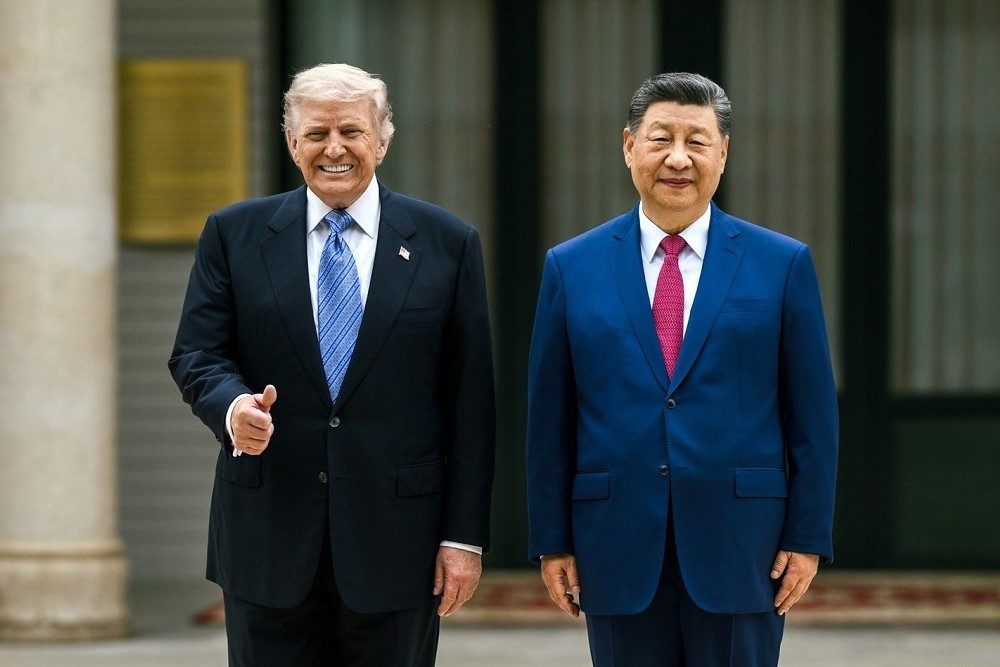
The anticipated agreement emerged as President Trump concluded a high-stakes summit in Beijing with Chinese leader Xi Jinping, aimed at stabilizing an increasingly volatile economic relationship between the world’s two largest economies.
“We expect to also see an agreement for double-digit billion purchases of ags over the next three years, per year, coming out of this visit,” Greer said in an interview with Bloomberg Television, adding that the purchases would encompass far more than soybeans alone.
For many farmers across the Midwest, the prospect of renewed Chinese demand carries unusual weight after last year’s trade war upended one of the most important export relationships in American agriculture.
As tariffs escalated between Washington and Beijing in 2025, China — historically the largest buyer of U.S. soybeans — effectively halted purchases of American soybeans from May through late October, redirecting much of its demand to Brazil and other South American suppliers. The abrupt freeze left U.S. grain elevators overflowing with unsold crops and sent soybean prices tumbling during the heart of harvest season.
By the fall, Chinese buyers had not placed a single major order for newly harvested U.S. soybeans, a sharp departure from normal market patterns in which China routinely accounts for a substantial share of export demand before harvest begins. Analysts and traders warned at the time that the absence of Chinese purchases could push soybean prices below profitable levels for many growers.
The consequences rippled across rural America. Farm groups and commodity analysts said many producers entered 2026 under mounting financial strain, squeezed not only by weak crop prices but also by sharply rising operating expenses. Diesel fuel prices climbed amid global energy disruptions, while fertilizer costs surged, further eroding already thin margins for corn and soybean farmers.
The economic pressure has revived memories of earlier agricultural downturns. Some growers delayed equipment purchases, refinanced operating loans or expanded grain storage capacity in hopes that trade negotiations might eventually reopen Chinese markets.
The new commitments announced during the Beijing summit would build on an existing agreement reached last October for China to purchase 25 million metric tons of U.S. soybeans annually. That arrangement alone is valued at more than $10 billion and has served as a foundation for broader agricultural negotiations.
Trump, speaking this week in a television interview, said “China will buy a lot of our farm products,” while administration officials also touted prospective deals involving aircraft, energy and medical products.
Greer said the administration expects China’s future purchases to span a wider array of agricultural goods, while also easing some non-tariff barriers that have restricted American exports. Chinese authorities have already renewed export licenses for some U.S. beef producers and loosened restrictions affecting certain agricultural imports, administration officials said.
At the center of the negotiations is a newly proposed “Board of Trade,” a formal bilateral mechanism designed to manage economic disputes and oversee tariff reductions on goods deemed outside national security concerns. Greer said the board would focus on “non-sensitive goods” including agricultural products, energy exports, Boeing aircraft and medical devices.
“We’ve always had an ad hoc approach,” Greer said during an appearance on CBS’s “Face the Nation.” “It’s much better to discuss these in a formalized way between our government and their government.”
Administration officials said the board could eventually oversee tariff reductions on roughly $30 billion in trade, though significant tariffs are expected to remain in place. Greer acknowledged that the United States continues to weigh additional trade actions tied to ongoing investigations into Chinese industrial policies and overcapacity concerns.
The summit itself unfolded against a backdrop of persistent geopolitical tensions, including disputes over technology, Taiwan and supply chains. Yet both governments appeared eager to prevent another full-scale rupture in trade relations after the tariff clashes of last year rattled global markets and deepened uncertainty for businesses on both sides of the Pacific.
Even so, questions remain about how fully China will follow through on its new promises. Beijing has previously fallen short of large-scale purchase commitments made during earlier trade negotiations, and analysts note that China has steadily reduced its dependence on U.S. soybeans in recent years as Brazilian production expanded dramatically.
For American farmers, however, even a partial restoration of Chinese demand could provide badly needed relief after a year in which the trade war exposed just how vulnerable the farm economy remains to geopolitical conflict.
U.S. agricultural exports to China fell sharply during the height of the dispute, with soybean shipments bearing much of the damage. By this spring, administration officials were openly framing expanded agricultural sales not only as a commercial objective, but also as a political imperative for rural communities still struggling to recover.