

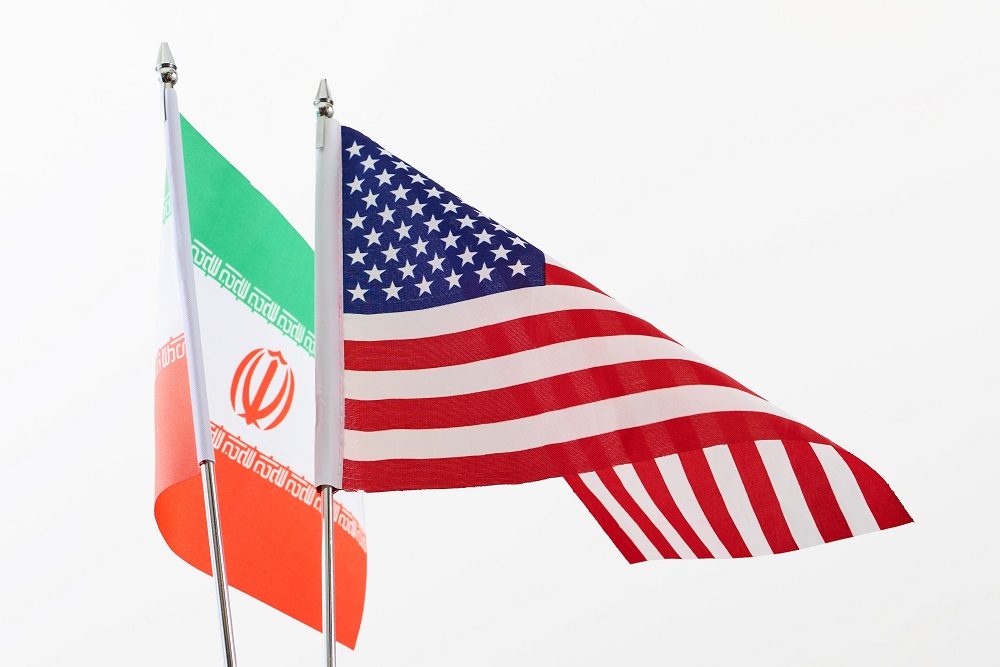
President Donald Trump and Vice President J.D. Vance are promoting a potential diplomatic breakthrough with Iran as an economic opportunity for American farmers, stating that billions of dollars in Iranian assets frozen abroad could eventually be used to purchase U.S. agricultural products. Iranian officials, however, insist no such commitment exists and say Tehran alone will decide how any released funds are spent.
The dispute highlights one of the first major points of contention emerging from a memorandum of understanding signed earlier this month between Washington and Tehran following months of conflict and negotiations aimed at easing tensions between the longtime adversaries.
Speaking after high-level talks in Switzerland, Vance said the Trump administration wants any Iranian assets that are released to be directed toward purchases of American corn, soybeans and wheat. He said the concept was developed in coordination with regional partners and would ensure that any economic relief provided to Iran would also benefit U.S. agriculture.
“If Iranian assets are ever unfrozen, they are going to make American farmers richer and help feed the Iranian people,” Vance said.
Trump reinforced that message this week, stating that funds released under the agreement would be used to purchase food and medical supplies from the United States. In a social media post Tuesday, he said some of Iran’s frozen assets would be released “to our farmers and ranchers” for the purchase of agricultural commodities including corn, wheat and soybeans.
The proposal could provide a new export outlet for American grain producers at a time when farmers continue to face uncertainty in global markets. Iran was once a significant buyer of U.S. agricultural products before diplomatic relations deteriorated following the 1979 Iranian Revolution.
According to the U.S. Department of Agriculture, the United States exported nearly $579 million in agricultural goods to Iran in 1978. Trade largely collapsed after the revolution, though occasional purchases continued during periods of food shortages. Iran imported more than $535 million worth of U.S. wheat during a severe drought in 2008, and purchased a record $318 million in U.S. soybeans in 2018 after Chinese retaliatory tariffs disrupted traditional export markets.
The United States has not exported wheat to Iran since 2012, corn since 2015, or soybeans since 2018.
The Trump administration’s proposal centers on billions of dollars in Iranian assets currently held abroad, including roughly $6 billion reportedly located in Qatar. Under the framework discussed by U.S. officials, those funds could be released and used to finance purchases of American agricultural commodities and other humanitarian goods.
But Iranian officials have publicly rejected the notion that Washington would dictate how the money is spent.
“Iran is the only country who decides what to do with those assets,” Ali Bahreini, Iran’s ambassador to the United Nations in Geneva, told reporters.
Iranian Foreign Ministry spokesman Esmaeil Baqaei similarly said Tehran would use any released assets in whatever manner serves the country’s interests. Central Bank Governor Abdolnasser Hemmati stated that the memorandum contains no requirement that Iran purchase agricultural products from the United States.
At the same time, Iranian officials stopped short of ruling out such purchases entirely. Hemmati said Iran could buy American products if they proved competitive in price and quality compared with supplies from other countries.
The disagreement has fueled debate inside Iran, where hard-line political factions have sharply criticized the possibility of using Iranian funds to purchase American goods. Conservative media outlets aligned with the country’s most hard-line factions argue that routing funds through mechanisms approved by Washington would violate the terms of the agreement and effectively hand economic leverage to the United States.
Others within Iran have defended the idea, noting that the country already imports billions of dollars worth of food annually and arguing that agricultural purchases could help stabilize the broader diplomatic arrangement.
Experts on sanctions policy say significant questions remain about how any transaction would work in practice.
Under previous sanctions regimes, proceeds from Iranian oil sales were often placed in restricted escrow accounts and could only be used for approved humanitarian purchases such as food and medicine. Whether the United States can legally require those funds to be spent exclusively on American agricultural products remains unclear.
For American farmers, however, the prospect of renewed access to a market that has been largely closed for more than a decade represents a potentially significant opportunity. Whether that opportunity materializes may depend less on agricultural demand than on the unresolved diplomatic and legal questions still surrounding the broader U.S.-Iran agreement.