

The push to expand domestic glyphosate production and preserve access to key crop protection tools by the Trump administration received a major boost Thursday when the U.S. Supreme Court ruled that federal law shields Monsanto from state-law claims alleging the company failed to warn users about cancer risks associated with its Roundup herbicide.
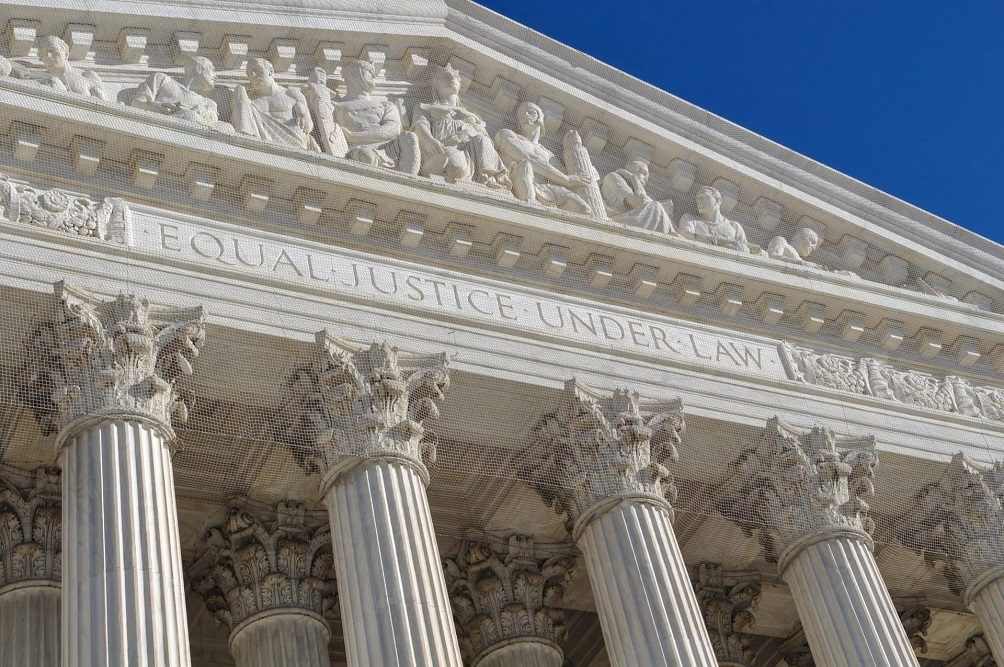
In a 7-2 decision in Monsanto Co. v. Durnell, the court held that the Federal Insecticide, Fungicide, and Rodenticide Act (FIFRA) preempts state lawsuits seeking to impose labeling requirements that differ from those approved by the Environmental Protection Agency (EPA).
Writing for the majority, Justice Brett Kavanaugh said Monsanto could not be held liable under Missouri law for failing to include a cancer warning on Roundup because federal regulators have repeatedly approved the product’s label without such a warning.
The ruling is a significant victory not only for Monsanto and its parent company, Bayer, but also for farm groups that warned an adverse decision could threaten the future availability of glyphosate, the active ingredient in Roundup and one of the most widely used weed-control products in American agriculture.
For many farmers, glyphosate has become an essential component of modern crop production. The herbicide is used extensively in corn, soybean and cotton production to control weeds while reducing the need for repeated tillage operations. Agricultural economists and grower groups have argued that limiting access to glyphosate would increase production costs, reduce yields and force farmers to rely on alternative weed-control methods that are often more expensive and less effective.
The case centered on John Durnell, a Missouri man who alleged that two decades of Roundup use caused him to develop non-Hodgkin’s lymphoma. A Missouri jury awarded Durnell more than $1 million after concluding Monsanto failed to adequately warn users about potential cancer risks. Monsanto appealed, arguing that because the EPA has repeatedly reviewed glyphosate and determined it is not likely to cause cancer, federal law barred states from requiring additional warning language.
The Supreme Court agreed.
“Because Durnell’s state tort claim would impose a pesticide labeling requirement ‘in addition to or different from’ the label required by EPA, FIFRA expressly preempts Durnell’s claim,” Kavanaugh wrote for the court.
The decision resolves a legal dispute that has divided federal and state courts and could dramatically affect thousands of pending lawsuits against Monsanto. Bayer has already spent billions of dollars defending and settling Roundup-related claims and earlier this year proposed a $7.25 billion settlement framework aimed at resolving current and future litigation.
Agricultural organizations welcomed the ruling, saying it reinforces a science-based regulatory system that farmers rely on when making crop protection decisions.
The American Soybean Association, which joined other farm groups in supporting Monsanto before the court, said the decision provides “much-needed clarity” for producers and reaffirms the role of federal regulators in determining pesticide safety and labeling requirements.
“Farmers depend on clear, consistent labeling and a uniform regulatory framework to use pesticides safely and responsibly,” the organization said in a statement. The group added that state-by-state labeling mandates create confusion and could limit access to important crop protection tools.
The ruling arrives at a time when glyphosate has become a flashpoint in both legal and political debates. While the EPA and many international regulatory agencies have repeatedly concluded that glyphosate is unlikely to cause cancer when used as directed, a 2015 assessment by the International Agency for Research on Cancer classified the chemical as “probably carcinogenic to humans.” That determination helped trigger more than 100,000 lawsuits against Monsanto and fueled growing opposition from consumer and environmental groups.
Farm organizations have increasingly argued that the litigation poses a broader threat to agriculture. Industry groups warned that if manufacturers face unlimited liability despite complying with EPA-approved labels, companies could reduce investment in crop protection technologies or remove products from the market altogether.
The Supreme Court’s decision may ease some of those concerns by establishing that EPA-approved pesticide labels carry nationwide legal force and cannot be overridden by state juries. Kavanaugh emphasized that FIFRA’s goal is “uniformity” in pesticide labeling and that allowing states to impose different warning requirements would undermine that objective.
Justices Ketanji Brown Jackson and Neil Gorsuch dissented. Jackson argued that Durnell’s claim mirrored, rather than conflicted with, FIFRA’s requirement that pesticide labels contain adequate warnings and should therefore have been allowed to proceed. She wrote that the majority’s interpretation leaves plaintiffs without recourse and misunderstands the scope of federal pesticide law.
For farmers, however, the practical effect of the ruling could be far-reaching. By reducing legal uncertainty surrounding glyphosate, the decision is expected to preserve access to a weed-control tool that many producers consider indispensable for maintaining yields, managing resistant weeds and controlling production costs.
The ruling also strengthens the EPA’s authority as the primary arbiter of pesticide labeling, reinforcing a regulatory framework that agricultural groups say is critical to ensuring consistent rules for growers across all 50 states.
CLICK HERE to read the Supreme Court’s full decision in Monsanto Co. v. Durnell.