

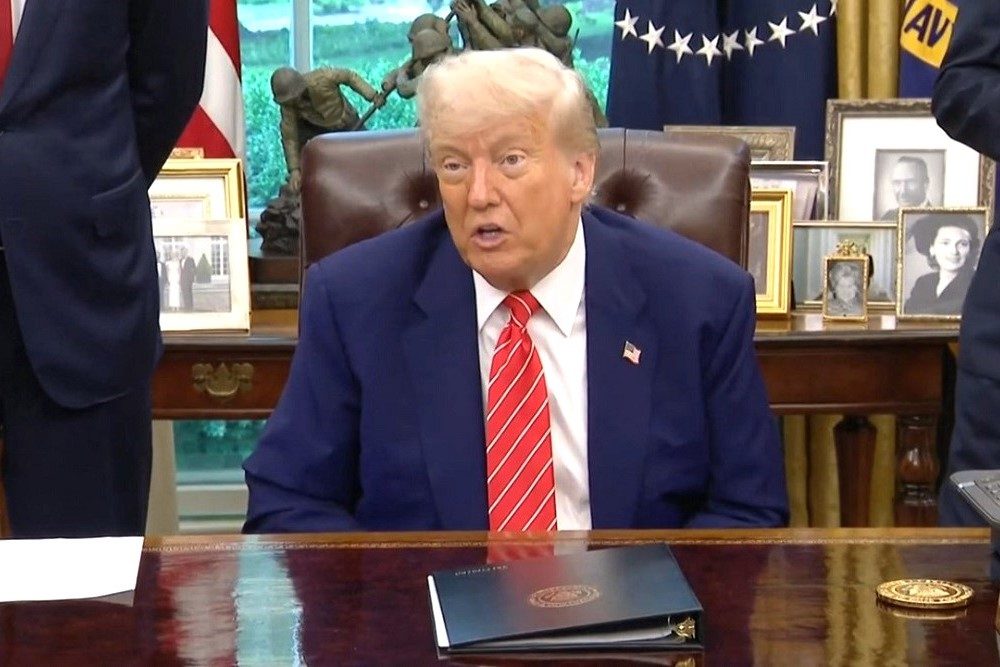
President Trump signed an emergency executive order Monday temporarily lifting import tariffs on phosphate fertilizer from Morocco, pivoting to a major foreign supplier to rescue American farmers reeling from skyrocketing costs and global supply shocks.
The proclamation invokes Section 318(a) of the Tariff Act of 1930, declaring a national emergency regarding the availability of critical agricultural nutrients. The order suspends countervailing and anti-dumping duties on Moroccan phosphate for up to eight months, a move aimed at driving down input costs before farmers begin their heavy fall and winter application cycles.
The decision marks a sharp policy shift, arriving as the agricultural sector faces a severe crunch from the ongoing war with Iran, which has choked off Middle Eastern shipping lanes and closed the critical Strait of Hormuz. With domestic production unable to fulfill U.S. demand, the administration is leaning on Morocco—home to roughly 70 percent of the world’s phosphate reserves—to stabilize the food supply chain.
“Persistent threats to the global fertilizer supply chain, which create rapid price increases and procurement challenges, require the United States to procure phosphate fertilizer from diversified foreign sources,” Trump said in the proclamation.
A Multibillion-Dollar Burden for U.S. Growers
For American growers, the suspension of these duties provides immediate, badly needed financial relief. Phosphate is an indispensable plant nutrient, particularly for traditional row crops. According to data from the U.S. Department of Agriculture, corn is the nation’s largest consumer, using 4.1 billion pounds annually, followed by soybeans at 2.0 billion pounds.
The tariffs on Moroccan imports—originally implemented in March 2021 after petitions from domestic manufacturer The Mosaic Company—have long been a target of farm state complaints. While intended to protect domestic manufacturing, the import barriers severely contracted supply options in a highly consolidated market where Mosaic controls roughly 75 percent of domestic production.
The financial toll of those tariffs on farmers was laid bare in a January 2026 study by the Agricultural and Food Policy Center at Texas A&M University. Researchers found that the countervailing duties inflated the price of diammonium phosphate (DAP), the most common phosphorus fertilizer, by 28.6 percent when levied at their full initial rate.
The Cost of Protectionism: The Texas A&M analysis concluded that the tariffs cost U.S. producers of major crops an estimated $6.9 billion in inflated fertilizer expenses between the 2021 and 2025 growing seasons.
“Input prices generally have been incredibly high and are a major contributing factor to the profitability picture, or lack thereof, for corn farmers right now,” said Jed Bower, an Ohio farmer and president of the National Corn Growers Association. Bower called the executive order “welcome news” that would directly alleviate pressure on tightening farm margins.
Crashing Into a Shipping Crisis
The domestic supply squeeze became untenable this year due to geopolitical conflict. White House economic adviser Kevin Hassett warned in March that the administration was actively scouring the globe for alternative fertilizer sources after the war with Iran abruptly severed imports from the Middle East.
The resulting price spikes left many producers unable to secure basic inputs. A spring survey conducted by the American Farm Bureau Federation revealed a striking statistic: 7 out of 10 American farmers reported they would not be able to afford enough fertilizer for the 2026 crop year.
“Skyrocketing fertilizer costs have contributed to rising expenses for farmers who were already struggling after years of inflation, depressed commodity markets, and high interest rates,” said Zippy Duvall, president of the American Farm Bureau Federation. “The decision to suspend tariffs on critical supplies… are common-sense steps that will bring relief to farmers at a time when they need it most.”
“This is such welcome news for corn farmers,” said Jed Bower, President of the National Corn Growers Association (NCGA). “Fertilizer represents one of the biggest expenses for farms every year, only made worse in recent years by actions of companies looking to further consolidate their control of the market. Input prices generally have been incredibly high and are a major contributing factor to the profitability picture, or lack thereof, for corn farmers right now.”
“Fertilizer is one of the most significant expenses soybean farmers face each year,” said Scott Metzger, President of the American Soybean Association (ASA). “Suspending import taxes on this critical farm resource will improve fertilizer availability and help reduce input costs at a time when farmers begin to plan for the 2027 crop while tackling increasingly challenging financial decisions. U.S. soybean farmers thank President Trump and his administration for recognizing the challenges facing America’s farmers, identifying targeted solutions to defray farm production costs, and taking meaningful action that will strengthen the agricultural economy.”
Balancing Near-Term Relief with Long-Term Supply
While farm groups celebrated the tariff suspension, the administration noted that the measure is a temporary bridge. The executive order gives the Treasury and Commerce departments the mandate to permit duty-free imports for eight months while federal officials monitor the supply emergency.
Over the long term, the White House stated it is continuing to use measures like the Defense Production Act—which Trump invoked in February 2026 to safeguard domestic production of elemental phosphorus—to expand manufacturing capacity at home. However, the proclamation acknowledged that domestic expansions “will take time to increase the supply materially.”
For the next eight months, U.S. agriculture will look across the Atlantic to fill the gap. Though the U.S. share of Moroccan phosphate imports had dwindled to just 2 percent in recent years due to the tariffs—with Peru stepping in as the primary alternative supplier—analysts note that opening the gates to Moroccan supply will ease the dangerous reliance on a single trade partner.
The immediate goal, federal officials emphasized, is ensuring that when fields are prepped this fall, the fertilizer is both available and affordable. Without it, officials warned, diminished crop yields next year could quickly morph a farm-sector emergency into a broader domestic food security crisis.
CLICK HERE to read the Executive Order.