

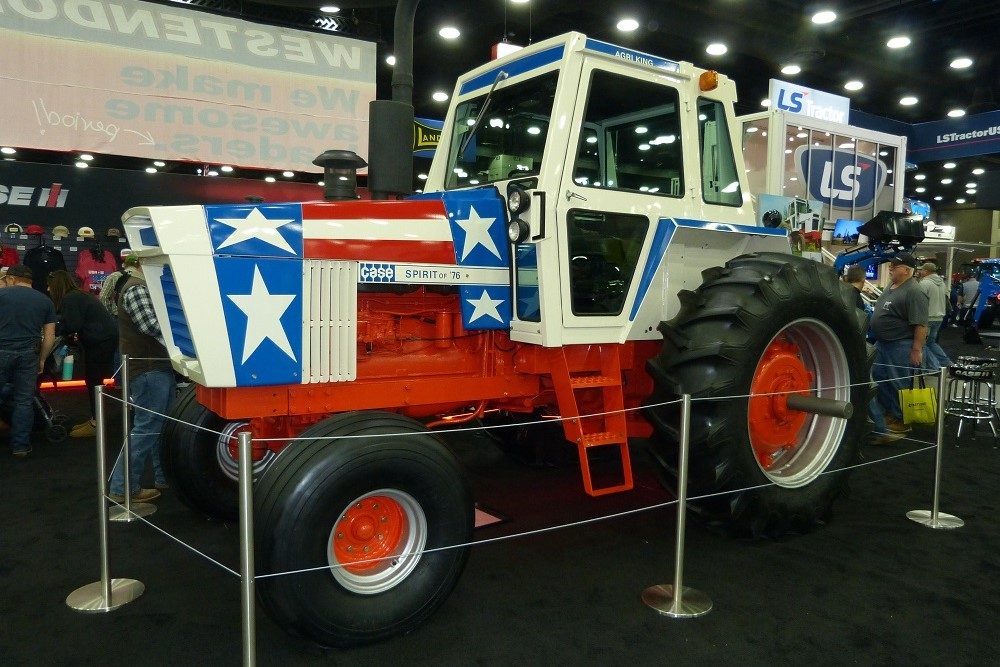
As fireworks prepare to light the skies over America for the nation’s 250th birthday, another symbol of patriotism is once again capturing attention—this one powered not by gunpowder, but by diesel.
Fifty years after a stars-and-stripes tractor rolled out of a factory in Racine, Wisconsin to celebrate the U.S. Bicentennial, its legacy is helping inspire a new generation of machinery that pays tribute not only to the country’s past, but to the American farmers who have helped sustain it since the founding of the Republic.
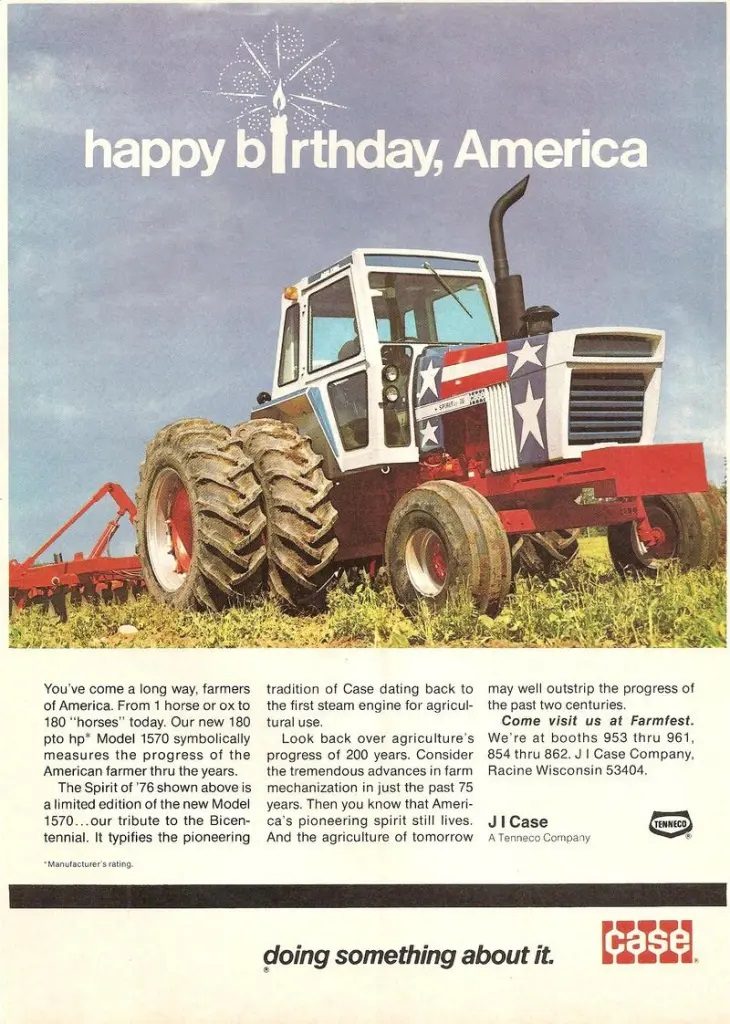
During the Bicentennial celebration of 1976, red, white, and blue seemed to appear on nearly everything. While much of corporate America embraced the patriotic fervor with commemorative consumer products, J.I. Case chose a different canvas. The company transformed its flagship 1570 row-crop tractor into the limited-edition “Spirit of ’76,” creating what would become one of the most recognizable and collectible tractors in agricultural history.
Already the largest two-wheel-drive tractor in the company’s lineup, the 180-horsepower Case 1570 was built for the toughest jobs in the field. But with only about 200 receiving the distinctive Bicentennial paint scheme, the machine became more than a workhorse—it became a rolling tribute to the American farmer and the nation’s agricultural heritage.
“I think one of the things that Case was able to capture was by taking their largest two-wheel-drive tractor and giving it a special, recognizable patriotic theme,” says Jay Barth, high horsepower marketing manager with Case IH. “It just was the perfect fit to appeal to a broad audience, especially those in the agricultural community.”
The Allure of the ‘Agri-King’
To understand why a 50-year-old tractor still commands such reverence requires a look at both engineering and nostalgia. The 1570 “Agri-King” was ahead of its time, featuring a standard rubber-mounted “Comfort Control” cab, air conditioning, and an adjustable swivel seat—luxuries in an era when many farmers still operated in the open elements.
Today, authentic “Spirit of ’76” models are among the most fiercely sought-after prizes in the vintage machinery market, routinely commanding upwards of $50,000 at elite collector auctions like Mecum.
“It was just all around a good product,” Barth reflects on the underlying mechanics of the 70-series tractors. “And when you take something like that and emblazon it with a special treatment as far as it having the stars and stripes patriotic theme, that just makes it all the more special. So, I think those are probably the main reasons why it continues on today.”
For collectors and casual observers alike, the sight of a preserved 1570 evokes a powerful emotional response that transcends modern corporate branding. It represents a era of production that defined a generation.
“It’s immediately recognizable, you know what it stands for, you know why it’s there,” Barth says. “And it kind of beckons back when you look at it from today’s standpoint to a simpler time. A 1570 just kind of speaks to that, albeit that it’s a big machine. It was highly productive.”
A Modern Rebirth: The ‘Heartland Edition’
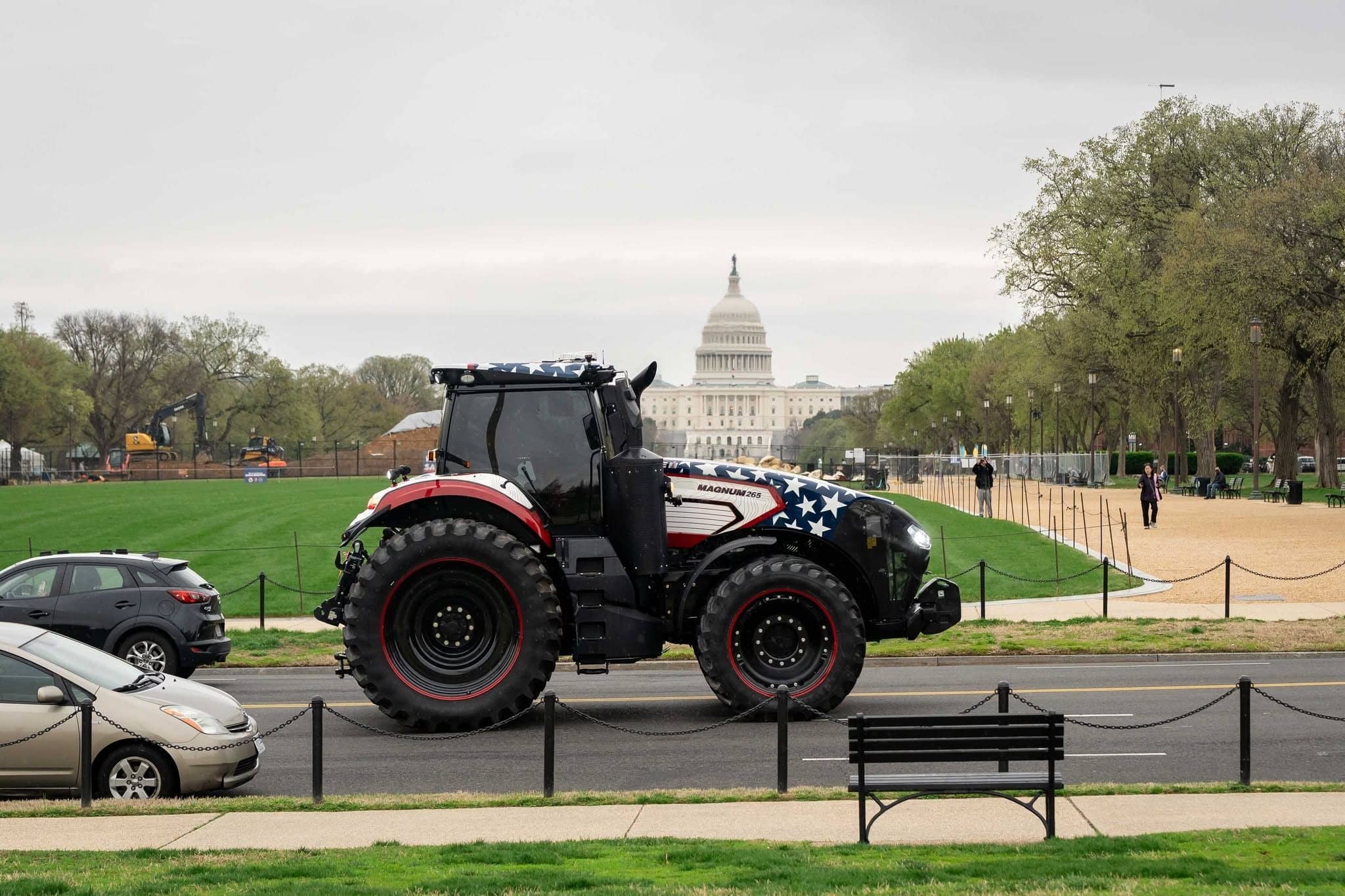
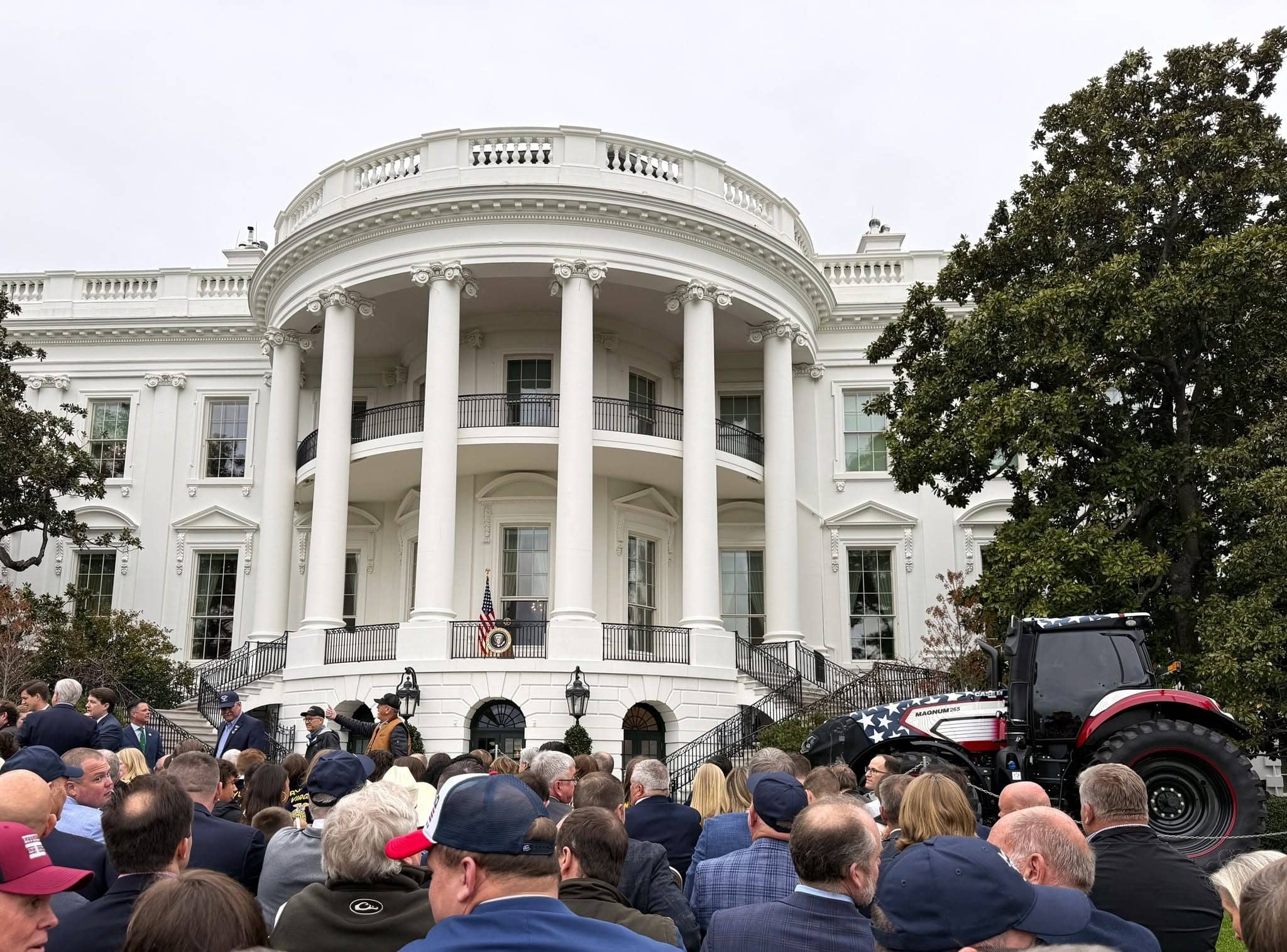
That enduring legacy has directly inspired Case IH’s latest creation as the nation approaches its next historic milestone. At the 60th annual National Farm Machinery Show in Louisville, Kentucky, the company pulled the tarp off its modern successor: the brand-new, one-of-a-kind Magnum 265 “Heartland Edition.”
Adorned with a custom patriotic wrap that bridges past and present, the tractor has already made waves far beyond the farm gate, even traveling to the White House South Lawn for a national Celebration of Agriculture.
According to Barth, the dual eras highlighted by these machines reflect the evolving but unbroken role of the American producer. “I think both tractors looked at and reflected upon the key role that agriculture played in the development of America,” Barth says. “Certainly, the Heartland tractor is a more modern depiction of what agriculture is today… but it still bears on that America is strong and is a key producer for food in the world.”
As agriculture navigates a modern landscape of autonomous field tech and data-driven farming, the Heartland Edition serves as a reminder that the heartbeat of the industry remains tethered to its heritage. The tools change, but the spirit under the hood remains entirely the same.
Legacy in the Modern Day
This Independence Day, as flags ripple above town squares and fireworks illuminate the summer sky, the stars and stripes will once again find their place in America’s farm country—not only on front porches and parade routes, but on a pair of tractors separated by five decades. One celebrates the optimism of the Bicentennial. The other looks toward the nation’s next chapter. Together, they serve as a reminder that while the technology driving American agriculture continues to evolve, its purpose remains remarkably constant: feeding a nation, sustaining rural communities, and carrying forward a legacy that has been woven into the American story since 1776.
CLICK BELOW for Hoosier Ag Today’s radio news story: