

Inside the roaring, high-decibel confines of the Riverview Health Arena in Noblesville, thousands of teenagers dressed in identical, stark-blue corduroy jackets are cheering with an intensity usually reserved for rock concerts.
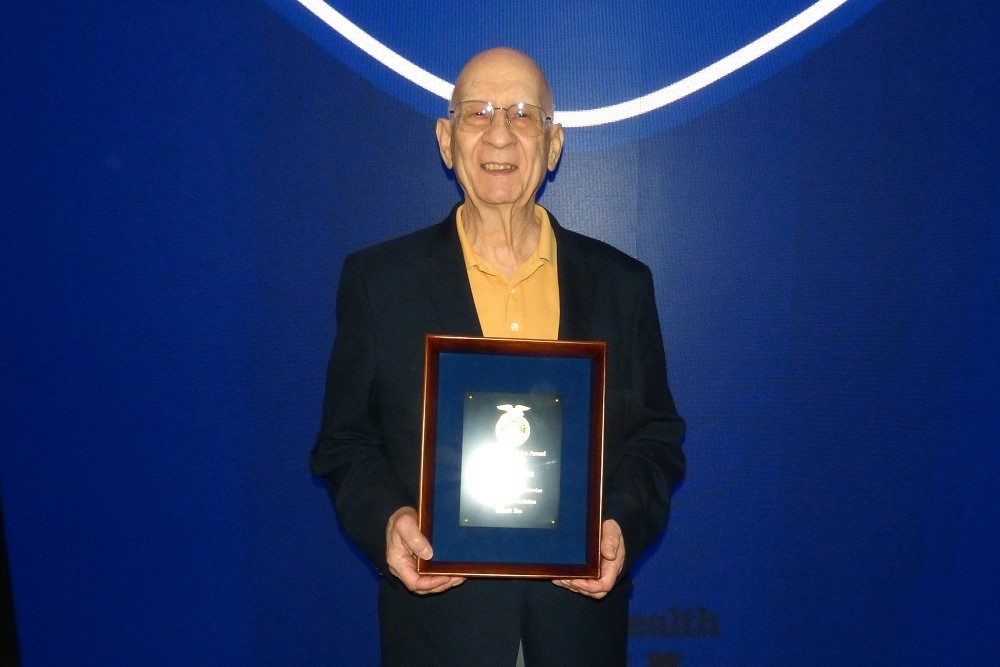
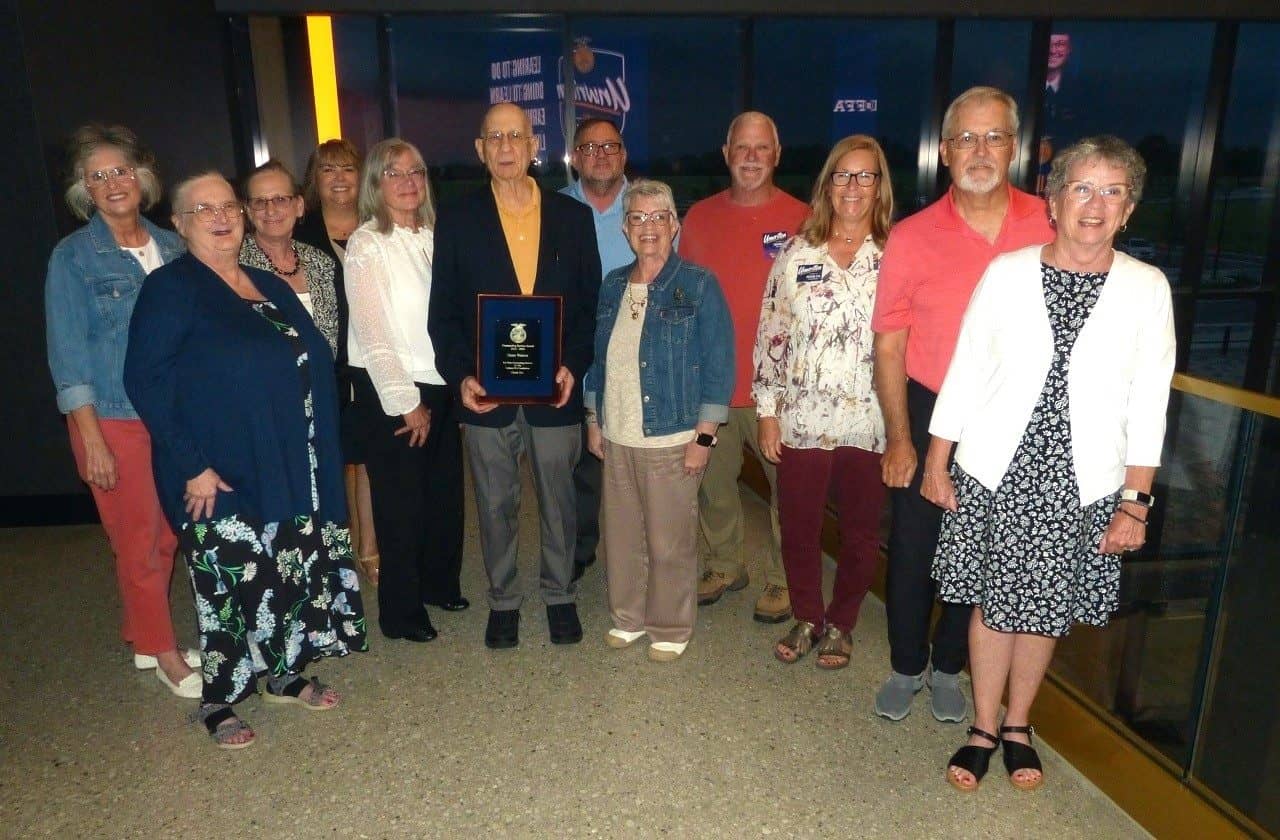
It is the 97th Indiana FFA State Convention, an annual gathering that represents the modern face of American agricultural education. But standing slightly apart from the digital screens and neon lights is Dean Marvin Warren, an 80-something veteran in a crisp suit, holding an Outstanding Service Award from the Indiana FFA Foundation.
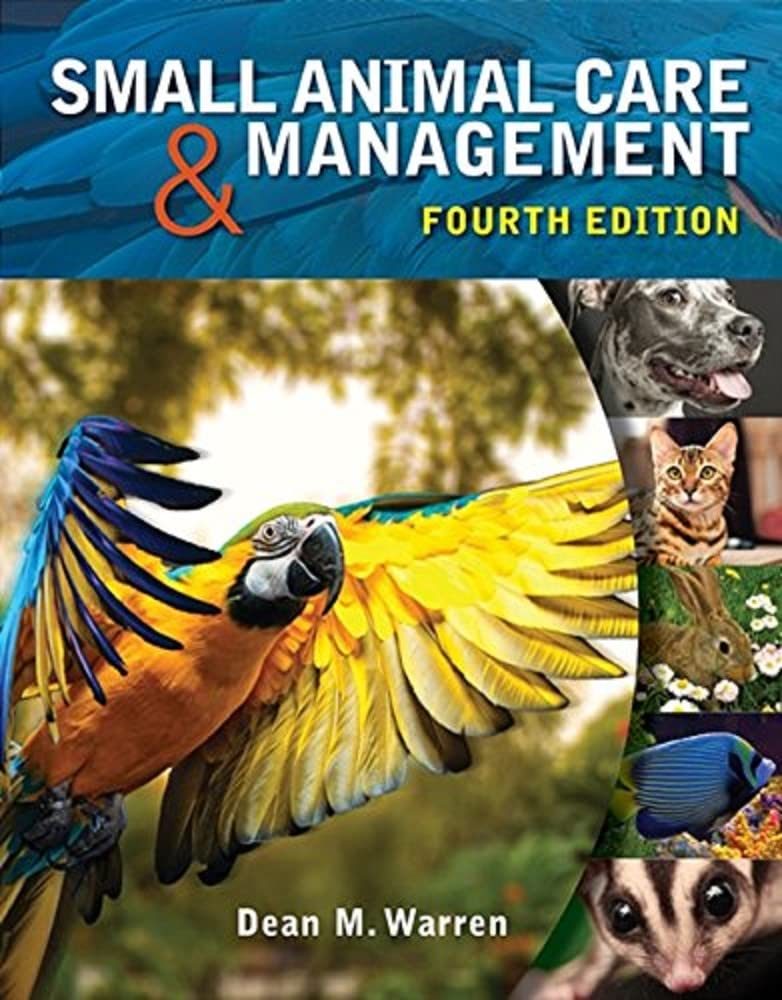
Mr. Warren’s presence here bridges a massive economic and demographic shift in how the American heartland trains its future workforce. A U.S. Navy veteran who spent three decades teaching vocational agriculture at Columbia City High School, Mr. Warren is the architect of a quiet, self-sustaining financial engine for the organization: the royalties of a 32-year-old textbook on domestic hamsters, lizards, and companion animals.
His book, Small Animal Care & Management, first published in 1994, has quietly become a staple of agricultural education across the United States. More uniquely, Mr. Warren has legally directed the financial proceeds of that intellectual property to ensure the fiscal health of the Indiana FFA Foundation long into the future.
The St. Louis Pivot
The genesis of the textbook traces back to an era when agricultural education was facing an identity crisis. In the early 1990s, high school agriculture curricula remained fiercely dominated by industrial livestock operations—what insiders colloquially called “cows and plows.”
Mr. Warren recognized a supply-and-demand mismatch in his classroom. Students were increasingly interested in suburban veterinary sciences and small animal husbandry, yet major publishers offered no educational infrastructure for the subject.
“I was at a convention one time at St. Louis,” Mr. Warren recalled during an interview on the convention floor, competing with the thunderous applause of the arena. “I was going around all the book representatives and saying, ‘You got any books on small animals?’ They said, ‘No, no.’ And I started to walk away from one of them and they said, ‘Why don’t you write one?’ I got all my notes and things that I’ve been using, so that was the basis of the first book.”
The resulting manuscript, covering everything from the husbandry of chinchillas and ferrets to the clinical care of dogs and cats, filled an immediate market void. Now in its fourth edition under commercial publisher Cengage Learning, the text remains a high-margin staple for preliminary veterinary science courses nationwide.
Capital Gains for Indiana FFA
Instead of pocketing the steady stream of secondary-market royalties, Mr. Warren chose to redirect a great deal of the capital back into the labor pipeline that produced him.
“A lot of the money that I’ve donated to the foundation comes from the income from that book sales and the royalties of it,” Mr. Warren said. “And it will continue for long after I’m gone, I hope, anyway.”
The move highlights an increasingly sophisticated financial landscape for youth agricultural organizations like the FFA, which rely heavily on private endowments, corporate sponsorships, and charitable trusts to fund scholarships, leadership seminars, and career development events.
For Mr. Warren, investing in the foundation is an investment in an organization that has fundamentally outgrown its mid-century roots. Raised on a traditional midwestern farm, his worldview was shaped by standard commodity production.
“I was born and raised on the farm. Agriculture is all I ever knew, really, and have ever known, except for the four years I was in the service,” he noted.
Yet, the economics of teaching the next generation required letting go of the past. Over his 30-year career, Mr. Warren watched the student profile shift from rural farmhands to urban and suburban teenagers looking to enter corporate food logistics, biotech, and veterinary medicine.
“The main thing that’s changed is it isn’t all agriculture anymore,” Mr. Warren observed. “We’ve got so many students in FFA and in agriculture classes that come from the cities and towns. It’s not all, as they used to say, ‘cows and plows’.”
The New Guard
The sheer scale of today’s agricultural conventions underscores this evolution. For older educators, the spectacle can be jarring.
“The first conventions that I remember going to were held at the Loeb Playhouse and Elliott Hall of Music at Purdue,” Mr. Warren said, reflecting on the mid-20th-century iteration of the group. “And that was more of a subtle, quiet atmosphere. Nothing like this out here.”
Today’s FFA is less about isolationist farming and more about global supply chains and corporate leadership. But as the industry modernizes, the institutional need for baseline funding remains constant. By locking part of his textbook royalties into a charitable mechanism for the Indiana FFA, Mr. Warren has provided a blueprint for how retired educators can leverage intellectual property to support public education infrastructure.
“I think it’s finest youth organization in the country,” Mr. Warren said, surveying the arena of blue jackets. “I mean, a lot of lot of opportunities for students now that weren’t there when I was teaching even. So, yeah.”
CLICK HERE to make your donation to the Indiana FFA Foundation.
CLICK BELOW for Hoosier Ag Today’s radio news report: