


For years, Brazil was one of the most important overseas customers for American ethanol, offering a lucrative export market for corn growers across the U.S. Midwest. Today, that trade relationship has become the center of a widening dispute as the Trump administration weighs new tariffs and broader penalties against one of the world’s largest agricultural competitors.
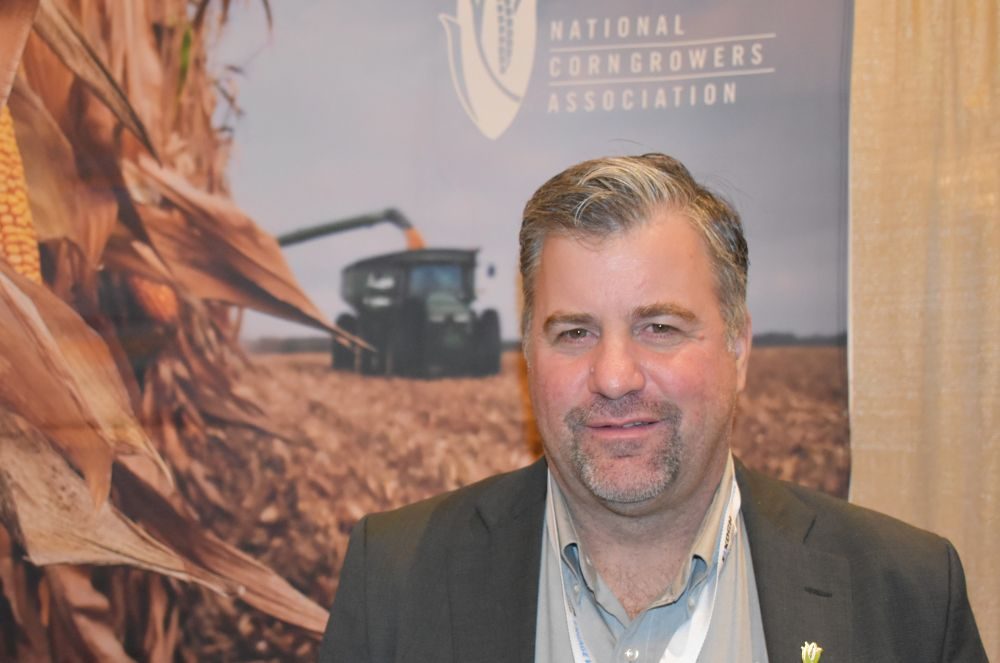
At a public hearing before the Office of the U.S. Trade Representative on Monday, Michigan farmer and National Corn Growers Association First Vice President Matt Frostic urged federal officials to move forward with a proposed 25 percent tariff on Brazilian ethanol imports while expanding the investigation to address what he described as years of discriminatory trade practices that have disadvantaged U.S. corn growers.
The hearing is part of the administration’s ongoing Section 301 investigation into Brazil’s trade policies, a sweeping review that extends beyond ethanol to include digital trade, intellectual property protections, anti-corruption enforcement and illegal deforestation. For corn farmers, however, ethanol has emerged as one of the most consequential issues.
“U.S. corn growers plant and harvest the most high-quality and efficient corn crop in the world,” Frostic testified. “We depend on export markets for both corn and ethanol so farmers can make a living and feed their families. And, we play by the rules, support competition, and oppose trade barriers.”
“Unfortunately, Brazil does not value a level playing field and unfairly penalizes U.S. corn growers,” he continued. “Over the past decade, Brazil has taken targeted trade actions aimed at evaporating current and future demand for U.S. farmers.”
Frostic, who farms near Applegate, Michigan, raising corn, soybeans, edible beans, sugar beets and beef cattle, said the National Corn Growers Association supports the proposed tariff because Brazil’s own trade barriers have dramatically reduced U.S. ethanol exports while allowing Brazilian ethanol to continue flowing into American markets.
According to Frostic’s testimony, Brazil abandoned what had been a cooperative trading relationship in 2017 when it imposed a 20 percent tariff and tariff-rate quota on U.S. ethanol. Although the policy has changed over time, Brazil currently maintains an 18 percent tariff that took effect in 2024.
The consequences, he argued, were immediate.
“U.S. corn growers felt the effects of the tariff as market access sharply declined,” Frostic said. “In 2018, Brazil was the top market for U.S. ethanol exports by far. Once the tariff was reimposed, the market nearly evaporated, showing that Brazil’s tariff was indeed responsible for the sudden decline of U.S. ethanol exports to Brazil.”
At the same time, Frostic said, Brazilian sugarcane ethanol continued entering the United States in increasing volumes, with shipments largely destined for California’s low-carbon fuel market.
Beyond tariffs, Frostic argued that Brazil has created additional barriers through its domestic biofuels program, RenovaBio, which he said effectively excludes most American ethanol producers from participating.
“As USTR considers additional proposed action to impose import restrictions, we would call attention to Brazil’s refusal to allow U.S. ethanol producers to obtain approval for their domestic biofuels program, called RenovaBio,” Frostic testified. “This is clear discrimination against U.S. ethanol producers.”
He contrasted that policy with the U.S. Renewable Fuel Standard, noting that Brazilian companies are permitted to participate in the American program.
“The United States does not impose such restrictions on participation in our Renewable Fuel Standard, and Brazilian companies are allowed to participate,” Frostic said. “This should be given strong consideration as USTR continues this investigation.”
Frostic also challenged Brazil’s environmental claims, arguing they have helped provide Brazilian ethanol with an advantage in emerging international low-carbon fuel markets.
“Brazil’s international advocacy touting a low environmental footprint is nothing short of a guise to artificially boost their carbon intensity score over American farmers,” he testified.
He disputed Brazil’s argument that much of its corn is produced as a secondary crop requiring fewer inputs.
“Brazil claims that its corn is a secondary crop, such that inputs and land used is more minor compared to the United States,” Frostic said. “But this could not be more incorrect, as land conversion from grassland or rainforest in Brazil is not properly documented.”
Those concerns extend beyond bilateral trade, he said, pointing to international aviation fuel standards that could further incentivize the use of Brazilian ethanol over U.S. production.
The National Corn Growers Association is urging the administration to pursue a broader package of actions beyond reciprocal tariffs, including equal access to Brazilian biofuel programs, removal of Brazil from certain U.S. trade preference programs and compensation for economic losses suffered by American producers.
“We appreciate the initiation of this investigation, and were pleased with the findings and proposed action,” Frostic told trade officials. “We urge USTR to consider a wide range of options to encompass the full scope of Brazil’s harmful actions.”
“We stand ready to work with the Trump Administration to fix years of economic harm and fight for what we deserve,” he said.
The Office of the U.S. Trade Representative has not announced when it will issue a final decision on the proposed tariffs or whether it will adopt additional measures stemming from the investigation.