

After nearly a year of uncertainty and disrupted trade, U.S. soybean farmers are seeing one of the strongest signs yet that their largest export customer is returning to the market.
Fresh export sales to China, coupled with commitments outlined in the latest U.S.-China trade agreement, are providing renewed optimism for soybean producers who have endured two consecutive years of tight margins, depressed prices and trade-related uncertainty.
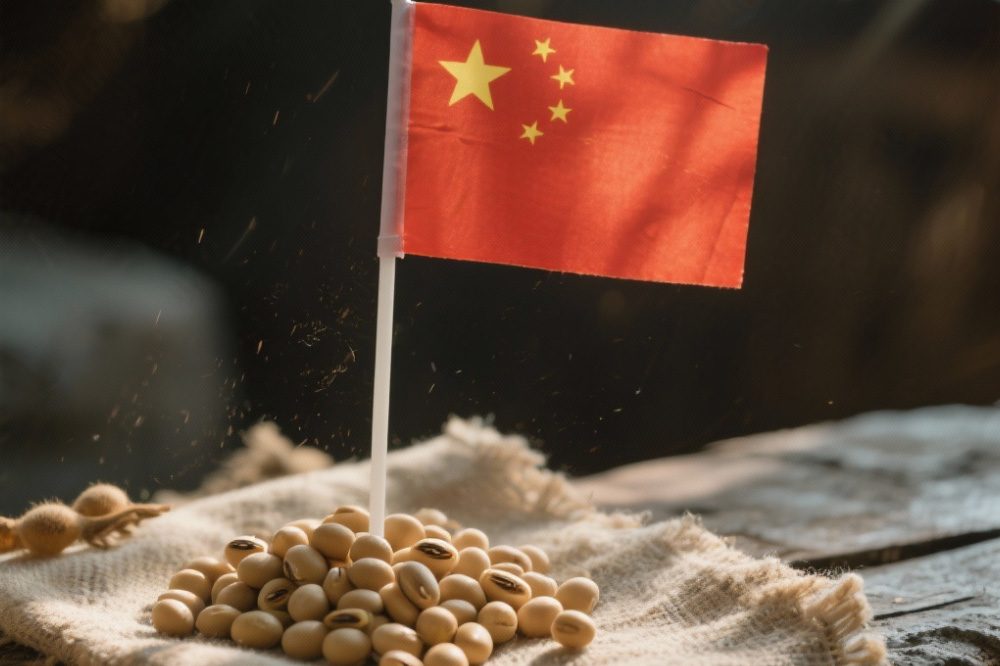
China has resumed purchasing U.S. soybeans after halting purchases during the 2025 tariff dispute with the Trump administration. The renewed buying follows a trade agreement reached between President Trump and Chinese President Xi Jinping that includes a commitment for China to purchase at least 25 million metric tons of U.S. soybeans annually through 2028, according to the White House. While Beijing has not publicly confirmed those specific volumes, export activity has accelerated in recent weeks.
The latest evidence came Thursday morning, when USDA announced two flash export sales totaling 256,000 metric tons of soybeans, including 136,000 metric tons purchased by China. Bloomberg also reported that Chinese state-owned grain company Cofco recently booked at least six cargoes of U.S. soybeans for September and October shipment, adding to earlier purchases already reported by USDA.
For U.S. soybean growers, the renewed demand couldn’t come at a better time.
Nearly 40% of all U.S. soybeans are exported, and China has historically been the industry’s single most important customer, often purchasing about half of all U.S. soybean exports. When China suspended purchases during the 2025 trade dispute, U.S. producers were forced to store more soybeans while China turned to Brazil and Argentina to meet its needs.
The renewed buying has already helped improve market sentiment.
Soybean futures have strengthened in recent weeks as traders anticipate stronger Chinese demand throughout the marketing year. Exports to China during the January-through-March period climbed 57% from a year earlier, largely as Chinese buyers returned to purchase soybeans that had remained in storage following last fall’s purchasing freeze.
While the renewed exports are encouraging, economists caution that the recovery remains incomplete.
From September through March, China accounted for less than 30% of total U.S. soybean exports—well below the levels seen before the trade dispute.
Economists still expect many soybean producers to face narrow or even negative profit margins in 2026 because production costs remain stubbornly high. Many growers have spent the past two seasons reducing expenses and restructuring operations to weather lower commodity prices.
Still, the return of China’s buying interest represents one of the brightest developments for the soybean sector this year.
Beyond China, USDA officials continue working to diversify export opportunities, noting that Canada and Mexico purchase more U.S. agricultural products overall than China. Growing soybean demand in markets including Egypt, Indonesia, Pakistan and Japan has also helped offset some of the losses experienced during the trade dispute.
For now, however, soybean producers will be watching export sales closely.
If China follows through on its purchasing commitments, stronger exports could help reduce domestic soybean inventories, support cash prices and provide an important financial boost for growers heading into the 2026 harvest. Whether the renewed buying marks the beginning of a sustained recovery—or simply a temporary rebound—will become clearer as the marketing year unfolds.