


For the past four months, Indiana drivers have operated in an economic anomaly. While international conflict and blockaded supply lines sent energy costs soaring across the United States, gas stations across the Hoosier State showcased prices that looked like a dispatch from a bygone era.
Thanks to an aggressive series of emergency executive orders by Governor Mike Braun, Indiana has boasted the lowest fuel prices in the nation. But the policy experiment is rapidly approaching a hard legal ceiling. With Braun enacting his fourth and final permissible extension through August 6, the state could be bracing for a sudden, 61-cent-per-gallon price spike overnight.
While suburban commuters are tallying the extra costs of their daily drive, the impending financial cliff is sending tremors through the state’s multi-billion-dollar agricultural sector, threatening to squeeze margins for farmers, agribusinesses, and the fragile economies of rural towns.
An ‘Energy Emergency’ and Its Hard Legal Ceiling
The policy took root in early April, following a sudden geopolitical flare-up. After a joint U.S. and Israel attack on Iran in late February, Tehran retaliated by closing the Strait of Hormuz—a crucial maritime chokepoint through which roughly a fifth of the world’s petroleum transit passes. As global crude supplies constricted, domestic fuel prices broke past the $4-a-gallon threshold by early spring.
Invoking a state statute meant for short-term catastrophes, Braun declared a 30-day energy emergency on April 8, completely suspending the state’s 7% Gasoline Use Tax. In May, he doubled down, renewing the emergency and adding the state’s 36-cent-per-gallon gasoline excise tax to the holiday. By June, he issued a second declaration, engineering a complex chain of executive handoffs that successfully bypassed the legislature.
For July, the policy has absolved drivers of paying a combined 61 cents per gallon at the pump, keeping Indiana’s average regular unleaded cost at a nation-low $3.12, according to AAA data.
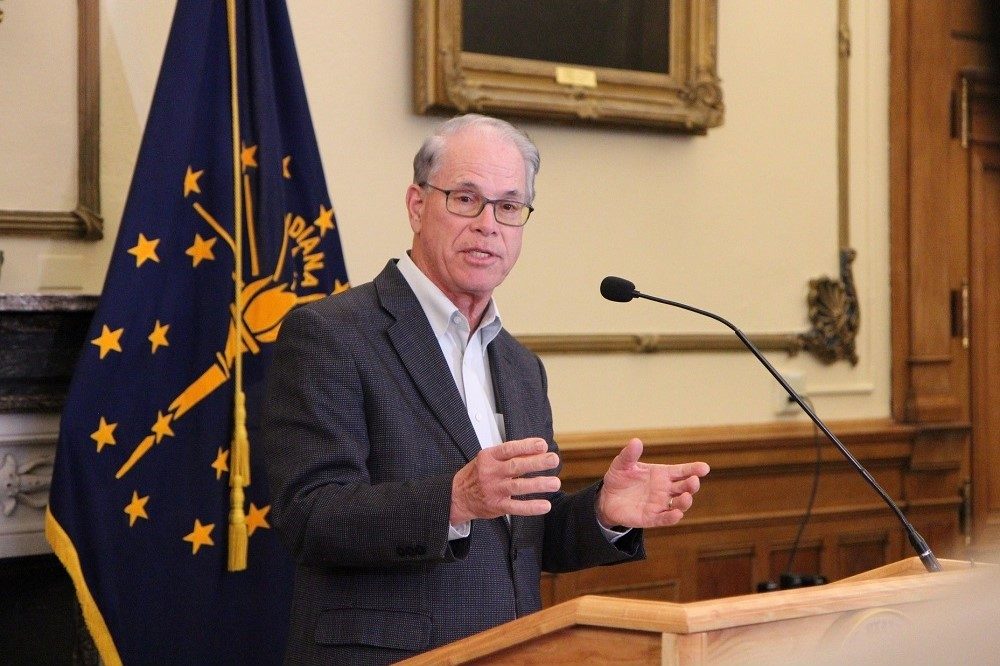
“I want to make sure that Hoosiers, not only when it comes to gasoline costs… know that we’re doing everything we can to make their lives easier,” Braun told reporters at a Statehouse news conference, defending the multi-layered strategy.
But Braun has run out of runway. Under Indiana Code, a governor is strictly barred from renewing an emergency proclamation more than once without explicit legislative approval. By any statutory reading, the administrative tax holiday hits a dead end on August 6. Unless the governor calls a special legislative session—a move he has floated but not yet formalized with General Assembly leadership—the full weight of Indiana’s fuel taxation will return simultaneously.
The Looming Harvest Squeeze
For Indiana’s agricultural sector, the timing of the tax cliff could hardly be worse. Early August marks the ramp-up to the fall harvest season, a period when fuel consumption among agricultural operations spikes exponentially.
While off-road diesel—the primary fuel source for heavy combines and tractors—is governed under separate tax structures, the return of retail gasoline taxes hits the broader agricultural supply chain directly. Farmers heavily rely on fleets of gasoline-powered pickup trucks, service vehicles, and secondary transport to manage daily operations across hundreds of scattered acres. A 61-cent-per-gallon increase translates to thousands of dollars in unforeseen weekly operating expenses per farm.
The problem ripples outward to local agricultural businesses. Grain elevators, regional cooperatives, and crop nutrient suppliers run massive transport networks. Because fuel costs are an immediate variable operating expense, the sudden price spike is expected to force agribusinesses to adjust their logistics fees. When local elevators face higher costs to haul grain to major shipping hubs along the Ohio River or Great Lakes ports, those expenses are frequently passed back down, resulting in lower cash crop bids for the farmers themselves.
Furthermore, the price hike hits a sector already grappling with highly volatile global supply chains. Agricultural inputs—ranging from specialized steel parts for machinery to concrete for new storage silos—have surged by roughly 50%, a reality Braun himself acknowledged. The compounding effect of returning fuel taxes alongside steep asset inflation threatens to thin farm profit margins to razor-edged levels.
A Fiscal Drag on Rural Communities
Beyond the fields, the tax holiday’s expiration presents a complex fiscal dilemma for Indiana’s small towns and rural communities.
The suspension of fuel taxes has been an expensive endeavor, draining an estimated $140 million per month from state and local coffers. Ordinarily, gasoline tax revenues are collected from distributors and split cleanly between the Indiana Department of Transportation (INDOT) and municipal governments to fund critical infrastructure maintenance, such as bridge repairs and rural highway paving.
To prevent small towns from seeing their local road budgets completely obliterated, the Braun administration announced that the state would use its healthy surplus reserves to fully reimburse local governments for their lost revenue. “If you run government efficiently… you get a win-win,” Braun insisted, pointing to revenue collections that have consistently outpaced internal state expectations.
However, rural infrastructure advocates caution that a temporary fix does not solve the long-term math. Even with state reimbursements covering the immediate revenue hole, local governments face an immense backlog of delayed projects due to skyrocketing material costs. When the tax holiday ends, rural residents will feel the double impact of paying significantly more at the local pump while watching their municipal leaders stretch depleted infrastructure funds across projects that cost far more to complete than they did a year ago.
Moreover, rural communities feature longer average commute times and lower median incomes than their urban and suburban counterparts. For a household in a small town driving 30 miles to a manufacturing job or regional medical center, the elimination of a 61-cent discount represents an immediate contraction in disposable household income. That missing cash directly translates to reduced consumer spending at local Main Street storefronts, diners, and independent grocers.
The Legislative Standoff
Whether this shockwave is allowed to hit the pavement on August 7 remains an open political question. Fiscal conservatives within the Republican-dominated General Assembly have expressed growing nervousness regarding the long-term strain the holiday places on infrastructure funds, even with the state’s surplus cushioning the blow.
Braun has indicated that the economic recovery of the broader energy market over the summer could mitigate the blow, noting that national averages have begun to soften slightly. Yet, with Middle East tensions remaining highly volatile and the Strait of Hormuz still shuttered, a baseline return to a non-subsidized tax environment could push Indiana from the cheapest state for gas to well above the national median in a single afternoon.
For now, the state’s agricultural hubs can only watch the calendar. As the August 6 deadline looms closer, Indiana’s rural economies are preparing to learn exactly what happens when an artificial economic cushion is pulled out from under them.