


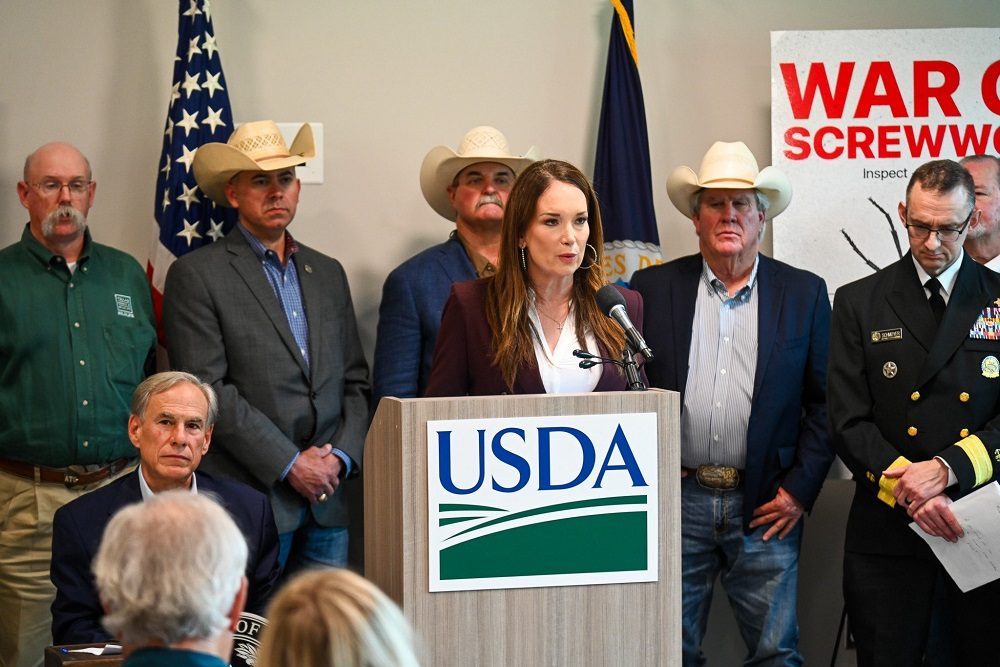
After a year-long, industry-altering closure designed to fend off a devastating livestock parasite, the U.S. Department of Agriculture has announced a coordinated, phased reopening of southern cattle ports of entry.
Beginning August 24, 2026, the USDA will officially open the Douglas, Arizona, port of entry to cattle trade. The move marks the first step in a carefully calibrated plan that will also initiate operational steps for subsequent openings at the Santa Teresa and Columbus, New Mexico, ports.
However, relief for the cattle sector comes with strict conditions. Every single animal entering the United States through these reopened ports will undergo a rigorous, full USDA inspection to ensure it is entirely free of any signs of the New World screwworm (NWS).
Balancing Act: Biosecurity vs. Market Pressures
U.S. Secretary of Agriculture Brooke Rollins emphasized that the prolonged border shutdown—initially prompted by the detection of the flesh-eating parasite in southern Mexico—was a necessary shield for the American livestock industry.
“Protecting the United States from NWS and pushing this pest out of Mexico and back to the Darien Gap is a top priority at USDA and has the full attention of the Trump Administration,” Rollins said in a statement. “Thanks to the work across the federal government as well as state, local, and industry partners, it is now safe to reopen the Douglas, Arizona, port in 30 days to resume the hundreds-year-old movement of cattle.”
The decision follows mounting pressure from Republican lawmakers and segments of the cattle industry eager to ease tight beef supplies and high consumer prices ahead of the midterm elections. While Agriculture Secretary Rollins previously resisted calls to rush open the border, mounting biosecurity milestones in specific northern Mexican states ultimately shifted the calculus.
Why Sonora and Chihuahua?
The reopening is heavily contingent upon Mexico’s strict adherence to a Joint Action Plan. Crucially, the phased restart is limited to regions deemed lowest-risk: Sonora and Chihuahua.
According to the USDA, while much of Mexico has struggled to contain the spread of the screwworm, Sonora and Chihuahua have maintained robust animal health infrastructure and successful disease control programs for years. Furthermore, their geographic distance from southern Mexico—where the majority of active cases remain concentrated—provided federal regulators with the confidence needed to act.
-
Douglas, Arizona: Reopening August 24, bordering Sonora. The closest active NWS case is roughly 325 miles away, detected on July 22, 2026.
-
Santa Teresa and Columbus, New Mexico: Operational steps are currently underway. These ports will follow only after USDA evaluates the success of the initial Douglas opening, ongoing surveillance results, and potential risk shifts.
The agency explicitly noted that the reopening timeline remains flexible. If post-opening audits or new observations reveal an increased disease risk, the USDA will not hesitate to pause or halt port operations.
Industry Reaction
National cattle organizations have largely welcomed the news, pointing out that the extended closure tested the resilience of producers throughout the border states and the Southern Plains.
National Cattlemen’s Beef Association (NCBA) CEO Colin Woodall praised the administration’s strategic approach.
“Secretary Rollins and her team at USDA have been fighting the spread of New World screwworm with an aggressive five-point plan and comprehensive response playbook,” Woodall said. “Their work—along with the diligence of cattle producers in border states—bought the United States valuable time to improve our domestic readiness. This decision will help normalize business for cattle operations throughout the border states and Southern Plains.”
Meanwhile, regional leaders like Texas Agriculture Commissioner Sid Miller voiced tempered relief, noting that while restoring trade is a vital step for ranchers and consumers alike, the prolonged restrictions underscore the ongoing challenges of managing foreign animal disease threats on American borders.
For more details regarding the USDA’s ongoing New World screwworm response and compliance guidelines, producers can visit the USDA APHIS Stop Screwworm Resource Page.