

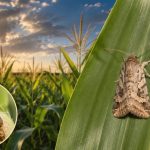
After dealing with heavy rains, uneven emergence, and disease pressure, corn growers are now facing another challenge in the field.
Western bean cutworm moth activity is showing up earlier than normal in parts of the Corn Belt, prompting crop scouts to encourage producers to begin monitoring fields now.
“This year, everything’s early, and it’s highly recommended that everyone — corn and dry bean growers — go out and scout now.” According to Dr. Pin-Chu Lai (Lie), an entomologist with the University of Nebraska Extension Service.
She says the pest lays eggs on the upper leaves of corn plants before the larvae feed on developing ears, reducing both yield and grain quality.
Dr. Lai adds, “The most vulnerable stage will be late whorl to tasseling. If that coincides with egg hatching, that will entirely increase those larvae’s survival because once they hatch, they will be moving on to the tassels to feed.”
While not every field will require treatment, early detection is critical. Also, know what BT traits your corn has.
“So, there has been evidence that the Cry1F protein might be losing its efficacy against this Western bean cutworm. So, you really want to check what Bt traits you have in your corn.” Concluded Lai.
With weather already putting pressure on this year’s crop, staying ahead of western bean cutworm could help protect yield potential as the growing season moves toward pollination.