

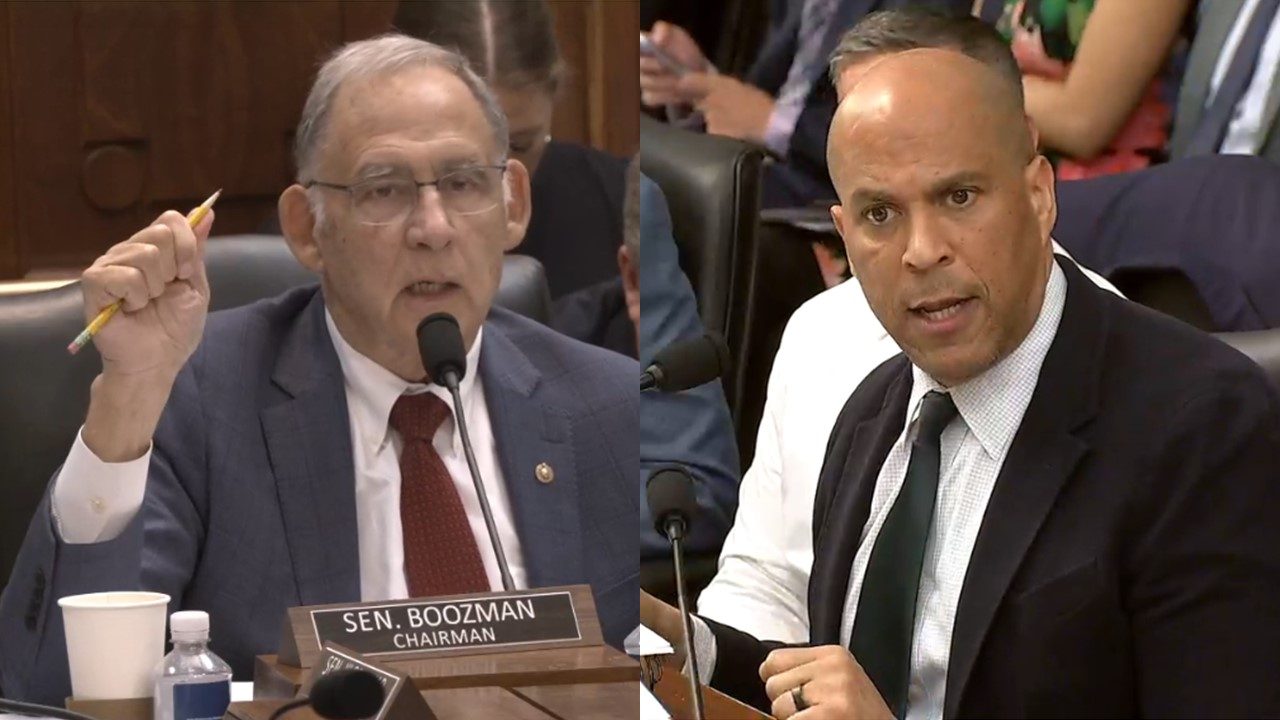
The long-overdue reauthorization of our nation’s agricultural policy hit a brick wall on Thursday as the Senate Agriculture Committee officially recessed indefinitely following a bitter 11-to-10 vote blocked a Republican-led farm bill package.
The SNAP Stalemate and Committee Clashes
At the heart of the committee breakdown is a sharp divide over the Supplemental Nutrition Assistance Program (SNAP). The Republican package, championed by Committee Chair John Boozman (R-Ark.), included provisions requiring states with high payment error rates to shoulder a greater share of program costs.
While Boozman offered a one-year delay to soften the blow—alongside popular measures like authorizing year-round E15 sales and boosting food bank distributions—committee Democrats stood firm in demanding a two-year buffer.
Senate Agriculture Committee Ranking Member Amy Klobuchar (D-Minn.) argued that a one-year fix leaves mid-level error-rate states at an unfair disadvantage compared to high-error-rate states.
“Our members are simply asking for the two-year delay so all states will be on the same footing in working to reduce their error rates,” Klobuchar stated following the markup. While praising provisions like year-round E15—a priority she has long fought for—Klobuchar emphasized that the nutrition dispute stalled a package otherwise containing critical wins for producers.
Republicans needed every vote they could muster, particularly with Sen. Mitch McConnell absent from the markup. Frustrated by the impasse, Chairman Boozman accused the opposing party of holding both farmers and nutrition program participants “hostage”.
Senate Majority Leader John Thune (R-S.D.), a longtime member of the committee, defended the chairman’s good-faith effort on the floor:
“The chairman fought as hard as he could,” Thune said during the markup. “The proposal in front of us gives everybody another year to do this and saves some states in this room a whole lot of money.”
On the other side of the aisle, Senator Cory Booker (D-N.J.) pulled no punches, characterizing the showdown as a predictable political game.
“That’s the game here today,” Booker remarked during the session. “All of us knew before we walked in this room, this is going to fall to a partisan vote over SNAP payments.”
Booker further criticized the committee’s focus on squeezing savings out of error rates within a $101 billion program, arguing that lawmakers were missing the forest for the trees:
“This is a Kabuki theater!” Booker said. “Why do we waste our time with this, and continue to see people suffer, while rich people—God bless them—get over on this government time and time again, and no one wants to audit them, no one wants to put requirements on them?”
Despite adopting dozens of amendments—including permanently transferring the Food for Peace program to USDA and making hot rotisserie chickens eligible under SNAP—the broader package collapsed along party lines.
What This Means for America’s Farmers and Ranchers
For grain producers, livestock operations, and specialty crop growers across the heartland, the collapse of the committee markup is more than just political theater in Washington—it translates to prolonged uncertainty on the farm.
-
Safety Net and Commodity Programs: Operating under extensions of the 2018 Farm Bill means reference prices, marketing loan rates, and safety net programs remain tied to economic realities of nearly a decade ago, failing to reflect modern input costs like skyrocketing fertilizer, seed, and machinery expenses.
-
Conservation Funding: Producers relying on Environmental Quality Incentives Program (EQIP) and Conservation Stewardship Program (CSP) funds face continued backlogs and regional funding scrambles without the modernized backing of a fresh reauthorization.
-
Market Expansion and Trade: Critical export promotion programs and foreign market development funds hang in limbo, leaving American agriculture vulnerable in competitive global commodity markets.
As Chairman Boozman leaves the panel door open for potential talks in September following the chamber’s August break, rural communities are left waiting. Producers have spent years dealing with weather extremes, shifting tariff pressures, and volatile input markets; they deserve a farm bill that provides long-term stability rather than short-term political kick-the-can.
CLICK HERE to watch the full Senate Ag Committee’s Farm Bill mark-up meeting.