


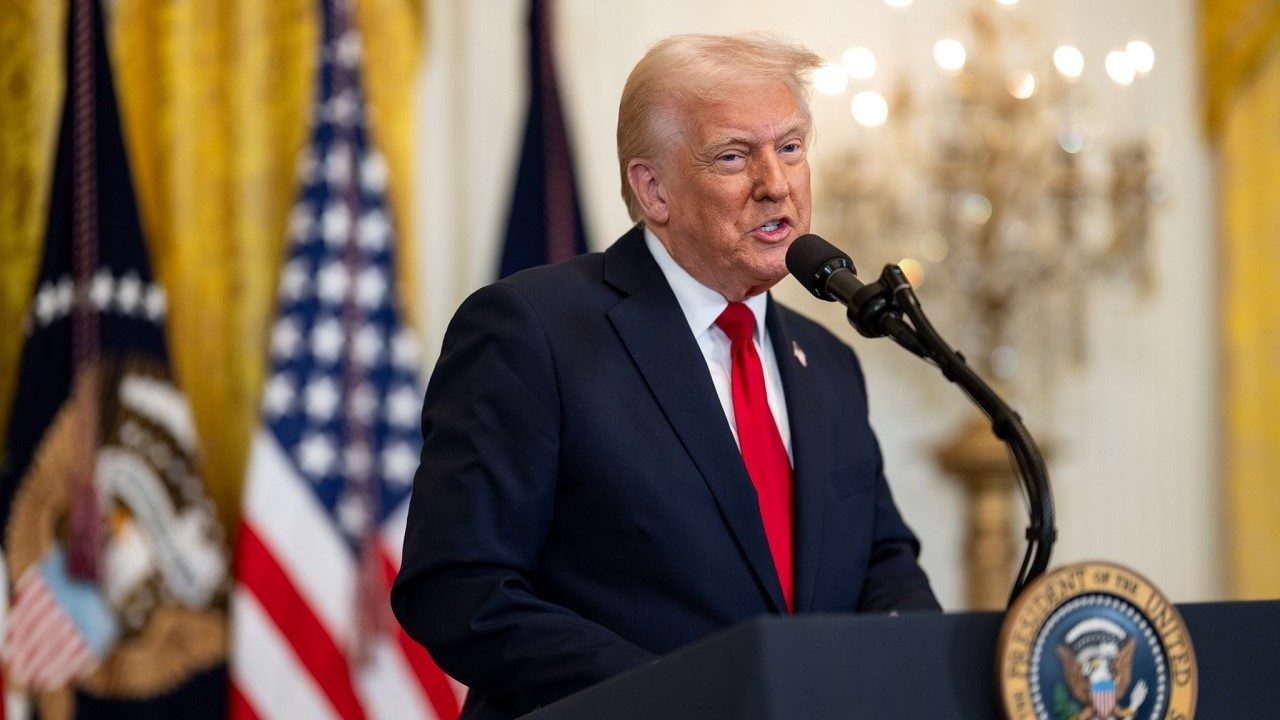
President Donald Trump is taking aim at one of the most entrenched structures in American agriculture, promising a rapid push to give farmers and ranchers greater ability to process and sell meat outside the nation’s dominant packing system.
The announcement could have major implications for cattle producers who have spent years navigating a beef industry dominated by a handful of large processors — but exactly how far the administration intends to go remains unclear.
In a Truth Social post Friday, Aug. 28, Trump said he was authorizing the preparation of legal documents that would give farmers and ranchers the “right to PROCESS THEIR OWN FOOD.”
Trump framed the move as an effort to break what he called a “nasty Monopoly” among the nation’s largest meat processors.
“There are, essentially, 4 of them, a very non competitive number, and they make life miserable for our wonderful Farmers and Ranchers,” Trump wrote.
The president did not identify a specific type of meat or provide details about what legal authority his administration would use. But the announcement came just days after Trump said he would examine federal regulations that ranchers contend make it difficult to slaughter and process their own cattle.
Agriculture Secretary Brooke Rollins indicated the administration plans to provide more details Monday, including efforts to expand ranchers’ ability to sell meat across state lines, provide additional support for smaller processors and rescind what she described as outdated guidance.
For cattle producers, those details could matter far more than the headline.
A Beef Industry Built Around Big Packers
The U.S. beef processing industry is highly concentrated. Cargill, Tyson Foods, JBS USA and National Beef Packing Co. account for roughly 85% of U.S. meat processing.
That concentration has long been a source of concern for cattle producers, particularly when cattle supplies tighten and competition for animals becomes more important.
For many producers, the problem is not simply the size of the packing companies. It is the lack of practical alternatives.
Federal law generally requires meat sold commercially across state lines to come from establishments operating under federal inspection. That means a farmer or rancher who wants to slaughter an animal and sell the resulting beef commercially faces a regulatory system that can require access to an inspected processing facility.
For small producers, finding that capacity can be difficult.
Transportation costs, processing schedules and limited availability at smaller plants can all make direct-to-consumer beef more challenging to produce at a scale that works economically.
Trump’s proposal could potentially open additional avenues for producers — particularly if the administration expands interstate commerce opportunities for smaller processors.
But there is an important distinction between expanding processing opportunities and simply allowing anyone to slaughter and sell meat without inspection.
That distinction is likely to become central to the debate.
Food Safety Remains a Flashpoint
The Meat Institute, which represents the nation’s meatpacking companies, warned that changes to inspection requirements could create food-safety risks.
“Allowing uninspected meat to be sold to unwitting consumers is the wrong approach,” the organization said, arguing that lowering food-safety standards is not the answer to high beef prices.
The National Cattlemen’s Beef Association has taken a more nuanced position.
The organization supports creating more opportunities for small beef processors and eliminating unnecessary regulations, but it also has warned against weakening meat inspection standards.
That could put the cattle industry in an unusual position: producers may broadly support greater processing flexibility while still insisting that any new system maintain consumer confidence in the safety of American beef.
USDA’s Food Safety and Inspection Service currently provides federal inspection at meat processing facilities, while existing programs allow some state-inspected processors to participate in interstate commerce if they meet federal requirements.
The Trump administration appears poised to explore whether those pathways can be expanded.
Will On-Farm Processing Really Change the Cattle Market?
That is perhaps the biggest unanswered question.
David Anderson, an agricultural economist at Texas A&M University, told Reuters that allowing more on-farm slaughter would likely have only a limited effect on the broader beef market.
“The numbers on that would be so small,” Anderson said of on-farm slaughter, arguing that it would not fundamentally change the larger market structure.
That distinction is important for cattle producers.
If the administration’s goal is to create more competition, simply allowing more ranchers to process a small number of animals themselves may not significantly alter the pricing dynamics created by an industry dominated by four major processors.
But expanding the number and geographic reach of smaller inspected processors could be a different story.
More regional processing capacity could give producers additional outlets for cattle, reduce transportation burdens and create opportunities for farmers to capture more value through direct marketing.
It could also strengthen local and regional beef markets — an increasingly important consideration for producers selling freezer beef, supplying restaurants or building branded beef businesses.
The Timing Is Significant
Trump’s announcement comes as the beef industry is already under extraordinary pressure.
The nation’s cattle herd is at a roughly 75-year low, while cattle prices have surged as supplies tighten. At the same time, processors are confronting high cattle costs and pressure on margins.
Consumers are also paying more for beef.
That has created a politically potent combination: record or near-record cattle prices for producers, historically tight supplies, expensive beef for consumers and a processing sector that remains highly concentrated.
Trump has taken several steps in recent weeks aimed at addressing beef prices and supply.
On Aug. 21, he announced a 90-day plan to allow up to 300,000 metric tons of additional lean beef trimmings into the United States without the normal tariff burden. The move is scheduled to begin Sept. 1.
The administration has also signaled that it wants to make it easier for smaller processors to compete.
Meanwhile, the Justice Department is investigating whether meatpacking companies have engaged in practices that illegally drove up consumer beef prices.
Against that backdrop, Trump’s latest announcement represents a much broader challenge to the traditional structure of the U.S. meat industry.
What It Could Mean for Farmers
For Indiana cattle producers, the most important question may not be whether farmers can literally build slaughter facilities on their farms.
Instead, watch what happens to the regional processing system.
If the administration makes it easier for small and mid-sized processors to obtain inspection, sell across state lines and access federal support, Indiana producers could have more options for marketing cattle without sending them long distances to large packing plants.
That could be especially important for producers who have developed direct-to-consumer beef businesses or who want to retain more ownership and control farther down the value chain.
But processing infrastructure does not appear overnight.
A new or expanded plant requires capital, skilled labor, reliable livestock supplies, waste-management systems, food-safety compliance and dependable markets for the finished product.
And even if regulatory barriers are reduced, those economic realities will remain.
That’s why Monday’s expected announcements from USDA could provide the first meaningful indication of whether Trump’s proposal represents a fundamental shift in federal meat-processing policy — or primarily an effort to expand existing programs for smaller processors.
For farmers and ranchers, the stakes are significant.
For decades, cattle producers have largely operated at the front end of a supply chain whose processing power is concentrated in relatively few hands.
Trump is now promising to change that equation.
Whether the administration can turn a sweeping promise to “break” the meatpacking monopoly into more competition, more processing capacity and better marketing opportunities for producers will depend on what comes next.
And for American’s cattle producers, the details may be more important than the headline.