


For generations, farm management has been built around a simple premise: produce more, produce better and produce efficiently.
But as farms have grown larger, land values have soared and business decisions have become increasingly complex, a new challenge is emerging — and it has little to do with what happens in the field. It is what happens behind the desk and work computer.
The latest Purdue University Ag Economy Barometer survey points to a striking gap in farm management skills. Producers say production skills generate the greatest return on investment on their operations. Yet when asked where their farms need the most improvement, strategic planning emerged as the No. 1 answer.
And farmers see artificial intelligence playing a potentially important role in closing that gap.
The August survey included three questions focused specifically on operator skills. The answers provide a revealing look at where producers believe their management strengths and weaknesses lie — and where technology could have the greatest impact.
Production pays. Planning needs work.
When Purdue researchers asked producers which skill generated the greatest return on investment on their farms, production came out on top.
Twenty-nine percent of respondents selected production skills, followed by financial management and analysis at 23% and strategic planning at 22%. Selling products accounted for 14%, while buying inputs came in at 11%.
That ranking isn’t necessarily surprising.
Farmers spend their careers learning how to raise crops and livestock, improve yields, manage risk in the field and make production decisions that directly affect the bottom line.
But the second question exposed a very different picture.
When producers were asked which skill their farm needed the most improvement in, strategic planning jumped to the top of the list at 28%.
Selling products followed at 20%, buying inputs at 19%, financial management and analysis at 17%, and production at just 16%.
The contrast is hard to ignore.
Production was the skill most often identified as delivering the greatest return on investment. It was also the skill least often identified as needing improvement.
Strategic planning was nearly the opposite.
It ranked third in terms of return on investment, but first — by a considerable margin — when producers were asked where their operations needed to improve.
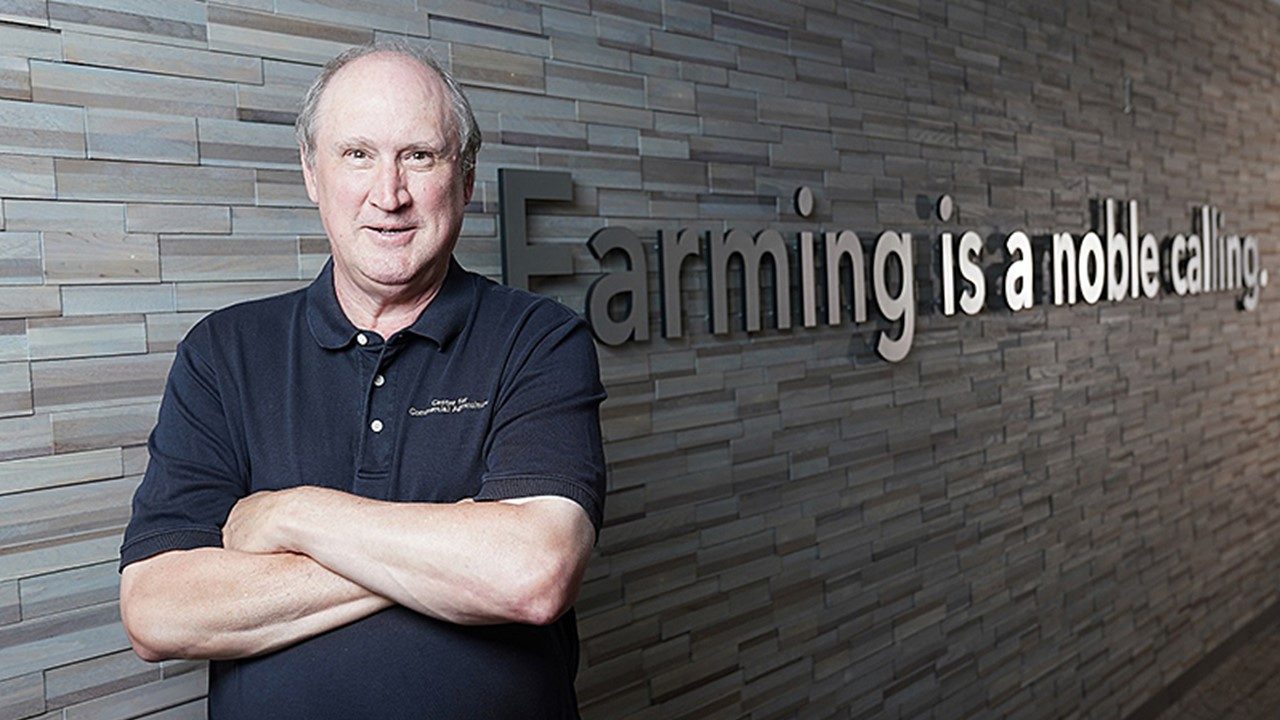
Dr. Michael Langemeier, director of Purdue University’s Center for Commercial Agriculture, says that disconnect reflects how dramatically the business of farming has changed.
“It’s a little surprising to me that buying inputs and selling products were quite a bit lower in terms of the percentage that thought that was the key skill, even compared to financial management and strategic planning,” Langemeier says.
Bigger farms require bigger-picture thinking
The challenge is not necessarily that today’s farmers lack management ability.
It may be that the definition of farm management has changed faster than the skills many producers developed earlier in their careers.
Langemeier points to the enormous growth in farm businesses over the past several decades.
“If you go back 30 to 40 years, they were managing a much smaller business,” he says. “If they had some technical training, they tended to focus on production.”
That made sense at the time.
But today’s farms can involve millions of dollars in land, machinery, buildings, livestock, inventories and other assets. Producers are simultaneously making decisions about production, marketing, financing, expansion, labor, risk management and succession.
And the numbers behind those decisions have changed dramatically.
Langemeier notes that land values have tripled since 2007, alone making many farm businesses substantially larger and more financially complex than they once were.
“As the business got bigger, it became just as important to focus on the management side — the long-term planning and the financial management,” he says.
The problem is that producers who built their careers around production may not have had the same opportunity to develop those higher-level business skills earlier in life.
That creates a potentially significant vulnerability.
A farmer can be exceptionally good at producing 200-bushel corn, raising high-quality livestock or squeezing another few bushels out of an acre — and still face difficult questions about where the operation should be five, 10 or 20 years from now.
Should the farm expand?
Should it reduce debt?
Should land be purchased or rented?
Which enterprises should grow — and which should be eliminated?
How should the farm transition to the next generation?
Those are strategic questions, and increasingly, they may be every bit as important to the farm’s future as production decisions.
Farmers see AI as a management tool
The third question in Purdue’s survey may be the most intriguing.
Researchers asked producers which operator skills had the greatest potential for improvement through artificial intelligence.
Again, strategic planning led the way.
Thirty-two percent of respondents selected strategic planning — the highest percentage of any skill.
Financial management and analysis followed at 28%, while production came in at 18%.
That result suggests producers aren’t viewing AI solely as a technology for the field.
There is growing recognition that AI could become a tool for helping farmers analyze the business itself.
Langemeier says that potential has not received as much attention as AI’s possible applications in production or marketing.
“If you look on the internet, there’s a lot of discussion about how AI is going to improve production,” he says. “You don’t see quite as much discussion as how it might improve financial management and strategic planning.”
But he believes the opportunity is significant.
AI could potentially help producers analyze financial information, evaluate alternatives, identify trends, build scenarios and simplify some of the analytical work involved in developing a business plan.
It could also play a role in transition planning, helping farm families organize information and evaluate different approaches to passing an operation from one generation to the next.
That doesn’t mean AI will make those decisions for farmers.
Rather, it could give producers a more powerful way to examine the decisions they already face.
The management challenge is coming into sharper focus
The operator-skill findings come at a time when farm businesses are already under pressure.
High input costs remained the biggest concern in Purdue’s August survey, cited by 45% of respondents. Low crop and livestock prices and rising interest rates also remain significant challenges.
Those pressures make strategic planning more than an academic exercise.
When margins are tight, the consequences of a major business decision can be magnified.
The difference between expanding and holding steady, buying and renting, borrowing and paying down debt, or investing and conserving cash can have consequences that extend for years.
That’s why the three operator-skill questions in Purdue’s survey may ultimately prove more important than a single month’s economic outlook.
They reveal something fundamental about modern agriculture:
Farmers know how to produce. Increasingly, they recognize that the harder question is deciding where the business should go next.
And perhaps most importantly, they believe technology could help them answer that question.
The next competitive advantage in agriculture may not come from another production breakthrough alone.
It may come from having the ability to step back from the field, look at the entire business and make better long-term decisions.
For farmers preparing to navigate an increasingly complicated agricultural economy, strategic planning may be the next skill that separates surviving from thriving.
CLICK HERE to read the latest Purdue Ag Economy Barometer survey and report.
CLICK BELOW for Hoosier Ag Today’s radio news report: