


After two grueling years of shrinking flock numbers, disease headlines, and margin compression, Indiana’s turkey growers are finally seeing the market turn the corner.
Fresh economic data from the American Farm Bureau Federation (AFBF) shows a national flock recovery taking hold. However, agricultural economists warn that rising feed expenses and persistent respiratory disease threats could squeeze margins before the expansion fully plays out.
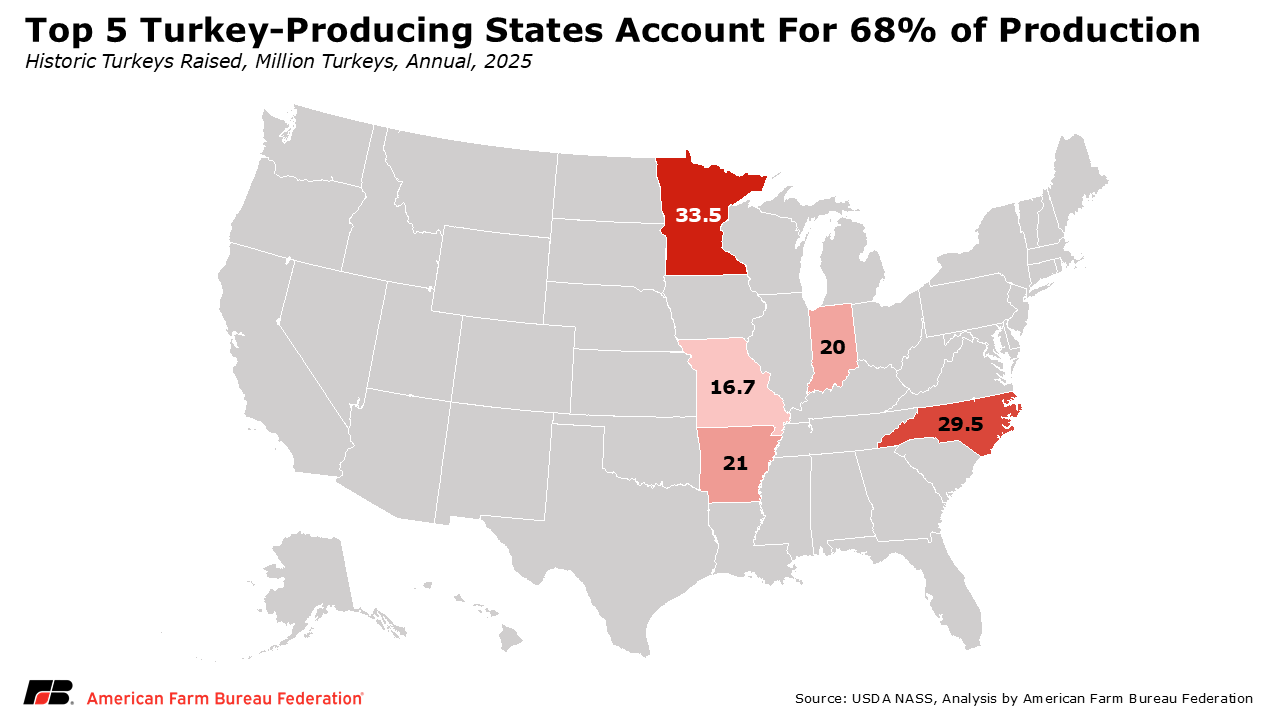
For Indiana—which ranks 4th in the nation for turkey production—the stake in this recovery is massive.
Indiana producers raise roughly 20 million turkeys annually—accounting for about 10% of the entire U.S. flock. Hoosier turkey production generates hundreds of millions of dollars in farm-gate value and consumes substantial quantities of Indiana-grown corn and soybeans.
Market Recovery: Production & Prices Rise
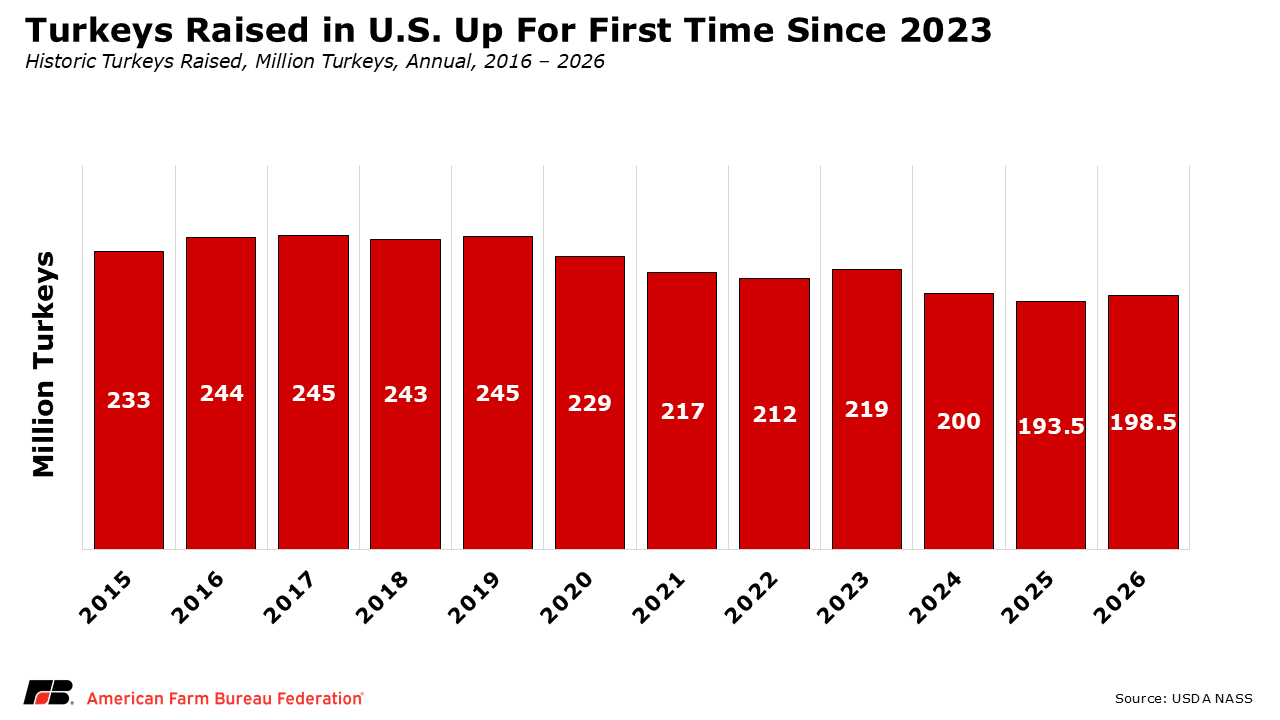
According to USDA’s Turkeys Raised report, U.S. turkey farmers raised 198.5 million birds in 2026—a 3% increase (up 5 million head) from 2025. This marks the first annual production increase since 2023.
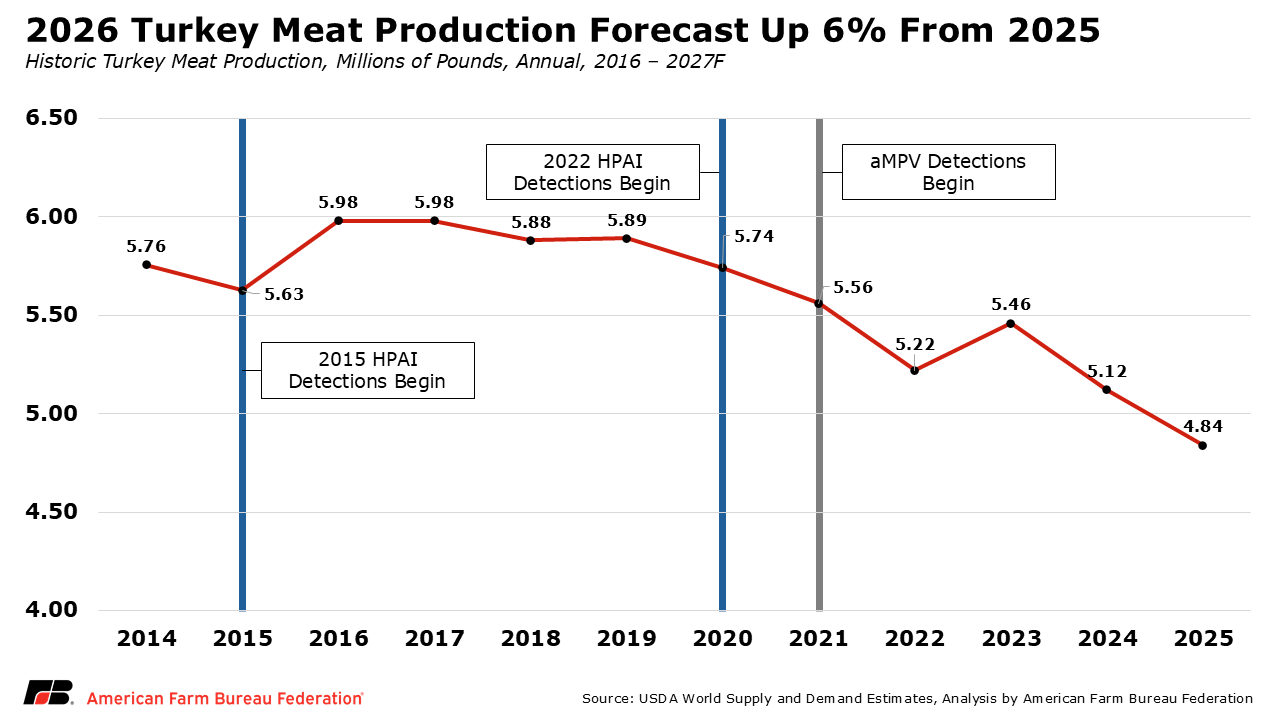
Combined turkey meat production is projected to hit 5.13 billion pounds for 2026, up 290 million pounds (6%) from 2025 levels.
Driving the turnaround is a double-shot of demand:
-
Domestic Consumption: Total domestic use reached 4.7 billion pounds in 2026, up 4% year-over-year.
-
Export Demand: Exports are projected at 461 million pounds (up nearly 10% from 2025). Mexico remains the single largest buyer of U.S. turkey meat, importing nearly 40 times the volume sent to Canada.
-
Cold Storage Drawdowns: September 30 cold storage stocks fell to 360 million pounds—down 4.5% from 2025 and 16% below 2024 levels.
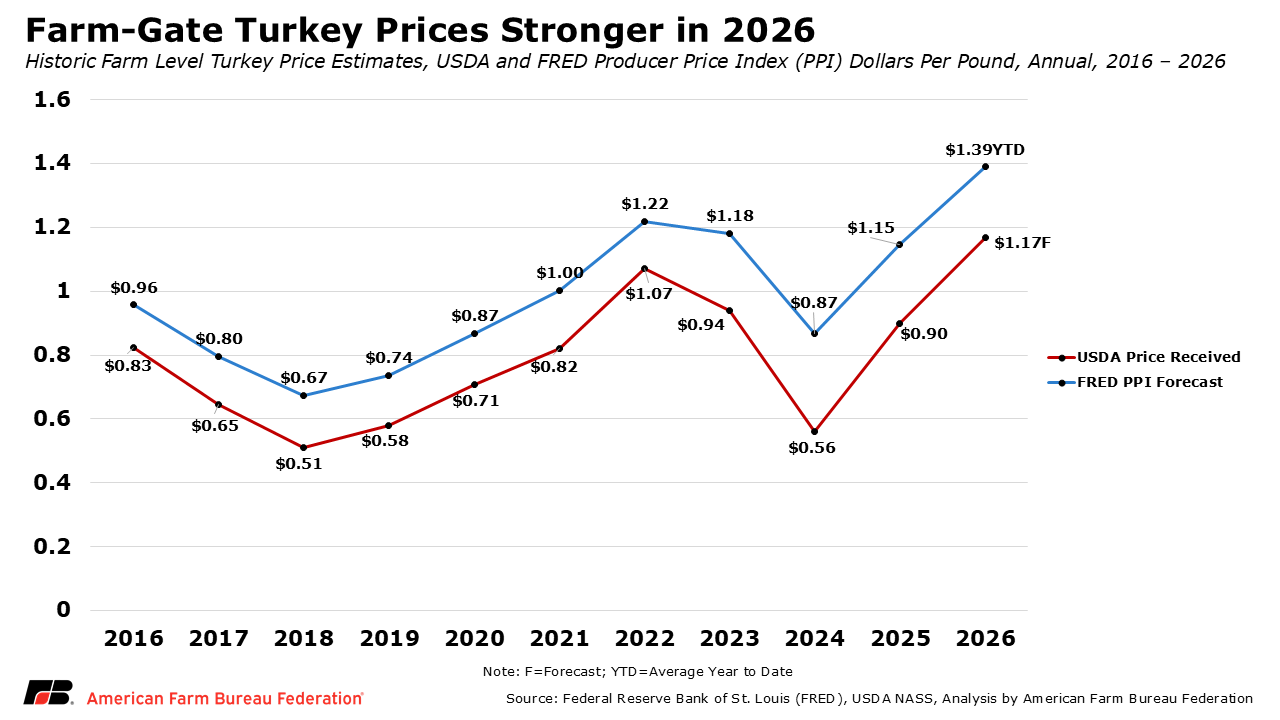
Tight stocks and firm demand sent wholesale whole-hen prices soaring to a projected average of $1.76 per pound in 2026—up 30% from 2025 and 88% above 2024’s 94-cent average.
What’s Squeezing Hoosier Margins?
While top-line prices look attractive, farm-level profitability is being tugged from two sides: feed costs and flock health.
1. The Feed Ration Pinch
Feed accounts for roughly 66% of the total cost to raise a market turkey. Finishing a heavy 38-pound tom requires between 75 and 80 pounds of feed.
USDA’s October WASDE peg puts farm-level corn at $4.70/bushel (up 13% from 2025) and soybean meal at $340/ton (up 4.5%). For Indiana contract growers and independent integrators alike, elevated feed costs quickly eat into gross price gains.
2. Dual Disease Threats: HPAI & aMPV
-
Highly Pathogenic Avian Influenza (HPAI): Commercial turkeys historically account for about 10% of all commercial poultry hit by HPAI. As wild bird fall migrations pass over the Mississippi and Flyway corridors, biosecurity protocols remain on high alert. In October 2026 alone, USDA-APHIS confirmed seven commercial turkey flock detections affecting over 250,000 birds nationwide.
-
Avian Metapneumovirus (aMPV): While HPAI gets national headlines, aMPV has quietly become the costliest respiratory disease in turkey barns. Texas A&M Extension estimates aMPV affected 60% to 80% of all U.S. turkey flocks in 2024, wiping out an estimated $2.88 billion in industry value. The virus damages feed conversion rates and extends days-to-market—compounding the impact of higher corn and meal costs.
Watching biosecurity routines in commercial poultry barns helps clarify how strict containment measures protect flock performance during peak migratory risk windows.
The video below demonstrates key biosecurity protocols and sanitation practices used in commercial poultry operations.
Looking Ahead to 2027
USDA expects turkey meat production to expand again in 2027 to 5.18 billion pounds. As total supplies rebuild toward pre-2024 levels, wholesale prices are forecast to moderate back to an average of $1.45 per pound—an 18% drop from 2026 highs.
For Indiana growers, maintaining profitability through 2027 will not depend on price spikes alone, but on:
-
Flock Health: Tightening biosecurity to minimize aMPV morbidity and avoid HPAI depopulations.
-
Feed Efficiency: Managing feed conversion ratios to buffer against elevated grain costs.
-
Sustaining Demand: Keeping export channels to Mexico open and steady.