

What happens when a health system stops treating food as advice and starts treating it as infrastructure?
Across central Indiana, farm families are accustomed to seeing crops as the lifeblood of rural economies and national food security. But at Hancock Health, based in Greenfield, just east of Indianapolis, locally grown produce is taking on a brand-new role: a direct clinical prescription written by physicians to stop chronic illness before it ever starts.
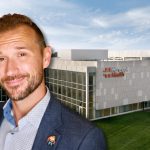
For Joel Hungate, Assistant Vice President of Strategy & Integrated Well-Being at Hancock Health, moving upstream to tackle health risks before they turn catastrophic is both a medical necessity and an economic imperative.
“We need to be involved in the last mile of patient engagement, and also keeping little problems from becoming big, scary, and expensive ones,” Hungate explains on the latest episode of the AgBioscience Podcast—presented by AgriNovus Indiana. “Healthcare doesn’t have a price problem—it’s got a total cost of care problem. We built the literal embodied infrastructure for people to say yes and stay yes to the things that we know reduce the total cost of care.”
Rather than waiting for patients to walk through hospital doors with advanced heart disease, diabetes, or metabolic failure, Hancock Health is executing a aggressive strategic shift toward proactive population health. The hospital system operates three state-of-the-art Wellness Centers strategically located in Greenfield, McCordsville, and New Palestine — all within Hancock County — serving as medical fitness campuses that blend clinical care, exercise physiology, lifestyle coaching, and nutrition education under one roof.
High-Tech Harvesting at the Point of Care
To bridge the gap between medical advice and daily nutrition, Hancock Health recently installed a 24-foot autonomous, climate-controlled hydroponic growing container on its Greenfield medical fitness campus. Built in partnership with Indiana ag-tech startup Anu, the container functions like a high-tech shipping pod equipped with automated rotary aeroponic towers.
Controlling water, light spectrums, and rotation at the click of a button, the system operates completely independent of Indiana’s variable weather, pests, or seasonal freezes. Capable of housing nearly 300 seed pods per tower cycle, the pod generates hundreds of pounds of nutrient-dense greens, peppers, and vegetables year-round.
The produce isn’t sold on commercial grocery shelves; it is sequenced deliberately as a “point-of-care produce prescription.” First priority goes to patients enrolled in Hancock Health’s 8-week Clinical Exercise Program—individuals recovering from cancer, cardiac events, diabetes, or metabolic conditions—followed by health system associates and Wellness Center members.
“Scott Massey and the Anu team created something that is so turn-key and produces such a volume… allowing us to do it year-round, essentially to have a perpetual farmers market,” says Hungate.
By placing the growing container directly on the Greenfield campus alongside registered dietitians and exercise physiologists, clinicians can hand patients a physical bag of nutrient-rich produce right after an exercise session or nutrition class, eliminating physical and financial barriers to fresh food access.
Closing the 80/20 Loop on Nutrition
For decades, traditional healthcare has relied on a reactive model: diagnose, prescribe medication, and hope the patient makes better choices at home. But as health leaders look at rising healthcare expenditures and chronic disease rates across rural communities, reliance on pharmaceutical intervention alone is showing its limits.
Hungate emphasizes that while physical activity and medical supervision are critical pillars, nutrition remains the ultimate needle-mover in long-term wellness.
“I cannot out-run, out-lift, or out-exercise a very, very poor diet,” Hungate notes. “Nutrition is the 20% of your behavior that’s going to account for 80% of the outcome, and for too long, healthcare has just left that up to chance.”
By combining medical fitness across its locations in Greenfield, McCordsville, and New Palestine with direct access to fresh harvests, Hancock Health is seeing dramatic results. Over the past decade, Hancock County has climbed from the 28th healthiest county in Indiana to 3rd overall, putting it in the top 4% of healthiest counties nationwide.
“What if we surrounded people with access to the infrastructure, the programs, the resources… getting people connected to physical activity, nutrition, healthcare education as a physician extender, as a mandate for the health system itself?” asks Hungate. “Not just waiting for you to wander into some sterile environment and serving you in a reactive capacity.”
Democratizing Fresh Food Across the State Road 9 Corridor
The vision doesn’t end at the hospital walls. Hancock County leaders are currently advancing plans for the State Road 9 Innovation Corridor north of Greenfield, proposing an ag-tech TIF district positioned at the exact intersection of agriculture, health, and bioscience.
As the hydroponic model scales over the next three to five years, Hancock Health aims to expand its produce distribution model out into the broader rural community, connecting local farmers, ag-tech innovators, schools, and civic organizations.
“What if we could help the Boys & Girls Club with access to fresh produce? What if we could help our local schools?” Hungate says. “The technology’s become so scalable and accessible that we’re democratizing this for the first time.”
For Indiana’s agricultural community, Hancock Health’s initiative highlights how farm innovation and medical care can unite to build healthier, more resilient rural towns.
“All spheres converge in health—it’s economic development, destination development, productivity, and workforce readiness,” Hungate reflects. “When a health system takes on that mandate in an agricultural county, incredible things can happen.”
CLICK BELOW for Hoosier Ag Today’s Radio News Report: